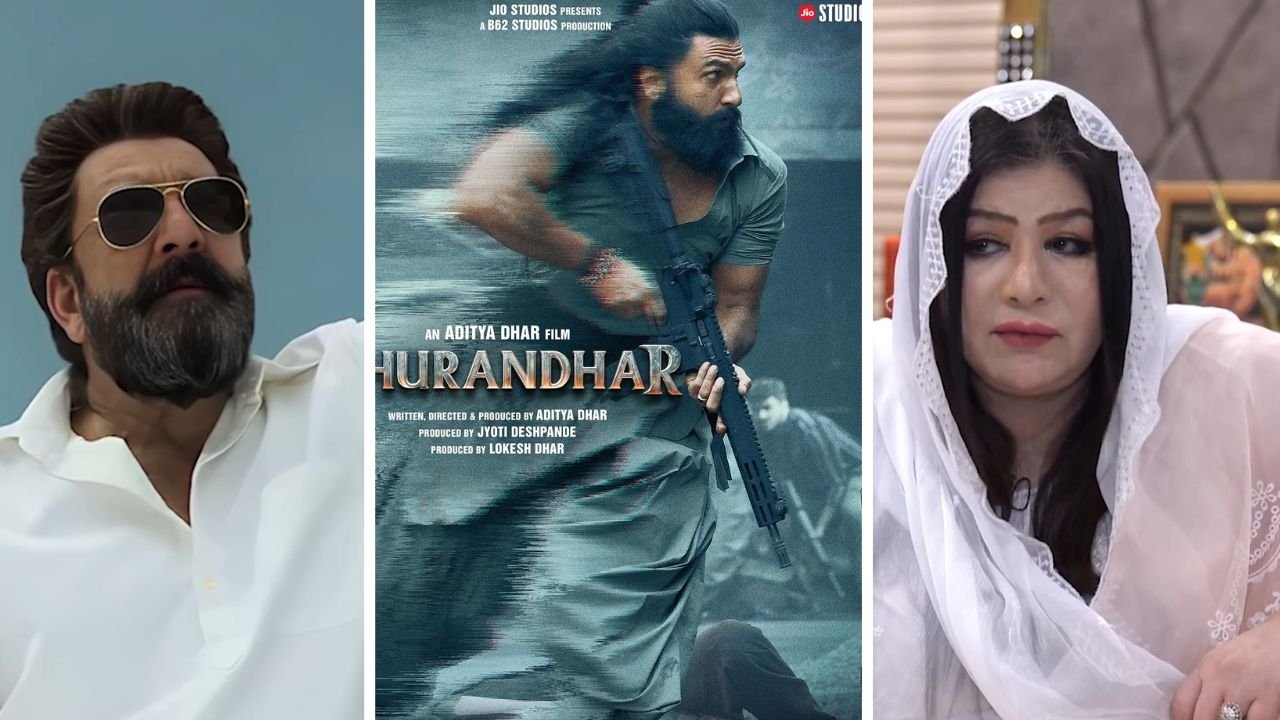
The eagerly awaited film Dhurandhar has run into a major controversy just after its trailer release, sparking a heated debate about the boundaries of cinematic license when depicting real-life figures. The criticism has been led by the family of the late, decorated police officer Chaudhry Aslam, whose actions against organized crime and terrorism in Pakistan made him a national figure.
The trailer, which hints at the film drawing heavily from events surrounding the Lyari gang wars, features a character prominently believed to be based on the courageous police officer.
Distortion of a Hero’s Legacy
The core of the controversy stems from the late officer’s widow, who has publicly and vehemently condemned the film’s depiction of her husband. Her statement expressed deep concern over what she termed a “misleading” portrayal.
The widow emphasized that the filmmakers appear to have exaggerated and distorted reality for dramatic effect, particularly in scenes involving the notorious gangster, Rehman Dakait. This dramatization, she fears, does a grave disservice to a man who dedicated his life—and ultimately gave his life—in the fight against crime and militancy.
The Ethics of Creative License
The remarks have thrust the film into a difficult ethical spotlight, reigniting a perennial debate within the entertainment industry: how much creative liberty can filmmakers take with biographical or historical events?
The widow’s concern centers on the integrity of her husband’s sacrifice. She highlights that such portrayals risk fundamentally misrepresenting Aslam’s hard-won legacy, transforming a complex public servant into a caricature designed to fit a dramatic narrative. When a story is “inspired by true events,” the public often perceives the cinematic version as factual, putting a heavy responsibility on the creators to prioritize authenticity.
Balancing Drama and Authenticity
Filmmakers frequently argue that dramatization is necessary to create engaging cinema and reach a wider audience. However, the family of Chaudhry Aslam argues that this balance has been lost in Dhurandhar, sacrificing truth for hyperbole.
This controversy is not just about one film; it raises crucial questions for the entire Pakistani and international film industry. It forces a discussion on the ethical responsibility owed to the families of real-life heroes, especially those martyred in the line of duty, whose private grief is amplified by public misrepresentation. The debate now continues on social media and in legal circles, proving that the reaction to a trailer can be as explosive as the film’s content.