China is progressing steadily toward its ambitious goal of establishing a permanent base on the Moon, a project famously nicknamed ‘Guanghan Palace’. Central to this plan is the use of specially engineered, ultra-lightweight construction materials designed to thrive in the harsh and unforgiving lunar environment. The development and successful testing of these materials represent a pivotal moment in China’s space exploration roadmap, strengthening the feasibility of long-term sustainable habitation on Earth’s natural satellite.
The 100-Gram Bricks and Lunar Exposure
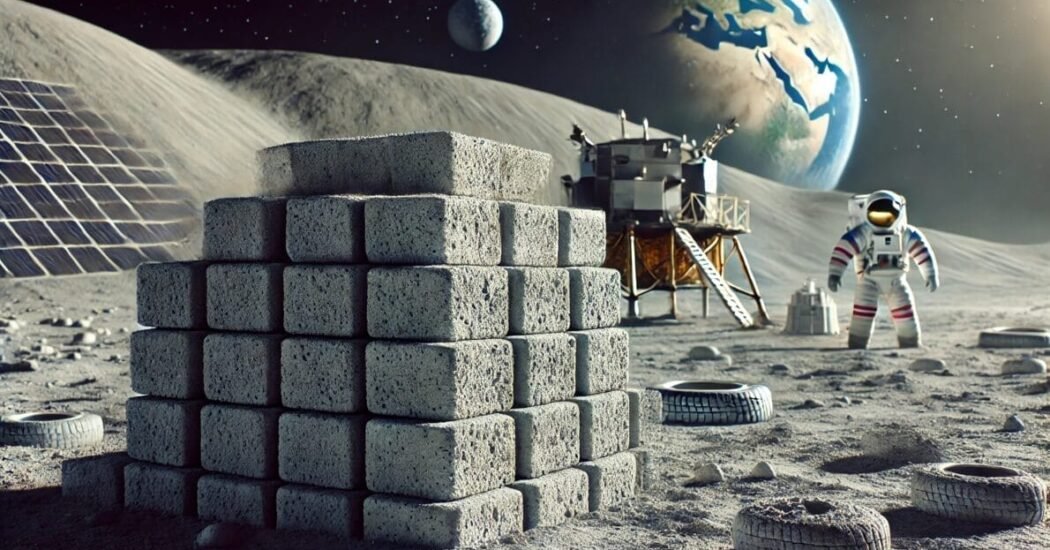
The cornerstone of this construction strategy is a unique type of lightweight brick. Each of these specially crafted blocks weighs only around 100 grams. Their lightweight nature is crucial for minimizing the cost and complexity of transporting materials from Earth to the Moon. However, the real test of their viability was their ability to withstand the Moon’s extreme conditions.
These bricks were sent to the Moon and spent nearly a year exposed to the extraterrestrial environment before being successfully returned to Earth for exhaustive inspection and analysis. The conditions they faced included intense solar and cosmic radiation, vast temperature fluctuations—ranging from scorching hot to freezing cold—and the high-vacuum environment. The successful retrieval and subsequent testing of these materials provided critical data to validate the engineering and material science behind the lunar construction concept.
Durability Confirmed Against Harsh Conditions
The early test results following their return have been overwhelmingly positive and validate China’s approach. Out of the batch, all 34 blocks remained intact, confirming their remarkable durability. Experts were particularly focused on assessing damage from radiation and the material’s resistance to thermal cycling. The inspection showed that the bricks sustained minimal damage and only minor color changes after prolonged exposure to the lunar surface.
The composition of these bricks is key to their success. They are made from materials engineered to be chemically and physically similar to lunar regolith, or lunar soil. This is a deliberate strategy, as the long-term goal of the Guanghan Palace project involves utilizing native lunar materials for construction, a process known as in-situ resource utilization. The successful performance of the Earth-made, regolith-like bricks serves as a crucial proof-of-concept, suggesting that structures built from actual lunar soil could possess the necessary strength and resilience.
A Step Towards Sustainable Lunar Construction
The positive outcome of the lunar material test significantly strengthens China’s long-term vision for sustainable lunar construction and exploration. The ability to create durable, high-performance structural materials that can withstand the lunar climate is perhaps the most significant hurdle in establishing a permanent base. By proving the concept of these bricks, China has moved closer to developing reliable manufacturing and construction processes for the Moon.
Reports suggest that the actual construction of the Guanghan Palace base could commence as early as 2028. This ambitious timeline positions China as a leading player in the new global space race focused on lunar habitation. This initiative represents more than just a technological achievement; it marks a major step in the ongoing expansion of humanity’s presence beyond Earth, transitioning from temporary missions to sustained off-world exploration and residence.