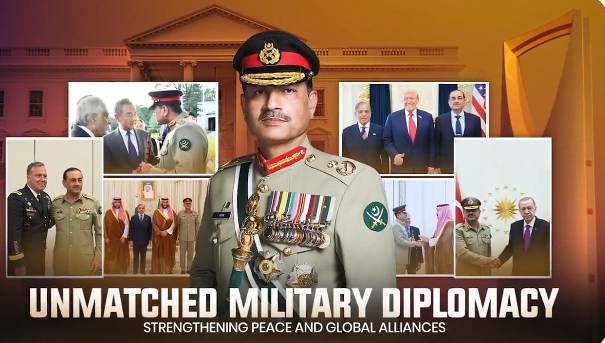
The British newspaper Financial Times has identified Pakistan’s Field Marshal Syed Asim Munir as one of the most influential strategic leaders navigating the complexities of today’s changing global order. In a detailed analysis of evolving international politics, the publication credited the Chief of Defence Forces (CDF) with steering Pakistan through a demanding phase marked by shifting power dynamics and heightened geopolitical competition.
According to the report, the global system is entering a new era where traditional alliances are under strain and middle powers face mounting pressure to balance relations among competing global actors. In this environment, the Financial Times noted that Pakistan has emerged as a notable example of effective strategic adaptation, largely due to the multidimensional approach championed by Field Marshal Asim Munir.
The analysis described him as a leading practitioner of multi-alignment diplomacy, a strategy that avoids rigid bloc politics in favor of pragmatic engagement with diverse partners. The newspaper highlighted Pakistan’s parallel diplomatic engagement with major global and regional players, including the United States, China, Saudi Arabia, and Iran, noting that this approach has allowed Islamabad to safeguard its national interests while expanding its diplomatic space.
A key focus of the Financial Times report was Pakistan’s interaction with the United States during the presidency of Donald Trump. The newspaper observed that Field Marshal Munir demonstrated a strong ability to adapt to Trump’s informal and unconventional diplomatic style. This flexibility, it said, helped Pakistan secure diplomatic gains at a time when many countries struggled to adjust to Washington’s shifting tone and priorities.
The report contrasted Pakistan’s experience with that of India, suggesting that New Delhi faced challenges in responding effectively to the same changing global dynamics. According to the analysis, India’s difficulties in aligning its approach with Trump’s transactional style exposed weaknesses in its own middle-power strategy, limiting its ability to capitalize on emerging opportunities.
Financial Times further noted that Field Marshal Munir has successfully leveraged global transitions to open new diplomatic avenues for Pakistan. His leadership was described as forward-looking, emphasizing strategic clarity, adaptability, and the ability to operate across multiple diplomatic tracks simultaneously.
The newspaper framed Pakistan’s current positioning as part of a broader trend in which middle powers are increasingly shaping outcomes through flexible and issue-based partnerships rather than fixed alliances. In this context, Field Marshal Munir’s approach was presented as a model for how states with limited resources but significant strategic relevance can navigate an increasingly fragmented world.
By recognizing Field Marshal Asim Munir’s role, the Financial Times assessment places Pakistan firmly within contemporary debates on global realignment and middle-power diplomacy. The analysis suggests that Islamabad’s strategic balancing, under his leadership, has enhanced its relevance and credibility at a time when global politics demand agility more than alignment.