The Khyber Pakhtunkhwa government has announced its decision to challenge the Peshawar High Court’s ruling on the KP Police Act in the Supreme Court of Pakistan. The move follows strong objections from the provincial leadership, which views the verdict as a violation of constitutional principles and democratic authority.
Provincial Law Minister Aftab Alam said the decision to declare amendments to the Police Act null and void undermines the constitutional mandate of the provincial government and elected legislature. He argued that the ruling contradicts the preamble of the Constitution of Pakistan and weakens democratic governance in the province.
According to the law minister, the provincial government will approach the Supreme Court under relevant constitutional provisions. He described the high court’s verdict as judicial overreach and said it crossed constitutional limits by interfering in legislative and executive matters. He added that both the provincial cabinet and the Khyber Pakhtunkhwa Assembly have unanimously rejected the ruling.
Separately, Khyber Pakhtunkhwa Advocate General Shah Faisal Utmankhel also criticized the decision, calling it unconstitutional, unlawful, and issued without proper legal process. He said the verdict was delivered unilaterally and that parties named in the petition were not given a fair opportunity to present their arguments.
The advocate general emphasized that the judiciary should refrain from intervening in executive policy decisions. He confirmed that the provincial government would challenge the ruling before the federal constitutional court to protect the constitutional division of powers.
The controversy stems from a decision issued by the Peshawar High Court earlier this week, in which it struck down amendments introduced through the KP Police (Amendment) Act 2024 to the Khyber Pakhtunkhwa Police Act 2017. The court declared the amendments unconstitutional.
A division bench comprising Chief Justice SM Atiq Shah and Justice Muhammad Ijaz Khan ruled that the amendments had altered the balance of authority within the police structure. The changes required chief ministerial approval for the appointment of senior police officers in BS-18 and above, while also removing the inspector general of police’s authority to appoint field commanders.
The bench observed that these amendments risked turning the police force into an instrument of political influence rather than an institution governed by law. The court stated that such changes were inconsistent with constitutional safeguards meant to ensure police autonomy and professionalism.
The ruling further clarified that under Pakistan’s constitutional framework, the executive’s role over the police is limited to oversight. This authority, the court noted, is confined to policymaking and general supervision, not operational control or political intervention.
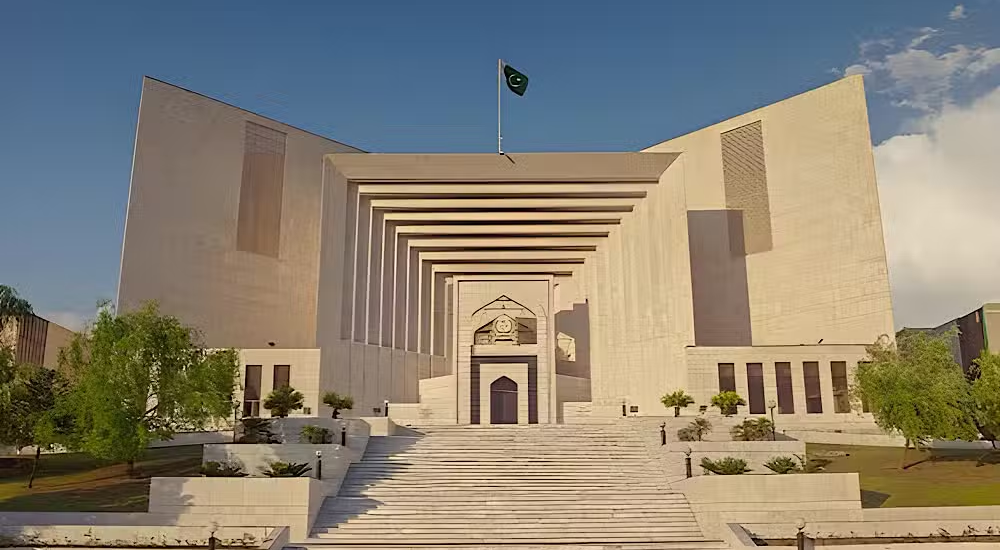
The case has triggered a broader debate on police independence, executive authority, and the separation of powers in Pakistan, with the Supreme Court now set to examine the matter.