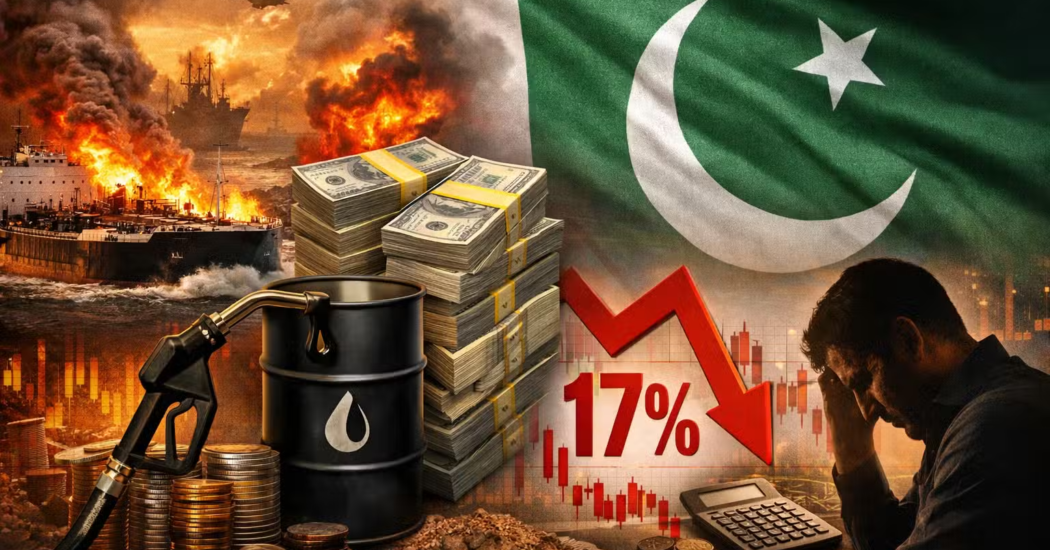
Middle East Conflict Could Push Pakistan’s Inflation to 17% and Widen Trade Deficit: PIDE Report
Escalating tensions in the Middle East could trigger serious economic challenges for Pakistan, particularly if the conflict disrupts global oil supply routes. A recent report by the Pakistan Institute of Development Economics warns that a full-scale regional crisis could drive international oil prices sharply higher and significantly impact Pakistan’s economy.
The report highlights a worst-case scenario in which crude oil prices climb to between $120 and $150 per barrel. Such a surge would place heavy pressure on oil-importing countries, including Pakistan, where energy imports already account for a major share of the country’s trade expenditure.
One of the biggest risks comes from potential disruptions in the Strait of Hormuz, a vital maritime route through which a large portion of the world’s oil supply passes. Any instability or blockage in this narrow passage could interrupt shipments and push global prices upward almost immediately.
According to the analysis, if such a disruption occurs, Pakistan’s inflation rate could rise dramatically. Current inflation levels hover around 7 percent, but the report estimates that prices could surge to between 15 and 17 percent if global oil markets face severe shocks.
Higher oil prices would also have a direct impact on Pakistan’s import bill. The country currently spends billions each month on energy imports, and under the projected scenario, the monthly oil import cost could climb to between $3.5 billion and $4.5 billion.
This spike in energy costs would likely widen Pakistan’s trade deficit, placing additional strain on foreign exchange reserves and increasing pressure on the national currency. Economists warn that such developments could slow economic recovery efforts and complicate fiscal planning.
Beyond the immediate financial impact, rising energy costs would affect nearly every sector of the economy. Transportation expenses, electricity generation, manufacturing, and food supply chains could all experience price increases, further fueling inflation across the country.
Experts emphasize that Pakistan’s heavy reliance on imported fuel makes the economy particularly vulnerable to global energy shocks. Strengthening energy diversification, increasing renewable power generation, and improving efficiency in fuel consumption could help reduce exposure to international market volatility.
The report ultimately underscores the importance of closely monitoring developments in the Middle East. For Pakistan, geopolitical instability in key oil-producing regions could quickly translate into domestic economic challenges, making proactive planning and energy policy reforms increasingly critical.
