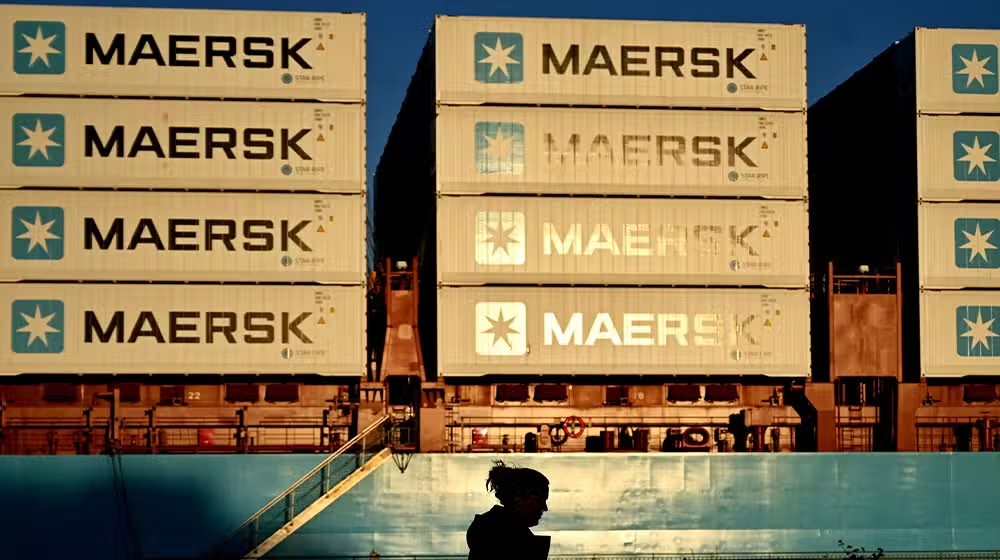
Global shipping leader A.P. Moller – Maersk has announced a rise in its Emergency Contingency Surcharge (ECS) for shipments originating from Pakistan and the wider Indian Subcontinent bound for West Africa. The revised surcharge is expected to take effect from the Price Calculation Date (PCD) of April 1, 2026, according to sources familiar with the development.
The decision is likely to impact Pakistani exporters in the short term as shipping costs rise across key trade routes. Businesses that rely on maritime logistics to move goods to West African markets may face higher operational expenses due to the updated charges.
The increase in the ECS comes at a time when cargo vessels are adjusting their routes due to ongoing maritime security concerns and logistical challenges in the region. Instead of passing through the strategically important Strait of Hormuz, some vessels are taking longer alternative routes and temporarily positioning near Karachi before continuing their journey.
These route adjustments are contributing to increased transit times and higher operational costs for shipping lines. As a result, the updated surcharge aims to offset the additional expenses incurred by carriers operating on these extended routes.
The surcharge revision will primarily affect cargo transported along the West Africa (W2MW) trade corridor, a key maritime route linking the Indian Subcontinent with major ports in West African countries. The corridor is important for Pakistani exporters shipping textiles, rice, and other manufactured goods to markets across the region.
Industry experts believe the move reflects the broader challenges facing global shipping networks, where geopolitical tensions, longer sailing distances, and rising fuel costs continue to influence freight pricing. For exporters in Pakistan, this development could require adjustments in pricing strategies and logistics planning to remain competitive in overseas markets.
While the ECS increase is expected to raise short-term costs, shipping companies often revise such surcharges based on evolving market conditions and operational risks. Exporters and freight forwarders will be closely monitoring further announcements from Maersk and other global carriers to assess the long-term impact on trade flows between Pakistan and West Africa.