Benazir Income Support Programme has reported major progress in reducing child malnutrition and improving maternal health outcomes through the Benazir Nashonuma Programme, according to a new evaluation conducted by Aga Khan University.
The Endline Impact Evaluation of the programme revealed notable declines in child stunting rates among beneficiary families, marking an important development in Pakistan’s efforts to tackle malnutrition and improve public health.
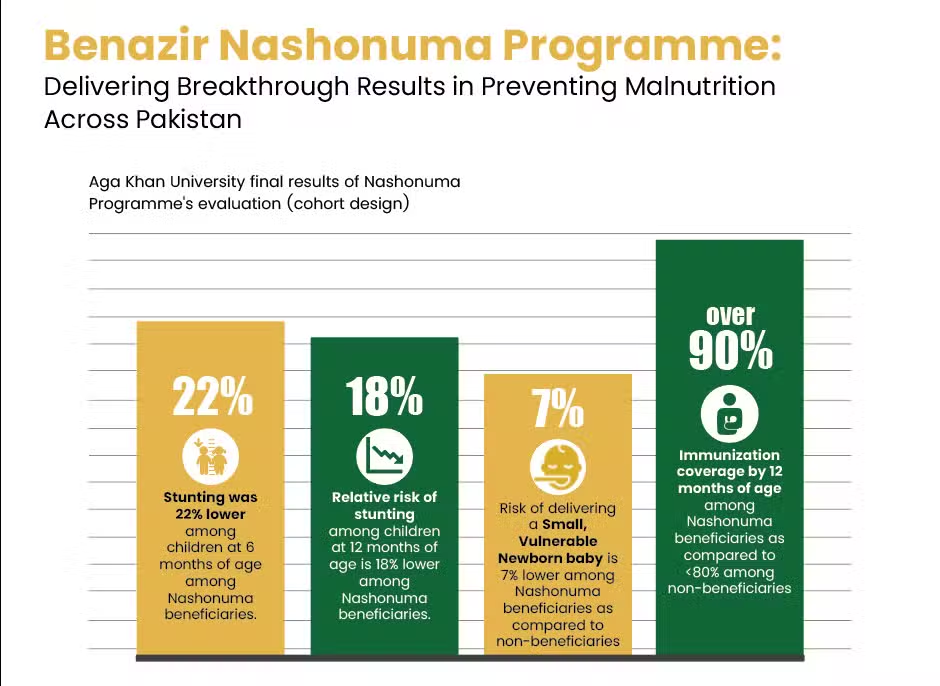
According to the study, stunting rates among beneficiary children were found to be 22 percent lower at six months of age and 18 percent lower at one year of age. The evaluation also highlighted broader improvements in maternal and newborn health indicators.
Researchers reported a 6 percent reduction in low birth weight cases, an 11 percent decline in premature births, and a 7 percent decrease in weak and vulnerable newborns among programme beneficiaries.
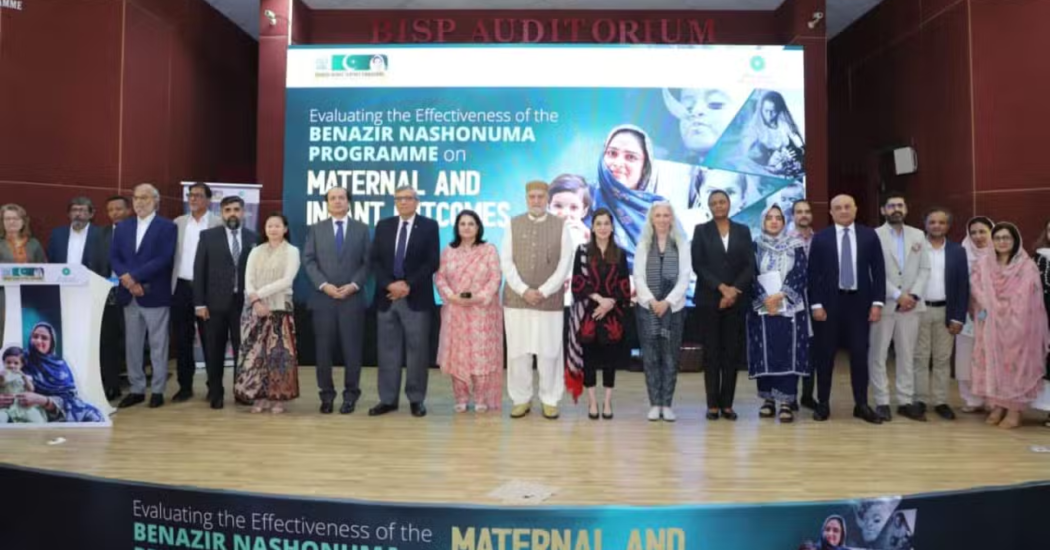
The findings were officially presented during a special session held at BISP Headquarters in Islamabad, where government officials, health experts, and representatives of international development organizations participated.
Speaking at the event, Syed Imran Ahmed Shah described the results as a major achievement for Pakistan’s social protection sector.
He stated that the evaluation demonstrates how targeted nutrition and maternal healthcare interventions can significantly improve child health outcomes in vulnerable communities across the country.
Meanwhile, Rubina Khalid emphasized the importance of maternal and child health in national development. She noted that healthy mothers and children are essential for building a stronger and more prosperous Pakistan.
Rubina Khalid revealed that the Benazir Nashonuma Programme has so far reached more than 4.5 million women and children across 157 districts through a nationwide network of 578 facilitation centres and 169 stabilization centres.
She added that every positive outcome highlighted in the report reflects improved support for mothers and healthier beginnings for children. According to her, BISP is integrating social protection initiatives with nutrition and healthcare services to promote long-term human development.
During the session, Ayesha Raza Farooq stressed the importance of investing in children during the first 1,000 days of life, from conception until the child’s second birthday.
She explained that this period plays a critical role in shaping cognitive development, physical health, learning capacity, and future productivity.
Global health expert Zulfiqar Bhutta also presented the evaluation findings and highlighted the programme’s positive impact on reducing stunting and improving maternal and child healthcare outcomes.
Additionally, Anita Zaidi praised the Benazir Nashonuma Programme as an effective model of social protection and appreciated Pakistan’s efforts to improve the lives of women and children.
Representatives from major international organizations including World Health Organization, World Food Programme, and UNICEF also attended the session alongside senior BISP officials.
The latest findings highlight growing recognition of nutrition-focused social protection programmes as an important tool for improving public health and reducing child malnutrition in Pakistan.