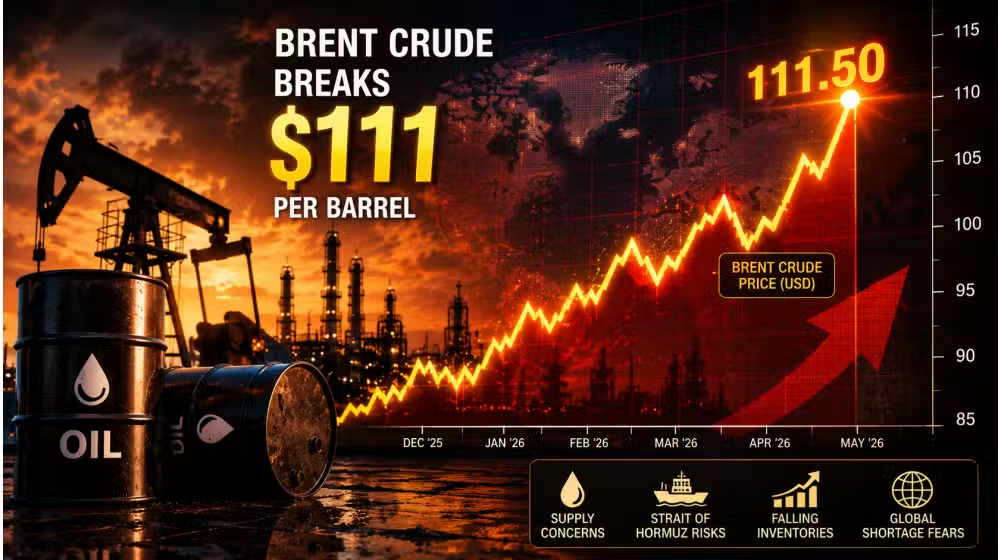
Global energy markets saw a sharp spike on Monday as crude oil prices climbed above the $110 mark following reports of drone attacks in key Middle Eastern regions, raising renewed concerns over supply stability and geopolitical risk.
Brent crude futures rose above $110 per barrel, while US West Texas Intermediate (WTI) crossed $108, as traders reacted to escalating tensions in the Gulf region. Market sentiment shifted quickly amid fears that disruptions in the Middle East could affect global energy supply chains.
The price surge followed reports of a drone strike near the Barakah nuclear power plant in the United Arab Emirates. According to Emirati authorities, the attack caused a fire near an electrical generator located outside the facility’s inner security perimeter. Officials stated that the core nuclear installation itself was not directly impacted.
In a separate incident, Saudi Arabia confirmed that its air defense systems intercepted three drones that reportedly entered its airspace from Iraq. The attempted incursions heightened regional security concerns and added to market uncertainty.
Traders and analysts say that even limited disruptions or threats to energy infrastructure in the Gulf region can have a significant impact on global oil prices due to the area’s strategic importance in worldwide crude exports. The proximity of these incidents to key energy corridors has further intensified market sensitivity.
The ongoing volatility also reflects broader concerns surrounding geopolitical tensions in the Middle East, particularly near critical shipping routes such as the Strait of Hormuz, which plays a vital role in global oil transportation.
Energy analysts note that oil markets remain highly reactive to security developments, with even unconfirmed threats capable of triggering rapid price movements. Investors are closely monitoring further developments for signs of escalation or stabilization in the region.
Rising crude prices are expected to have a direct impact on inflation expectations worldwide, including in import-dependent economies where fuel costs heavily influence transport, electricity, and industrial production expenses.
As the situation continues to evolve, global markets are likely to remain sensitive to any additional security incidents or diplomatic responses from affected countries.