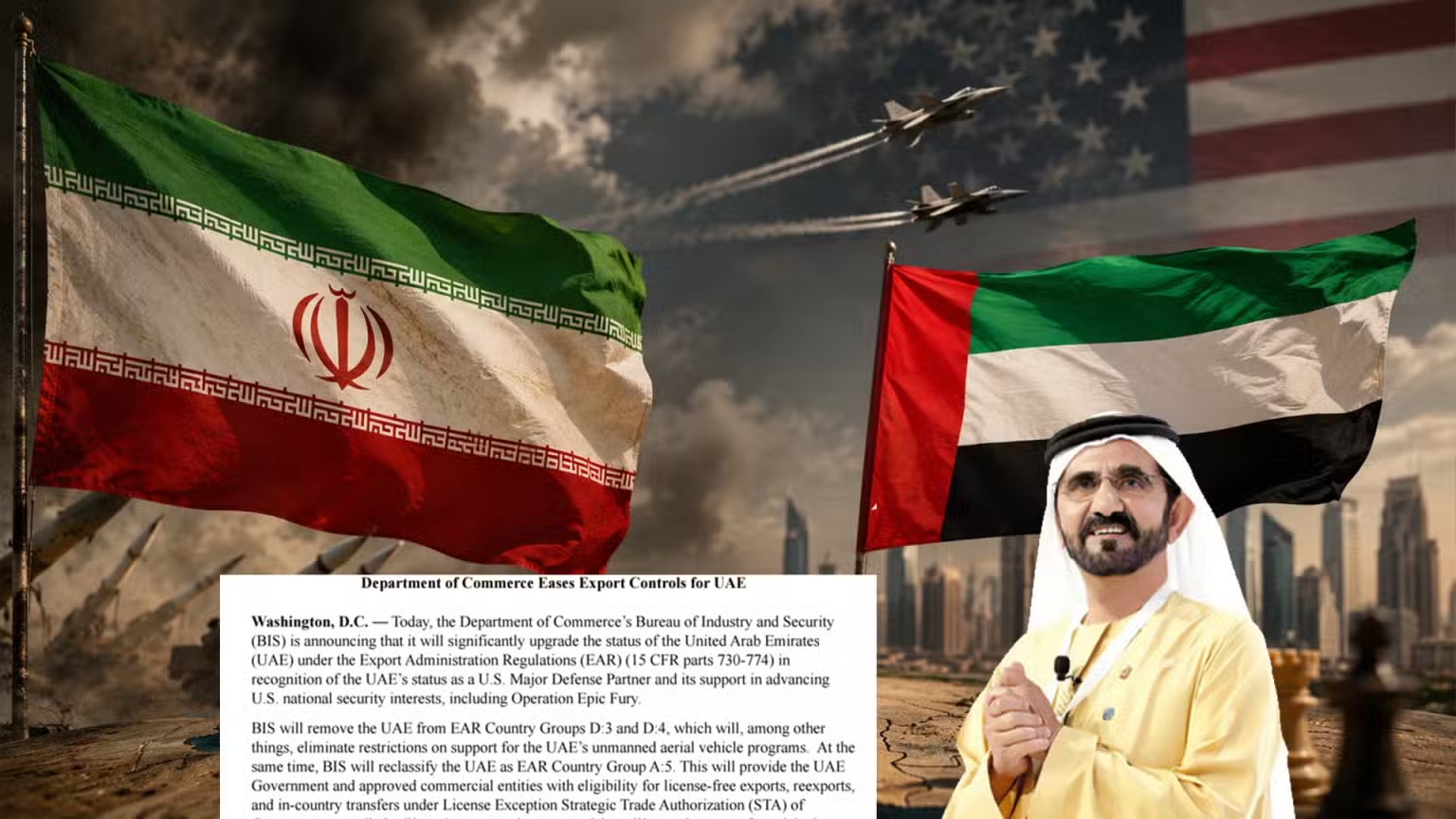
Iran has strongly criticized the United States after Washington announced expanded export privileges for the United Arab Emirates (UAE), alleging that Abu Dhabi supported Operation Epic Fury. Tehran has called for the UAE to be held accountable, arguing that the move could further heighten regional tensions.
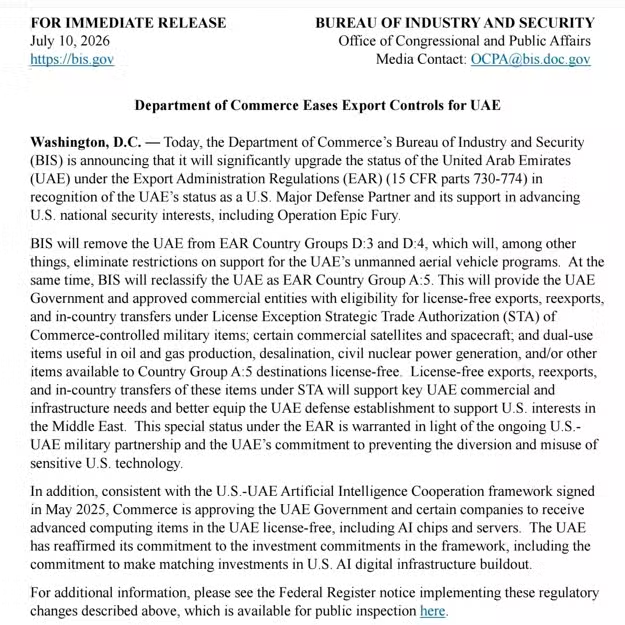
The reaction follows a statement from the US Department of Commerce, which announced an upgrade to the UAE’s export status. According to the department, the decision recognizes the UAE’s designation as a major US defense partner and its support for Operation Epic Fury against Iran.
Under the updated policy, several export restrictions on the UAE will be eased. The changes are expected to allow license-free transfers of selected military and dual-use technologies while expanding the country’s access to advanced computing equipment and other high-tech exports.
US officials say the revised export framework reflects the growing strategic partnership between Washington and Abu Dhabi. The move is intended to strengthen defense cooperation, facilitate technology sharing, and support broader security objectives in the region.
Iran, however, has condemned the decision, describing it as a step that could undermine regional stability. Iranian officials argue that providing greater access to advanced defense-related technologies for countries involved in operations against Iran risks escalating geopolitical tensions in the Middle East.
The announcement comes amid ongoing regional security challenges and heightened diplomatic friction involving Iran, the United States, and several Gulf states. Military cooperation between Washington and its regional allies has remained a sensitive issue, particularly as concerns over security, maritime stability, and technological capabilities continue to shape strategic alliances.
The easing of export controls is expected to benefit the UAE by improving access to selected American technologies used in defense, aerospace, artificial intelligence, and advanced computing. Such measures are often designed to strengthen interoperability between defense partners while supporting innovation and national security objectives.
Analysts note that closer defense cooperation between the United States and the UAE could have broader implications for regional security dynamics. At the same time, Iran’s response highlights the continuing geopolitical competition and differing perspectives on military partnerships in the Gulf.
As diplomatic discussions continue, the development is likely to remain a focal point in relations between Tehran, Washington, and Abu Dhabi. Further statements from the involved governments are expected as the policy changes move toward implementation.