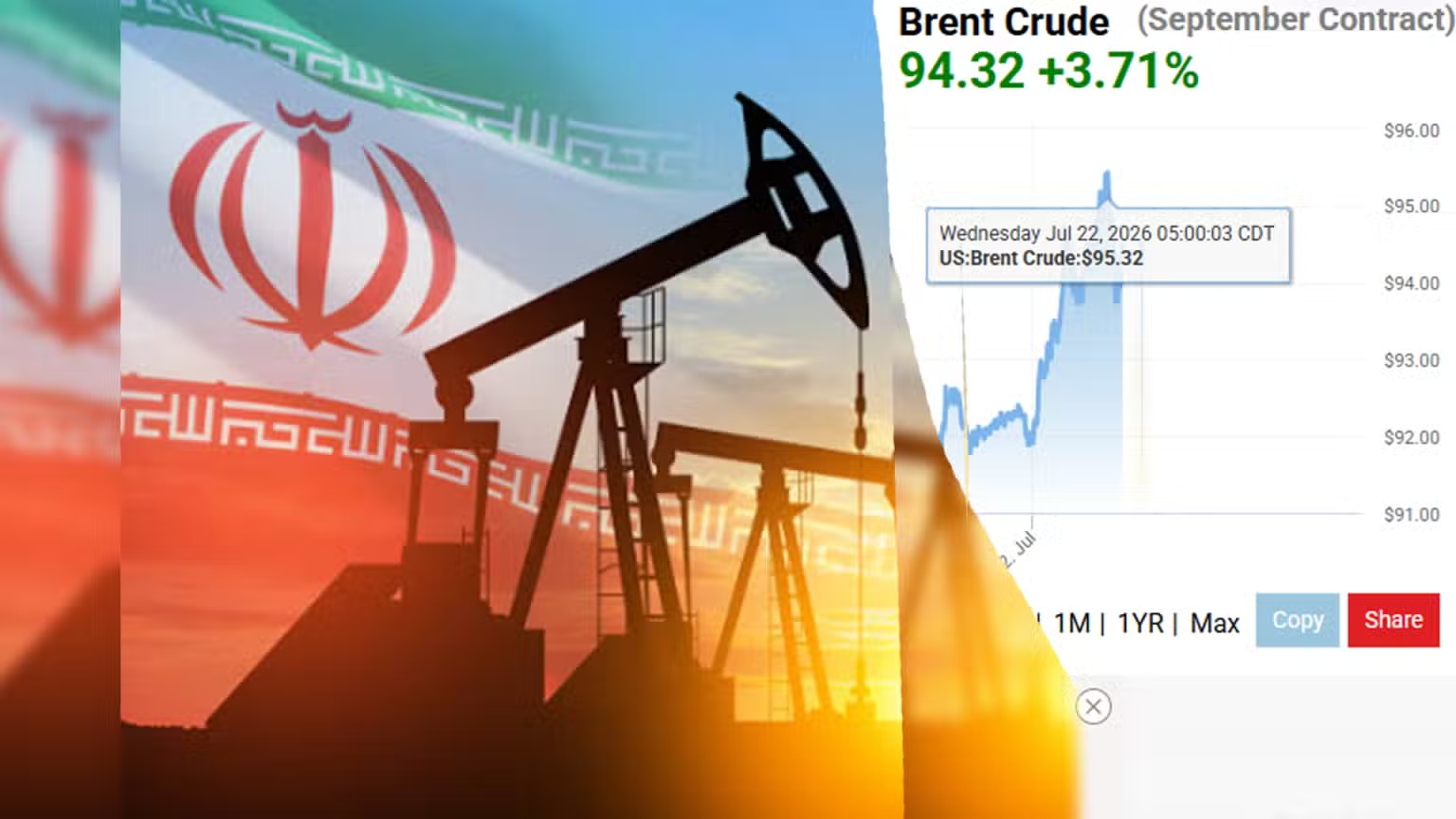
Global oil prices climbed above $95 per barrel on Wednesday as escalating tensions between the United States and Iran sparked renewed concerns over energy supplies and geopolitical stability. The sharp increase reflects growing uncertainty in international markets, where investors are closely monitoring developments that could disrupt crude oil production and exports from the Middle East.
Brent crude, the international benchmark for oil prices, surged past the $95 per barrel mark after reports indicated a breakdown in diplomatic efforts between Washington and Tehran. According to US officials, Iran was “not serious” about reaching a ceasefire agreement, while Iranian authorities maintained that the United States was unwilling to resume negotiations.
The exchange of statements heightened fears that diplomatic relations between the two countries could deteriorate further, increasing the risk of supply disruptions in one of the world’s most important oil-producing regions. The Middle East remains a critical hub for global energy exports, and any escalation in regional tensions often has an immediate impact on crude oil prices.
Energy markets reacted swiftly as traders weighed the possibility of prolonged geopolitical instability. Concerns over the security of shipping routes, potential sanctions, and disruptions to oil exports contributed to strong buying activity, pushing Brent crude to its highest level in recent months.
Oil prices are highly sensitive to geopolitical developments because even the perception of supply risks can influence global demand and pricing. Investors closely monitor developments involving major oil-producing nations, particularly those in the Gulf region, where any disruption can affect international energy markets.
Higher crude oil prices can have wide-ranging economic consequences. Rising energy costs often translate into increased transportation expenses, higher manufacturing costs, and more expensive fuel for consumers. Businesses across sectors may also face higher operational costs, potentially contributing to inflationary pressures in both developed and emerging economies.
For oil-importing countries such as Pakistan, sustained increases in global crude prices could place additional pressure on import bills, foreign exchange reserves, and domestic fuel prices. Higher energy costs may also influence inflation, transportation expenses, and electricity generation costs, affecting businesses and households alike.
Financial markets also tend to react to sharp movements in oil prices. Energy companies may benefit from stronger revenues, while industries heavily dependent on fuel—including aviation, logistics, manufacturing, and shipping—could experience increased operating costs if elevated oil prices persist.
Analysts note that future price movements will largely depend on geopolitical developments and diplomatic engagement between the United States and Iran. Any progress toward renewed negotiations or a reduction in regional tensions could help stabilize energy markets, while further escalation may keep upward pressure on crude oil prices.
Global demand trends, production decisions by major oil-producing countries, and inventory levels will also remain key factors influencing the direction of oil prices in the coming weeks. Investors and policymakers are expected to closely monitor these developments as markets continue to assess the broader economic impact of geopolitical uncertainty.
With Brent crude trading above $95 per barrel, the latest surge underscores how quickly international energy markets can respond to geopolitical risks. As tensions between the United States and Iran continue to evolve, oil prices are likely to remain volatile, with significant implications for global trade, inflation, and economic growth.