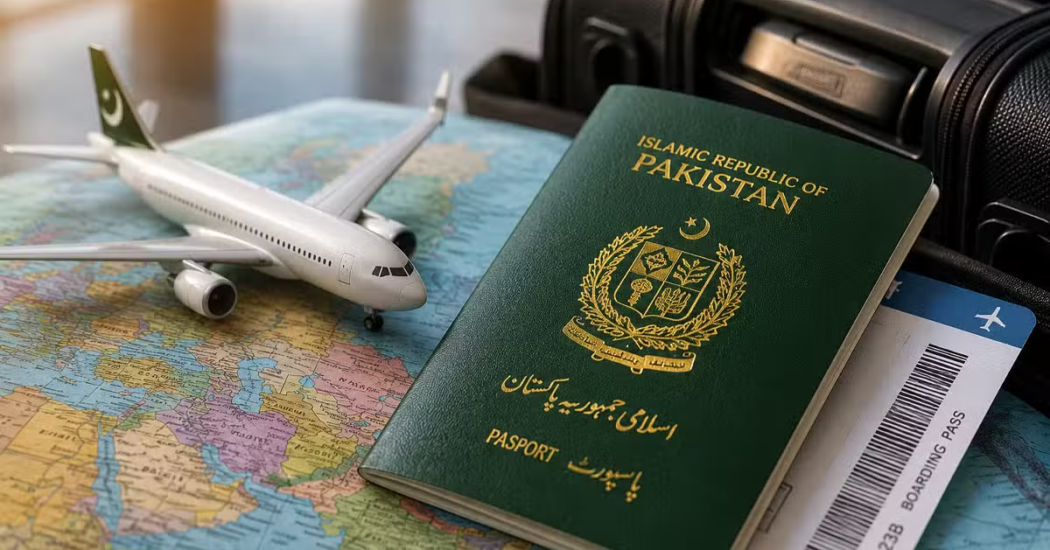
Pakistani Passport Ranking Falls to 101st in 2026 as Global Mobility Gap Widens
Pakistan’s passport has slipped further in global rankings, highlighting the country’s ongoing challenges in international travel access. According to the latest Henley Passport Index released in July 2026, the Pakistani passport now ranks 101st in the world, compared to 79th place in 2006.
The latest report, which marks the 20th anniversary of the Henley Passport Index, reflects how global mobility has expanded significantly for many countries over the past two decades. However, Pakistan has moved in the opposite direction, losing 22 positions since the index was first published.
The report reveals that the average passport worldwide now offers visa-free or visa-on-arrival access to 108 destinations. In 2006, that average stood at just 58 destinations, demonstrating how international travel freedom has improved globally for most nations.
Pakistan, however, has struggled to keep pace with this trend. Its continued decline in the rankings reflects limited visa-free travel opportunities compared to many other countries. The country’s passport now remains among the lowest-ranked travel documents in the world, making international travel more challenging for Pakistani citizens.
The Henley Passport Index is regarded as one of the world’s leading passport rankings. It measures passports based on the number of destinations holders can visit without obtaining a visa in advance. The rankings rely on exclusive data from the International Air Transport Association (IATA) along with independent research.
Experts believe passport strength is influenced by several factors, including diplomatic relations, international agreements, political stability, economic performance, and national security perceptions. Countries that maintain strong global partnerships and stable international ties often enjoy broader visa-free access for their citizens.
Over the past two decades, several Asian, European, and Middle Eastern nations have strengthened their passports through strategic diplomacy and expanded bilateral agreements. Meanwhile, Pakistan’s ranking has remained under pressure as global mobility standards continued to evolve.
For millions of Pakistanis seeking opportunities abroad for education, employment, tourism, or business, passport strength plays a vital role. A weaker passport often means longer visa processing times, stricter documentation requirements, higher travel costs, and reduced flexibility when planning international trips.
The July 2026 rankings also underline the growing inequality in global mobility. While many travelers now enjoy easier cross-border movement than ever before, citizens of lower-ranked countries continue to face significant barriers despite increasing globalization.
The latest figures are likely to renew discussions on the importance of improving Pakistan’s international standing through stronger diplomatic engagement, enhanced bilateral cooperation, and policies that promote greater global trust and connectivity.
Although passport rankings fluctuate over time, they serve as an important indicator of a country’s international relationships and the travel opportunities available to its citizens. As global mobility continues to expand, Pakistan faces the challenge of improving its position in future editions of the Henley Passport Index.
