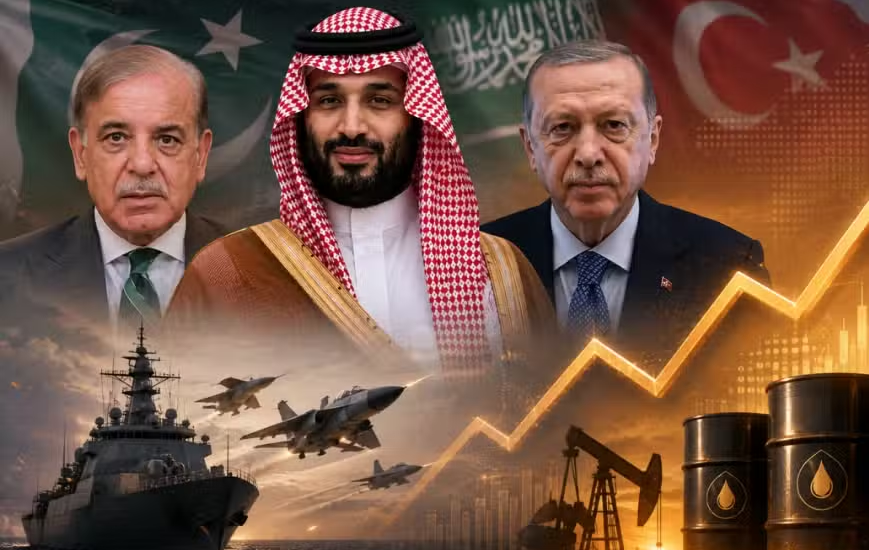
Oil Prices Rise After Pakistan’s Defense Cooperation With Saudi Arabia and Turkey Amid Middle East Tensions
International oil markets moved higher after Pakistan, Saudi Arabia, and Turkey announced a new defense cooperation agreement, while renewed security concerns in the Middle East added further pressure to global energy prices. Investors closely monitored the latest geopolitical developments, which once again highlighted the sensitivity of oil markets to regional instability.
At the time of reporting, Brent crude was trading around $84 per barrel after climbing toward the $90 mark during intraday trading. Meanwhile, West Texas Intermediate (WTI) crude gained momentum and hovered near $80 per barrel as traders responded to the evolving situation.
The rise in oil prices came shortly after Pakistan, Saudi Arabia, and Turkey unveiled a new defense cooperation framework aimed at strengthening military collaboration and regional security. Although the agreement is primarily focused on defense and strategic partnerships, financial markets quickly reacted as investors evaluated its broader geopolitical implications.
Energy markets have historically responded to political and military developments across the Middle East because the region remains one of the world’s largest oil-producing hubs. Any event that increases uncertainty around energy infrastructure or shipping routes often leads to higher crude prices as traders factor in potential supply disruptions.
Adding to market concerns, Yemen’s AnsarAllah launched an attack targeting Saudi Arabia’s southern province of Najran. The incident marked another escalation in the long-running regional conflict and renewed fears about the safety of Saudi Arabia’s energy facilities.
Saudi Arabia remains one of the world’s leading oil exporters, making the security of its production sites and infrastructure a key concern for global markets. Even isolated security incidents can influence investor sentiment, especially when geopolitical risks are already elevated.
Analysts noted that while global oil supply has remained relatively stable in recent weeks, markets remain highly sensitive to unexpected developments in the Gulf region. The combination of defense cooperation announcements and fresh security incidents prompted traders to reassess risk premiums, pushing crude prices higher during the trading session.
The latest price movement also reflects growing caution among investors who continue to monitor diplomatic efforts and regional military activity. Market participants are keeping a close watch on whether tensions remain contained or evolve into broader disruptions that could impact oil production or transportation.
For Pakistan, the newly announced defense cooperation with Saudi Arabia and Turkey underscores the country’s expanding strategic partnerships. While the agreement is centered on defense collaboration, its announcement coincided with heightened regional tensions, leading investors to interpret the developments within a wider geopolitical context.
Energy experts believe oil prices could remain volatile in the coming days as markets digest fresh information from the Middle East. Any additional security incidents, diplomatic breakthroughs, or policy announcements from major oil-producing nations could significantly influence price movements.
Global consumers and businesses are also watching crude prices closely, as sustained increases often translate into higher fuel costs, transportation expenses, and inflationary pressures. Countries that rely heavily on imported energy may experience additional economic challenges if oil continues its upward trajectory.
As geopolitical developments continue to unfold, investors will remain focused on regional stability, energy infrastructure security, and international diplomatic efforts. These factors are expected to play a major role in determining the direction of global oil prices in the weeks ahead.
