




India Excluded From US-Led Pax Silica Alliance, Raising Questions Over Global Tech Standing
India has suffered a fresh diplomatic setback after being left out of the United States–led advanced technology alliance known as Pax Silica. The exclusion has intensified political debate at home, with opposition parties arguing that it reflects a growing sense of global isolation under the current government.
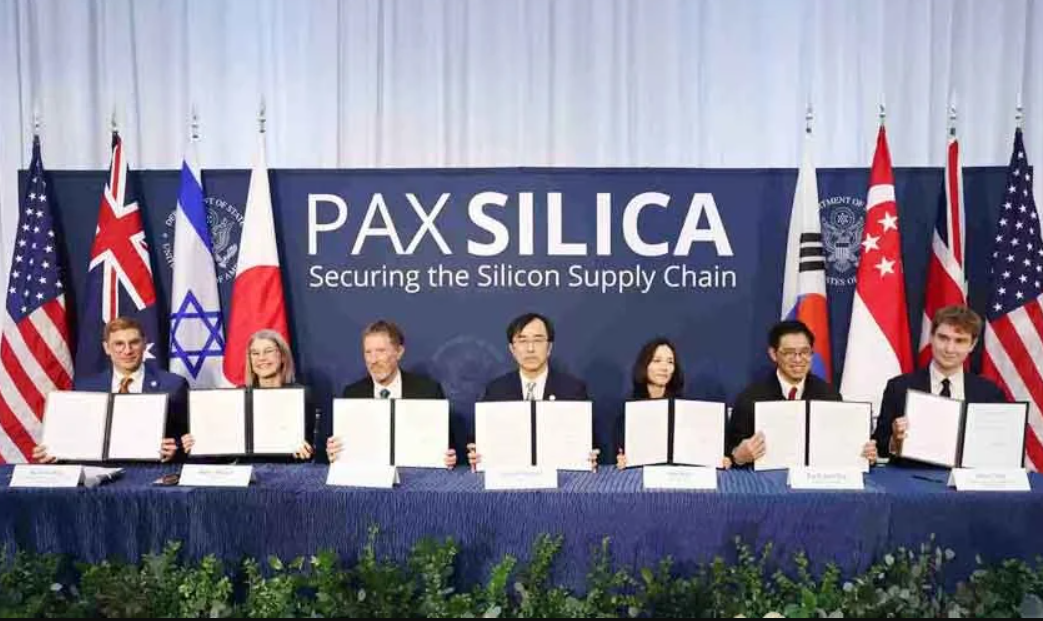
The Pax Silica initiative, announced by the US State Department, is focused on building a secure and resilient global ecosystem for silicon-based technologies. The alliance aims to strengthen supply chains critical to advanced manufacturing, semiconductors, artificial intelligence infrastructure and the minerals that support these industries. Despite ongoing trade and technology engagement between Washington and New Delhi, India was not invited to join the coalition.
According to US officials, Pax Silica is designed to support innovation-led and trusted supply networks while reducing reliance on Chinese-dominated chains. The initiative seeks to counter what it describes as coercive dependencies and ensure access to materials and capabilities vital for emerging technologies. Its scope spans the entire value chain, from energy and raw materials to logistics and high-end manufacturing.
The first Pax Silica summit is expected to bring together countries such as Japan, South Korea, Singapore, the Netherlands, the United Kingdom, Israel, the United Arab Emirates and Australia. These nations host some of the world’s most influential companies and investors in the artificial intelligence and semiconductor sectors. India’s absence from this core group has drawn attention across diplomatic and policy circles.
India’s opposition has been quick to seize on the development. Critics have described the exclusion as a major embarrassment for the Modi government, arguing that it signals declining global influence. Senior opposition figures have linked the setback to recent regional tensions, claiming that India’s diplomatic standing has weakened in the aftermath of military and strategic challenges earlier this year.
The criticism is sharpened by the contrast with recent India-US cooperation. In 2024, the two countries signed a memorandum of understanding on critical minerals supply chains, aiming to strengthen resilience through shared capabilities. Initiatives such as the bilateral framework on critical and emerging technologies were widely seen as indicators of deepening collaboration in clean energy and advanced technology.
However, analysts suggest that India’s exclusion from Pax Silica indicates that it may not yet be viewed as a full-spectrum partner in the most advanced segments of the global AI and semiconductor ecosystem. Concerns around manufacturing readiness, semiconductor capacity and high-end supply chain integration are being cited as possible factors.
So far, Indian officials have not issued an immediate response to the exclusion. The silence has further fueled political debate and raised questions about India’s foreign policy direction and its positioning in the rapidly evolving global technology order.