




Lebanon PM Set to Unveil Long-Awaited Banking Law Draft to Address Crisis Losses
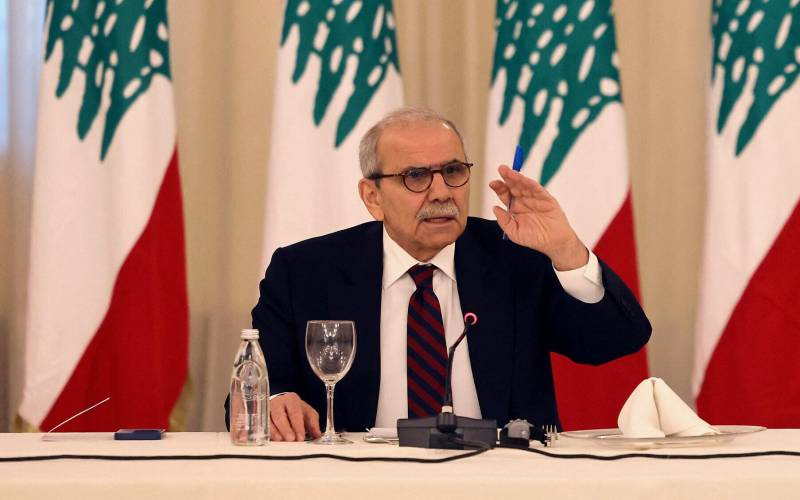
Lebanese Prime Minister Nawaf Salam is set to announce a long-awaited banking law draft that aims to address the massive financial losses stemming from the country’s 2019 economic collapse. The move marks a critical step in Lebanon’s stalled reform process and comes amid sustained pressure from the international community to overhaul the country’s troubled financial system.
According to a senior Lebanese official, the prime minister will address the nation before formally circulating the draft, widely referred to as the fiscal gap law, to cabinet ministers. Cabinet discussions are expected to begin shortly, potentially opening a long-delayed debate on how Lebanon plans to distribute the burden of one of the worst financial crises in its modern history.
The proposed legislation seeks to define how losses from the crisis will be shared among the Lebanese state, the central bank, commercial banks, and depositors. Government estimates place the losses at around $70 billion, though experts believe the figure has continued to rise as the crisis remained unresolved for more than six years.
For international lenders and donors, the fiscal gap law is seen as a cornerstone reform. Institutions such as the International Monetary Fund have consistently stressed that restoring confidence in Lebanon’s banking sector requires a transparent framework aligned with international standards. Central to these demands is the protection of small depositors, many of whom lost access to their savings when banks imposed informal capital controls.
The IMF has closely followed the drafting process, repeatedly urging Lebanese authorities to act decisively. Without meaningful reform, international financial assistance remains out of reach, leaving the economy trapped in prolonged stagnation.
However, the proposed law has already drawn criticism from within Lebanon’s banking sector. The Association of Banks in Lebanon has warned that the draft contains what it described as serious flaws and could further weaken commercial banks already struggling under the weight of the crisis. Bank representatives argue that the legislation unfairly shifts losses onto financial institutions without adequately addressing state responsibility.
Political hurdles also remain significant. While President Joseph Aoun and Prime Minister Nawaf Salam have both pledged to push through long-overdue reforms, similar efforts in the past have faced strong resistance. Lawmakers and influential financial stakeholders have repeatedly blocked or diluted reform bills, delaying international support and prolonging economic hardship for ordinary citizens.
In April, Lebanon’s parliament passed a bank restructuring law aimed at correcting earlier legal gaps that allegedly enabled capital flight at the onset of the crisis. Yet analysts note that restructuring alone is insufficient without a clear mechanism for loss allocation, making the fiscal gap law a decisive test of political will.
Even if the cabinet approves the draft, it could still face delays or rejection in parliament. For many Lebanese, the announcement represents a cautious moment of hope, signaling that long-promised reforms may finally be moving from rhetoric to action, though their ultimate fate remains uncertain.