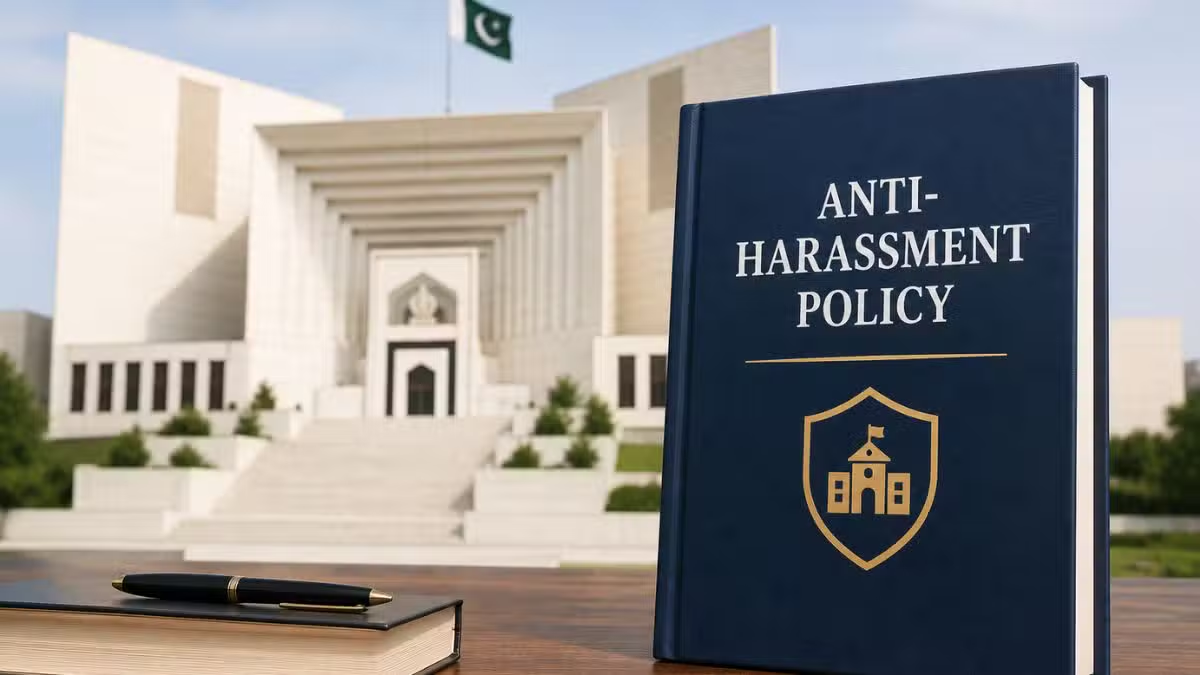
The Supreme Court of Pakistan has ordered all educational institutions in the country to adopt a comprehensive anti-harassment policy aimed at ensuring a safe and respectful working environment for teachers, administrative staff, and other employees.
In a detailed 12-page judgment, Justice Muhammad Ali Mazhar restored the original punishment of a male teacher who had been found guilty of harassing a female colleague. The court also overturned the decision of the Punjab Service Tribunal, which had earlier reduced the severity of the disciplinary action.
The ruling is being viewed as a significant step toward strengthening workplace protections within the education sector. The Supreme Court emphasized that educational institutions have a legal and moral responsibility to provide a harassment-free environment where employees can perform their duties without fear of intimidation, discrimination, or misconduct.
According to the judgment, institutions must establish clear procedures for reporting complaints, conducting impartial investigations, and taking appropriate disciplinary action when allegations are proven. The court stressed that anti-harassment policies should not remain merely symbolic documents but must be actively implemented and monitored.
Legal experts say the decision reinforces existing protections available under Pakistan’s workplace harassment laws and sends a strong message that misconduct within educational settings will not be tolerated. The judgment is expected to encourage schools, colleges, and universities to review their internal policies and ensure compliance with the court’s directives.
Education sector stakeholders have welcomed the ruling, noting that a safe workplace is essential for maintaining professionalism and promoting equal opportunities. Teachers’ associations and rights advocates argue that stronger enforcement mechanisms can help increase confidence among employees who may otherwise hesitate to report harassment.
The court’s decision also highlights the importance of institutional accountability. By restoring the original punishment, the Supreme Court underscored that disciplinary measures should reflect the seriousness of harassment offenses and that leniency in such cases can undermine workplace safety.
Observers believe the judgment could have a broader impact beyond educational institutions by encouraging public and private organizations to strengthen their own anti-harassment frameworks. As Pakistan continues efforts to improve workplace protections, the ruling is likely to serve as a key reference point for future cases involving harassment and employee rights.