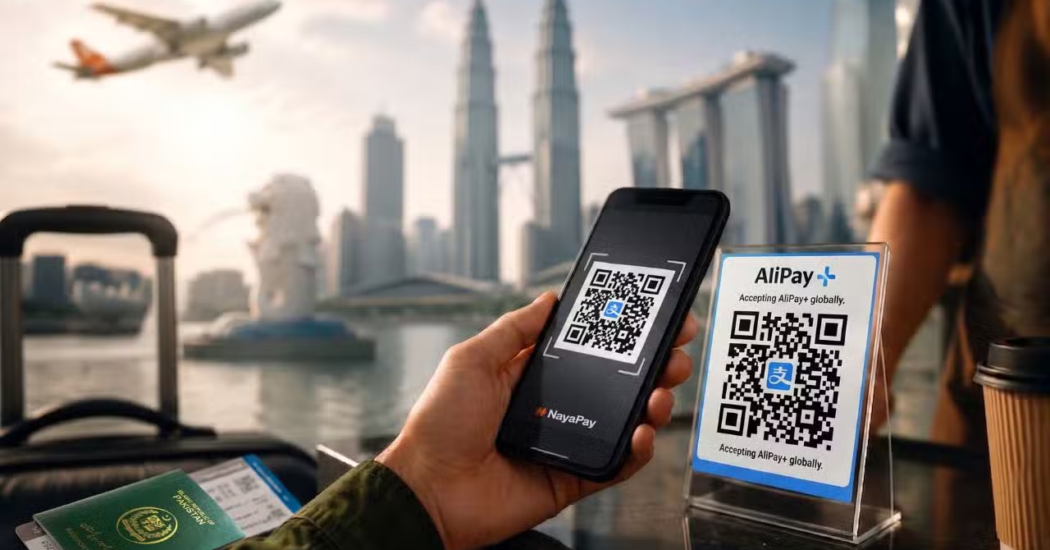
Pakistani Travelers Embrace QR Payments as Cash and Cards Take a Back Seat Abroad
International travel has long come with a familiar challenge for many Pakistanis: carrying large amounts of cash or relying on bank cards that often charge high foreign transaction fees and unfavorable exchange rates. Whether traveling for business, Umrah, education, or leisure, managing payments overseas has remained an inconvenient part of the journey.
That experience is beginning to change as QR code-based payment systems gain traction across international markets. A growing number of Pakistani travelers are now discovering that digital wallets can offer a faster, safer, and more affordable alternative to traditional payment methods.
One of the biggest developments driving this shift is the expansion of QR-first payment networks across Asia. Instead of depending on physical cards or exchanging currency before departure, travelers can simply scan a merchant’s QR code using a compatible digital wallet and complete the transaction within seconds.
This payment model has already become a standard in several Asian economies. Countries such as China, Malaysia, Thailand, Singapore, and the UAE have widely adopted QR-based payments, allowing both residents and visitors to make purchases without carrying cash.
For Pakistani travelers, the benefits are significant. International card acceptance has often been inconsistent, while foreign transaction fees and currency conversion charges can quickly increase travel expenses. QR-based payments eliminate many of these concerns by enabling direct wallet payments without requiring local currency or a foreign bank account.
Among Pakistan’s digital financial service providers, NayaPay has emerged as one of the first electronic money institutions (EMIs) to integrate with the Alipay+ payment network. This allows eligible users to pay overseas merchants by scanning QR codes directly through the NayaPay app using funds already available in their digital wallet.
The integration opens access to millions of merchants across multiple destinations that are popular with Pakistani travelers. Instead of searching for exchange counters or worrying about carrying multiple cards, users can complete payments using the same mobile application they already use at home.
This convenience reflects changing consumer behavior in Pakistan. Over the past several years, digital wallets, instant transfers, biometric verification, and QR merchant payments have become increasingly common in the country’s financial ecosystem. As more consumers grow comfortable with app-based transactions, extending that experience internationally feels like a natural next step.
The broader significance goes beyond travel convenience. Pakistan’s fintech sector has invested heavily in building modern digital payment infrastructure. Cross-border QR payment compatibility demonstrates that local financial technology is beginning to connect with international payment ecosystems rather than relying solely on traditional card networks.
Industry observers believe this could encourage additional banks and fintech companies to introduce similar services in the future. If more providers join global QR payment networks, Pakistani travelers may eventually view mobile wallets as their primary payment option abroad instead of international debit or credit cards.
The trend also aligns with the global movement toward contactless and mobile-first payments. Across many countries, QR payments have become the preferred method for retail purchases, restaurants, transportation, and tourism-related services due to their speed, security, and ease of use.
For travelers planning visits to destinations where QR payment infrastructure is already well established, digital wallets now present a practical alternative that reduces dependence on cash while helping simplify international spending.
As Pakistan continues its digital finance transformation, innovations like cross-border QR payments represent an important milestone. They not only improve convenience for millions of travelers but also position Pakistan’s growing fintech industry to play a larger role in the evolving global digital payments landscape.
