China’s CHEC Proposes $522 Million Plan for New Keti Bunder Deep-Water Port
China Harbour Engineering Company (CHEC) has proposed a preliminary engineering cost of $522.34 million for the first phase of a new deep-water port at Keti Bunder in Sindh. The proposed project is part of Pakistan’s broader efforts to strengthen its maritime infrastructure, logistics network and trade capacity.
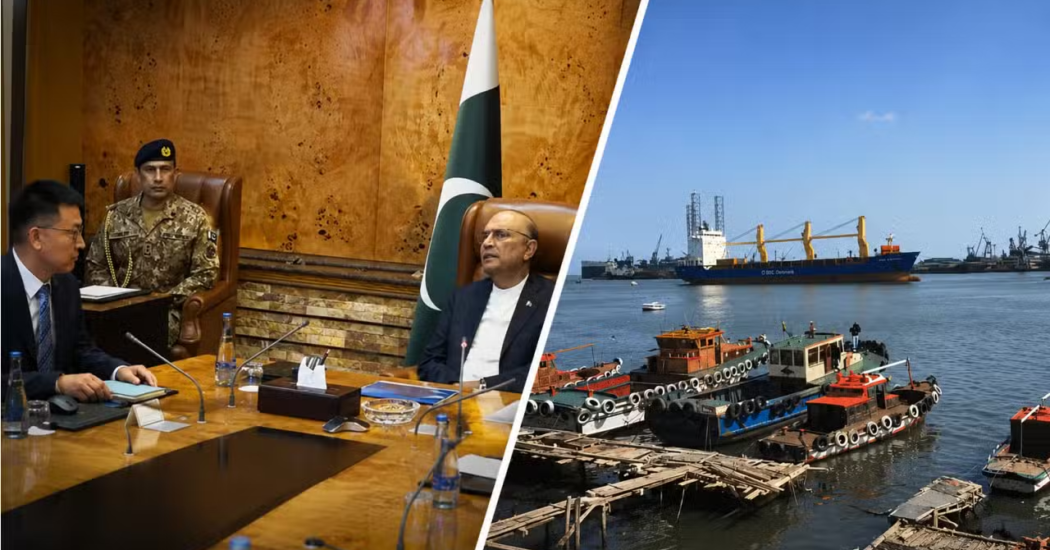
CHEC presented a Conceptual Master Plan for the proposed port to President Asif Ali Zardari during a meeting on Monday. The Chinese engineering company outlined a modern maritime gateway that could include multiple terminals, logistics facilities and other supporting infrastructure.
According to the presentation, the first phase of the Keti Bunder port would feature a multi-purpose terminal with a 500-meter quay. The facility is expected to support different types of maritime and commercial activities while improving connectivity between sea-based trade and inland logistics networks.
The proposed investment highlights the growing focus on developing Pakistan’s coastal infrastructure. A modern deep-water port at Keti Bunder could potentially create new opportunities for cargo handling, transportation, warehousing and related industries in the region.
Keti Bunder is located along the Sindh coast and has long been viewed as an area with potential for maritime development. A large-scale port project could help unlock that potential by introducing modern port facilities and improving the movement of goods through the coastal region.
The proposed $522.34 million engineering cost relates to the preliminary first phase of the project. Further planning, technical assessments, financing arrangements and approvals would be required before construction and full implementation can move forward.
The development could also have wider implications for Pakistan’s logistics sector. Modern port infrastructure can improve cargo-handling capacity, reduce pressure on existing facilities and provide businesses with additional routes for moving goods to domestic and international markets.
For Pakistan, expanding maritime infrastructure is particularly important because the country relies heavily on sea routes for international trade. Additional port capacity could support future growth in imports and exports while strengthening the country’s position as a regional logistics hub.
The involvement of CHEC also reflects the continuing role of Chinese engineering companies in Pakistan’s infrastructure development. The company has been involved in major maritime and infrastructure projects in the country, bringing experience in port construction, engineering and logistics-related development.
If the Keti Bunder proposal advances, the project could become an important component of Sindh’s long-term economic and maritime development plans. It may also generate demand for supporting services, including transportation, logistics, construction, warehousing and other port-related businesses.
The proposed deep-water port is therefore being viewed not only as a transport project but also as a potential driver of regional economic activity. Its eventual impact will depend on detailed feasibility studies, investment decisions, infrastructure connectivity and the successful completion of subsequent development phases.
For now, CHEC’s $522.34 million preliminary proposal marks an important step toward evaluating the potential of Keti Bunder as a new maritime gateway for Pakistan.
