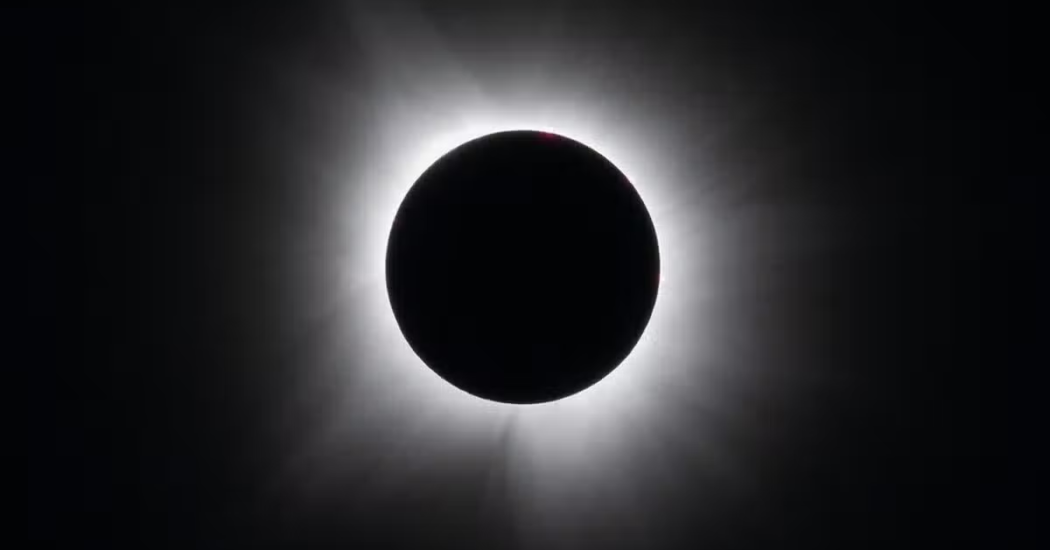
A rare total solar eclipse is set to captivate millions of skywatchers around the world on August 12, 2026, marking the first total solar eclipse of the year. The highly anticipated astronomical event will offer a spectacular view as the Moon completely passes in front of the Sun, temporarily turning day into twilight for those located within the path of totality.
The eclipse is expected to attract astronomers, photographers, travelers, and science enthusiasts eager to witness one of nature’s most extraordinary phenomena. While people outside the path of totality may still experience a partial solar eclipse, only those within the Moon’s central shadow will be able to enjoy the full spectacle.
According to the confirmed eclipse path, the Moon’s shadow will travel across Greenland, Iceland, northern Russia, the Atlantic Ocean, Spain, and a small section of Portugal. These locations will have the opportunity to witness totality, where the Sun is completely obscured for a brief period.
Spain is expected to become one of the most popular viewing destinations due to its accessibility and favorable weather conditions during August. Experts anticipate an increase in tourism as visitors from across Europe and other regions travel to experience the celestial event firsthand.
Astronomers advise people planning to observe the eclipse to prepare in advance by selecting safe viewing locations and using certified solar viewing glasses during all partial phases of the eclipse. Looking directly at the Sun without proper eye protection can cause permanent eye damage, even during an eclipse.
During the brief period of totality, however, observers within the eclipse’s central path can safely view the Sun’s outer atmosphere, known as the corona, without eclipse glasses. This dazzling halo of light is only visible during a total solar eclipse and is considered one of astronomy’s most breathtaking sights.
The exact viewing time will vary depending on the observer’s location along the eclipse path. Local astronomical organizations and observatories are expected to publish detailed schedules closer to the event, allowing residents and visitors to plan their observations with precision.
Total solar eclipses occur because the apparent sizes of the Sun and Moon align almost perfectly as viewed from Earth. Although solar eclipses happen somewhere on Earth every year or two, a total eclipse at any specific location is exceptionally rare, often occurring only once in several centuries.
Scientists also use these events to study the Sun’s corona, solar activity, and atmospheric conditions. Beyond their scientific importance, total solar eclipses continue to inspire public interest in astronomy and space science around the world.
With the countdown underway, the August 12, 2026 total solar eclipse is expected to become one of the year’s most remarkable astronomical events, offering an unforgettable experience for those fortunate enough to stand beneath the Moon’s shadow.