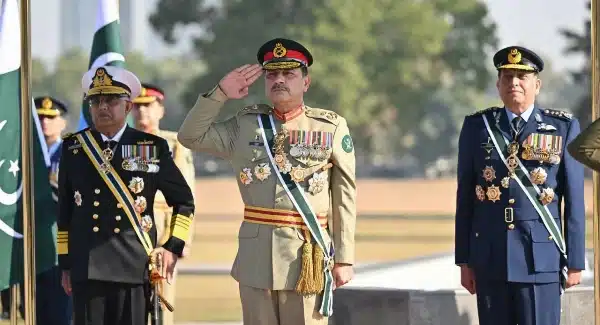
The federal cabinet has approved the draft Defense Forces Act 2026, formally establishing the legal and administrative framework for the newly created position of Chief of Defense Forces. The decision marks another major legislative development following the 27th Constitutional Amendment.
The cabinet meeting was held in Islamabad under the chairmanship of Prime Minister Shehbaz Sharif. According to the Prime Minister’s Office, the proposed legislation is designed to provide the necessary administrative structure for the Chief of Defense Forces and the newly established Chief of Defense Forces Headquarters.
The approval is part of broader institutional changes introduced through the 27th Constitutional Amendment. The government has moved to translate those constitutional changes into a detailed legal framework governing the new defense command structure.
The Defense Forces Act 2026 is expected to define the administrative arrangements, responsibilities and organizational structure associated with the Chief of Defense Forces. It will also establish the framework for the headquarters of the new position.
Alongside the Defense Forces Act 2026, the federal cabinet also approved amendments to the National Command Authority Act 2010. These amendments are intended to bring the existing legal framework in line with the constitutional and institutional changes introduced by the government.
The development is significant because the creation of a new senior defense position requires clear legislation to define its role within Pakistan’s national security and defense structure. The new law is therefore expected to provide greater clarity over administrative responsibilities and institutional coordination.
The Prime Minister’s Office described the proposed legislation as a continuation of the reforms introduced through the 27th Constitutional Amendment. The move indicates that the government is progressing from constitutional changes toward detailed legislation required for their implementation.
The cabinet’s approval of the draft does not itself represent the final completion of the legislative process. The proposed laws and amendments will still have to proceed through the relevant parliamentary procedures before becoming fully enforceable legislation.
The establishment of the Chief of Defense Forces position could have a broader impact on the organization of Pakistan’s defense institutions. Its precise powers, responsibilities and relationship with other military and national security institutions will depend on the final wording of the legislation.
For now, the cabinet decision represents an important step toward formally recognizing the new position through law. Further details are expected to emerge as the Defense Forces Act 2026 and amendments to the National Command Authority Act move through the legislative process.