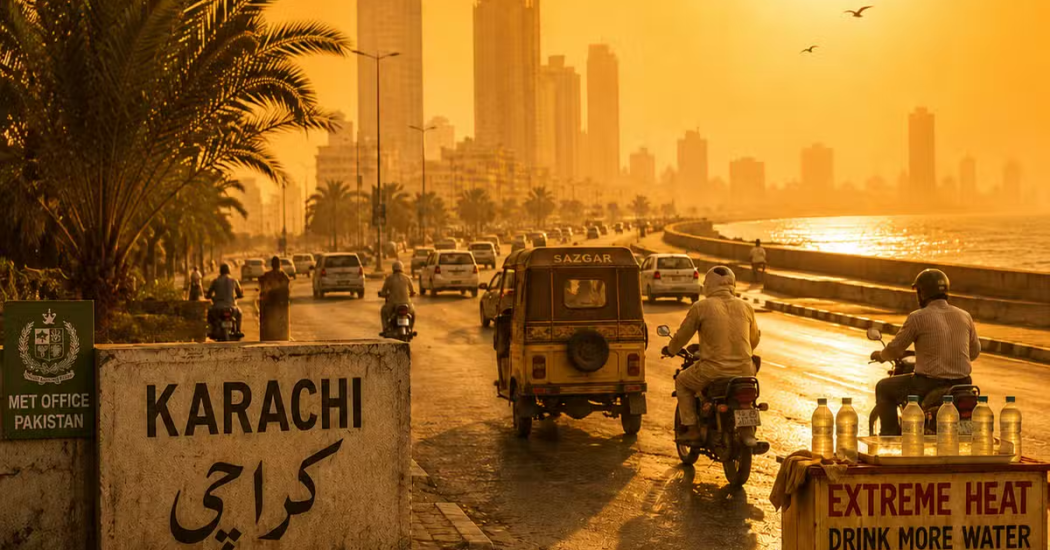
Karachi Feels Like 48°C as Humidity Intensifies Heatwave Conditions
Residents of Karachi continued to endure intense heat and humidity as weather conditions pushed the city’s perceived temperature to dangerous levels. Although the actual maximum temperature remained below 37°C, high moisture levels in the air made conditions feel significantly hotter, creating discomfort for millions across the metropolis.
According to the Pakistan Meteorological Department (PMD), Karachi recorded a maximum temperature of 36.5°C on Tuesday. However, relative humidity levels remained elevated at around 62 percent, causing the heat index, commonly known as the “feels-like” temperature, to climb to approximately 48°C.
Meteorologists explain that humidity plays a crucial role in determining how hot weather feels to the human body. When humidity is high, sweat evaporates more slowly, reducing the body’s natural cooling process and making temperatures feel considerably warmer than the actual reading.
The combination of heat and humidity has increased discomfort across Karachi, particularly during afternoon hours when temperatures peak. Residents reported challenging outdoor conditions, while health experts advised people to remain cautious and avoid prolonged exposure to direct sunlight.
High heat index values can pose health risks, especially for children, elderly individuals, and people with pre-existing medical conditions. Medical professionals recommend staying hydrated, wearing light clothing, limiting outdoor activities during peak heat hours, and seeking shaded or air-conditioned environments whenever possible.
Karachi frequently experiences humid weather due to its coastal location along the Arabian Sea. During the summer season, sea breezes can provide some relief, but elevated humidity levels often make temperatures feel much higher than official readings.
Weather experts note that the heat index is an important indicator because it reflects the combined effect of temperature and humidity on the human body. Even when temperatures appear moderate compared to other regions of the country, high humidity can significantly increase the risk of heat-related illnesses.
The ongoing weather conditions have also placed additional pressure on electricity consumption as households and businesses increase their use of cooling appliances. Energy demand typically rises during periods of extreme heat, particularly in densely populated urban centers such as Karachi.
The Pakistan Meteorological Department continues to monitor weather patterns and advise the public to take necessary precautions. Citizens are encouraged to stay informed through official weather updates and follow safety guidelines to minimize the impact of prolonged heat exposure.
As summer temperatures continue to affect large parts of the country, Karachi residents are being urged to prioritize hydration, avoid unnecessary outdoor activities during peak hours, and remain vigilant against heat-related health concerns.
