Deputy PM Ishaq Dar Meets D-8 Secretary General-Designate Sohail Mahmood

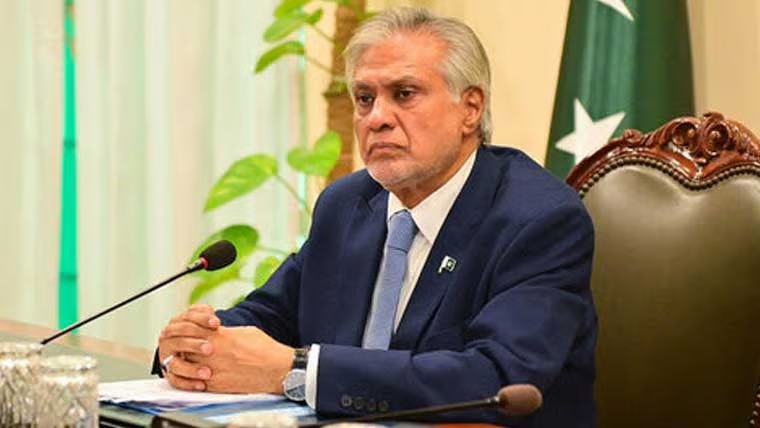
Deputy Prime Minister and Foreign Minister Ishaq Dar met with Sohail Mahmood, the Secretary General-designate of the D-8 organization, to discuss future plans and the strategic direction of the group. The meeting was confirmed by the Foreign Office, with spokesperson Tahir Hussain Andrabi highlighting the importance of the discussion.

Sohail Mahmood briefed the Deputy Prime Minister on his upcoming responsibilities at the D-8 Secretariat and reaffirmed his commitment to advancing the organization’s objectives in alignment with the vision of the D-8 leadership. Mahmood, a former Foreign Secretary of Pakistan and former Director General of the Institute of Strategic Studies Islamabad (ISSI), brings extensive diplomatic experience to the role.

Deputy PM Ishaq Dar congratulated Mahmood on his appointment and expressed best wishes for his tenure. He described D-8 as “very effective and viable” and emphasized that Mahmood’s leadership could revitalize the organization, strengthening both bilateral and multilateral relations among member countries.

The D-8, formally known as the Developing Eight, is a group of eight developing Muslim-majority countries aiming to enhance economic cooperation, trade, and development. Mahmood’s appointment is expected to further boost collaboration in trade, infrastructure, and diplomatic engagements within the organization.

Officials noted that the meeting also highlighted Pakistan’s commitment to supporting the D-8’s initiatives and promoting regional economic stability through active participation.

New Zealand First to Welcome 2026 with Spectacular Fireworks in Auckland

The world officially stepped into 2026 as New Zealand became the first country to welcome the New Year, with a dazzling fireworks display lighting up the skies over Auckland despite rainy weather.

As the clock struck midnight, thousands of people gathered in Auckland’s city centre to witness a vibrant fireworks show launched from the iconic Sky Tower, New Zealand’s tallest structure. The colourful celebration marked the first major New Year event globally, setting the tone for festivities around the world.

Sky Tower hosts five-minute fireworks display

The five-minute display featured approximately 3,500 fireworks, fired from multiple levels of the 240-metre (787-foot) Sky Tower. Showers of colour and light cascaded across the skyline as crowds braved steady rain to take part in the historic moment.

With a population of nearly 1.7 million, Auckland welcomed 2026 18 hours ahead of New York’s Times Square ball drop, once again highlighting New Zealand’s position at the forefront of global New Year celebrations. Several South Pacific nations also bid farewell to 2025 shortly after.

Weather disrupts regional celebrations

While the main Auckland event went ahead as planned, authorities cancelled several smaller community celebrations across the North Island. Officials cited forecasts of heavy rain and potential thunderstorms as the reason for precautionary cancellations.

Sydney prepares for New Year amid remembrance

Across the Tasman Sea, Sydney was set to welcome 2026 two hours after New Zealand, with a major fireworks display planned over Sydney Harbour. The celebrations were scheduled to begin at 6pm Pakistan time.

Ahead of the fireworks, the Sydney Harbour Bridge was to be illuminated in remembrance of victims of the Bondi Beach attack. The tragic incident on December 14, described as Australia’s worst mass shooting in nearly three decades, claimed 15 lives and left 40 people injured after gunmen targeted a Hanukkah gathering.

A resilient start to 2026

Despite weather challenges and moments of reflection across the region, the celebrations symbolised resilience and unity. As fireworks lit up Auckland’s skyline, the world’s journey into 2026 officially began, with millions more preparing to welcome the New Year in the hours that followed.

NCCIA Probes 2,146 Cybercrime Cases, Recovers Rs461 Million in 2025

Pakistan’s National Cyber Crime Investigation Agency (NCCIA) has released its annual performance report for 2025, revealing significant progress in tackling cybercrime, online fraud, and digital financial scams across the country.

According to the report, the NCCIA examined 2,146 cases during the year involving cybercrime, online fraud, data theft, identity misuse, and other serious digital offences.

Cyber Financial Crimes Down by 36%

In a major development, the agency reported a 36 per cent decline in cyber financial crimes in 2025, reflecting improved enforcement, monitoring, and public awareness.

As part of investigations, authorities recovered Rs461 million from suspects involved in cyber fraud and financial scams, providing partial relief to victims affected by digital crime.

Over 46,000 Accounts and Wallets Frozen

To disrupt illegal financial networks, the NCCIA froze 46,056 bank accounts and digital wallets linked to fraudulent activities during the year. Officials said the measure helped prevent further losses and assisted in tracing money trails connected to organised cybercrime.

Operation Brown Targets Online Child Exploitation

The report also highlighted Operation Brown, a focused nationwide crackdown against online child exploitation.

  • 35 cases registered
  • Multiple suspects arrested and taken into custody
  • Digital evidence seized to support ongoing prosecutions

The NCCIA termed the operation a “critical step” toward protecting children in digital spaces.

Capacity Building and Public Awareness

To strengthen institutional capacity, over 300 law enforcement officers received specialised training in cyber investigation and digital forensics.

Meanwhile, NCCIA-led awareness campaigns on online safety and financial fraud reached more than two million people nationwide, aiming to educate citizens on avoiding scams and reporting cyber offences.

Strengthening Pakistan’s Cyber Security Framework

Officials said the results demonstrate growing effectiveness in Pakistan’s cybercrime response framework, while stressing the need for continued vigilance as digital transactions and online activity continue to expand.

Fans worried? BCCI confirms Gambhir’s future

The Board of Control for Cricket in India has put an end to growing speculation around Gautam Gambhir’s future as India’s Test coach, firmly backing him despite recent disappointing results at home. The clarification comes after reports suggested that former Indian batter VVS Laxman was being considered as a possible replacement, sparking debate among fans and experts alike.

BCCI Vice-President Rajeev Shukla categorically denied any plans to change the coaching setup, stating that the board continues to have full confidence in Gambhir. He stressed that there have been no discussions at any level regarding the appointment of a new Test coach, dismissing the rumours as unfounded and misleading.

The speculation gained momentum following India’s recent struggles in Test cricket. The team suffered a 0-2 whitewash at home against South Africa, followed by a disappointing 0-3 defeat to New Zealand. These losses have dented India’s prospects in the ICC World Test Championship and raised questions about the direction of the team under Gambhir’s leadership.

BCCI Secretary Devajit Saikia also addressed the reports, echoing Shukla’s stance and calling the claims about VVS Laxman being approached completely baseless. He emphasised that the board believes knee-jerk reactions and frequent changes in leadership rarely deliver long-term success, particularly during periods of transition.

Since taking over as head coach, Gautam Gambhir has pushed for a culture built on discipline, mental toughness, and fearless cricket. The BCCI acknowledges that such an approach requires time to take root, especially as the team navigates generational changes and experiments with combinations across formats.

The board also pointed out that India is currently in a crucial phase, with preparations underway to defend its T20 World Cup title starting February 7. With senior players like Rohit Sharma and Virat Kohli not part of the squad, a relatively young team led by Suryakumar Yadav will be under intense scrutiny. In such circumstances, stability in the coaching staff is seen as vital.

BCCI officials believe that changing the head coach mid-cycle could disrupt planning, confuse messaging in the dressing room, and negatively impact player confidence. Continuity, they argue, offers a better chance for the team to regroup, learn from recent setbacks, and improve performances across formats.

While fans remain divided on social media, with some demanding accountability and others urging patience, the BCCI has drawn a clear line. The board has chosen to stand firm behind Gambhir, prioritising long-term vision over short-term pressure. For now, Gautam Gambhir’s position remains secure as India looks ahead to major international challenges.


Bangladesh’s two-time PM Khaleda Zia passes away at 80

Bangladesh’s first female prime minister and veteran opposition leader Begum Khaleda Zia passed away early Tuesday morning at Evercare Hospital in Dhaka after a prolonged illness. She was 80 years old. Khaleda Zia, the chairperson of the Bangladesh Nationalist Party (BNP), had been admitted to the hospital on November 23 with a lung infection and was suffering from advanced liver cirrhosis, chronic heart complications, diabetes, and arthritis.

Her family and senior BNP leaders, including her eldest son Tariq Rahman and party secretary Mirza Fakhrul Islam Alamgir, were present during her final moments. The medical board overseeing her treatment also attended her bedside.

Born on August 15, 1946, in Dinajpur, Khaleda Zia entered politics following the assassination of her husband, former president and BNP founder Ziaur Rahman, in 1981. Initially considered politically inexperienced, she quickly rose to prominence, playing a key role in ending the military rule of Hussain Muhammad Ershad in 1990. In 1991, she became Bangladesh’s first female prime minister after the country’s first widely recognised free election. She was also the second woman to lead a democratic government in a Muslim-majority country, following Pakistan’s Benazir Bhutto.

During her tenure, Khaleda Zia restored the parliamentary system, promoted foreign investment, and implemented policies making primary education free and compulsory. Her political career was marked by a long-standing rivalry with Awami League leader Sheikh Hasina, known as the era of the “Battling Begums,” which saw alternating periods of power, street protests, election boycotts, and military-backed emergency rule.

Khaleda Zia faced legal and health challenges in her later years. In 2018, she was jailed on corruption charges linked to an orphanage trust, which she denied, describing them as politically motivated. Declining health and travel restrictions further limited her ability to seek medical treatment abroad. BNP officials have yet to announce funeral prayers and burial arrangements.

Prime Minister Shehbaz Sharif expressed deep sorrow over Khaleda Zia’s passing, acknowledging her significant role in shaping Bangladesh’s political landscape and her contributions to the country’s development. He also highlighted her friendship with Pakistan and offered condolences to her family and the people of Bangladesh, praying for her soul.

President Asif Ali Zardari also mourned her death, praising her decades-long political service and resilience, while extending sympathies to her family and the people of Bangladesh.

Khaleda Zia’s passing marks the end of a defining chapter in Bangladesh’s political history, with a legacy of leadership, resilience, and commitment to public service that will be remembered across South Asia.


IMF makes new demands from Pakistan under $7bn loan program

The International Monetary Fund has reportedly placed fresh demands on Pakistan under the ongoing $7 billion loan program, with potential implications for the country’s emerging electric and hybrid vehicle industry. According to sources, the new conditions focus on ending long-standing sales tax exemptions that were introduced to promote cleaner and locally manufactured transportation.

Sources familiar with the discussions say the IMF has asked Pakistan to abolish sales tax exemptions on locally manufactured electric vehicles and electric bikes. Under the proposal, these products would be brought under the standard 18 percent General Sales Tax from the fiscal year 2026–27. If implemented, this would mark a major shift in government policy aimed at encouraging electric mobility.

The IMF has also turned its attention to hybrid electric vehicles manufactured locally. At present, these vehicles benefit from special tax relief measures designed to support the adoption of fuel-efficient and environmentally friendly technology. The lender, however, has urged Pakistan to phase out these incentives as part of broader tax reforms.

Currently, locally manufactured hybrid electric vehicles remain fully exempt from sales tax until June 30, 2026. After that deadline, a reduced tax structure applies, with an 8.5 percent sales tax on vehicles up to 1,800cc and 12.75 percent on vehicles up to 2,500cc. The IMF now wants these concessions removed altogether and replaced with the normal tax regime.

According to sources, these demands were raised during talks with the Ministry of Industries and Production. The IMF has reportedly called for the removal of sales tax exemptions listed under the Eighth Schedule of the Sales Tax Act, which currently shields locally manufactured electric and hybrid vehicles, as well as electric bikes, from standard taxation.

By shifting these products into the normal tax framework, the IMF aims to broaden Pakistan’s tax base and reduce distortions created by exemptions. However, industry experts warn that such a move could have far-reaching consequences for pricing, affordability, and consumer demand in the electric vehicle market.

If the government accepts the IMF’s proposal, the tax exemption on locally manufactured electric vehicles, hybrid vehicles, and electric bikes would effectively end from the next fiscal year. This could lead to higher retail prices, potentially slowing down Pakistan’s transition towards cleaner transportation at a time when global markets are pushing aggressively for electrification.

The development highlights the difficult balance Pakistan faces between meeting IMF conditions for financial stability and sustaining growth in emerging industries. While the government has yet to officially confirm these changes, the proposed measures signal that further tough fiscal decisions may be on the horizon as Pakistan works to comply with the requirements of the $7 billion IMF program.


Pakistan’s GDP Grows 3.71% in First Quarter of FY26: Ahsan Iqbal

Pakistan’s economy has shown a strong and encouraging start to the fiscal year 2025–26, recording a 3.71 percent growth in GDP during the first quarter, according to data shared by Federal Minister for Planning, Development and Special Initiatives Ahsan Iqbal. The development on Tuesday and has been termed a significant shift in the country’s economic direction.

Taking to social media platform X, Ahsan Iqbal highlighted that the first-quarter growth of FY26 is 2.15 percentage points higher than the growth recorded in the same quarter of the previous fiscal year. He described this improvement as a qualitative change in Pakistan’s economic trajectory, indicating a move towards stability and sustained recovery.

During FY25, Pakistan’s quarterly GDP growth remained uneven. The economy expanded by 1.56 percent in Q1, followed by 2.03 percent in Q2, 2.66 percent in Q3, and a sharper rise of 6.17 percent in Q4. In contrast, FY26 has begun with growth that is more than double compared to the corresponding quarter of last year, reflecting a stronger and more balanced economic momentum.

Ahsan Iqbal noted that the current economic improvement is being driven primarily by the industrial sector. Industrial output expanded by an impressive 9.38 percent in the first quarter of FY26, a sharp turnaround from the meagre 0.12 percent growth recorded during the same period last year. This surge points towards improved manufacturing activity, better capacity utilisation, and the impact of policy measures aimed at reviving industrial production.

The planning minister also acknowledged that the economic rebound has occurred despite several major challenges. These include the flood shock of 2025, fiscal tightening under stabilisation measures, the withdrawal of energy subsidies, and persistent food inflation, all of which had put pressure on economic activity and household incomes.

According to Ahsan Iqbal, the latest GDP figures demonstrate growing resilience in Pakistan’s economy. He said the performance reflects the effectiveness of policy adjustments introduced to stabilise the macroeconomic environment and lay the groundwork for long-term recovery.

Economists believe that sustained industrial growth, combined with improved investment sentiment and structural reforms, could help Pakistan maintain this upward trend in the coming quarters. However, they also stress the need for continued focus on inflation control, export growth, and social protection to ensure that economic gains translate into broader public welfare.


Ishaq Dar Meets Sadiq Sanjrani, Pledges Support for Balochistan Development

Deputy Prime Minister and Foreign Minister Ishaq Dar met with former Senate Chairman Sadiq Sanjrani on Monday to discuss ongoing development initiatives in Balochistan, according to a spokesperson from the Deputy Prime Minister’s Office.

During the meeting, Sanjrani briefed Dar on various projects and efforts aimed at boosting infrastructure, welfare, and public services in the province. He also expressed appreciation for the government’s commitment to supporting Balochistan’s development.

In response, Ishaq Dar assured full backing for initiatives focused on public welfare and sustainable growth, reaffirming the government’s determination to continue promoting progress and prosperity in Balochistan.


PM Shehbaz Sharif to Attend World Economic Forum in Switzerland

Prime Minister Shehbaz Sharif is set to undertake his first official foreign visit of 2026 to Switzerland. According to 24NewsHD TV, the prime minister will attend the 56th meeting of the World Economic Forum (WEF) in Davos from January 19 to January 26.

A high-level delegation will accompany PM Shehbaz during the visit. Diplomatic sources have indicated that he will hold bilateral talks with world leaders on the sidelines of the forum, focusing on strengthening international cooperation, economic development, and investment opportunities for Pakistan.

The WEF gathering in Davos is expected to bring together political leaders, business executives, and policymakers from around the globe to discuss pressing economic, social, and environmental issues, offering Pakistan an opportunity to highlight its policy initiatives and growth prospects.


US Eyes Pakistan to Replace China in Critical Missile Mineral Supply

Pakistan is attracting attention from the United States as a potential alternative source for the critical mineral antimony, used in missiles, batteries, and flame retardants, according to the Financial Times. The move is part of Washington’s broader strategy to reduce reliance on China-dominated supply chains for strategic materials.

Antimony trioxide prices have surged to approximately $40,000 per ton, up sharply from around $26,000 in September 2024. This price spike reflects growing global demand and the increasing urgency for Western governments and defense-linked companies to secure alternative sources outside of China.

Pakistan, along with neighboring regions, has emerged as a viable supplier capable of meeting these strategic needs. Analysts note that tapping into Pakistan’s mineral reserves could help the US diversify its supply chains while supporting local industry and production in the region.

The development underscores the growing geopolitical importance of Pakistan in global supply chains for critical minerals, especially as nations look to reduce dependence on China for defense and technology-related resources.


ICC Declares MCG Pitch Unsatisfactory After Two-Day Ashes Test Finish

The International Cricket Council has officially rated the Melbourne Cricket Ground pitch as “unsatisfactory” following the abrupt conclusion of the fourth Ashes Test, which ended inside just two days. The assessment has reignited debate around pitch preparation, competitive balance, and the commercial impact of shortened Test matches.

Under the ICC’s four-tier pitch rating system, an “unsatisfactory” grade is the second lowest possible outcome. It is used when conditions are deemed excessively favourable to either batting or bowling. In this case, the governing body concluded that the surface offered bowlers a disproportionate advantage.

Match referee Jeff Crowe confirmed the decision, pointing to the extraordinary number of wickets that fell during the match. A total of 20 wickets tumbled on the opening day, followed by 16 more on day two. Across four innings, not a single batter managed to reach a half-century, underlining how difficult conditions were for scoring runs.

The rating brought an end to the MCG’s recent run of strong evaluations, with the iconic venue having earned “very good” ratings for the previous three Boxing Day Tests. As per ICC regulations, the ground has also received one demerit point as a result of the ruling.

England secured a four-wicket victory in the final session of day two, sealing the match in a contest dominated almost entirely by seam bowling. While the Perth Test earlier in the series also finished inside two days, that surface was judged far more balanced and retained a “very good” rating.

The MCG wicket was prepared with around 10 millimetres of grass, a decision that produced significant movement and bounce for fast bowlers. While such conditions are not uncommon in Australia, the extent of assistance made batting a major challenge throughout the match.

The financial consequences have been substantial. Cricket Australia is reportedly facing an estimated revenue shortfall of around AUD 10 million due to ticket refunds for days three and four. Officials acknowledged the disappointment felt by fans both at the ground and watching globally.

Cricket Australia’s chief of cricket, James Allsopp, said the pitch failed to deliver the traditional balance expected at the MCG. However, he also praised the ground staff’s long-term record of producing high-quality Test wickets.

Australia coach Andrew McDonald publicly defended curator Matt Page, arguing that occasional poor Tests are part of the game. He stressed that players, particularly batters, must also take responsibility for performances and warned against administrative interference in pitch preparation.

Cricket Australia will conduct its own end-of-season review, with chief executive Todd Greenberg previously stating that shorter Tests are “bad for business.” Despite this, McDonald maintained that Australia should avoid moving towards tailor-made surfaces, preserving the independence of curators.

Australia currently lead the Ashes series 3-1, with the final Test set to begin in Sydney on Sunday.

Pakistan Raises Alarm Over Persecution of Minorities in India, Urges Global Action

Pakistan has expressed serious concern over what it describes as the continued persecution of religious minorities in India, calling on the international community to take notice and play its role in protecting the fundamental rights of vulnerable communities. The issue was raised in the context of recent incidents involving vandalism during Christmas celebrations and violence against Muslims across different parts of India.

The concerns were articulated by the spokesperson of Pakistan’s Ministry of Foreign Affairs, Tahir Andrabi, while responding to media queries on Monday. He stated that the persecution of minorities in India remains a matter of deep and ongoing concern, particularly in light of repeated reports of targeted violence and discrimination.

According to the Foreign Office, recent incidents of vandalism at Christian sites during Christmas have added to fears among minority communities. These acts, Pakistan says, reflect a broader pattern of intolerance that has increasingly affected religious groups in India, undermining their sense of security and social inclusion.

The spokesperson also highlighted what he described as state-sponsored campaigns targeting Muslims. These include the demolition of Muslim homes, incidents of mob lynching, and a climate of fear that has grown steadily over recent years. He referred specifically to the case of Muhammad Akhlaq, noting that the handling of the case reinforced perceptions that perpetrators of such violence are often shielded from accountability.

Tahir Andrabi said that such incidents have contributed to deepening alienation among Muslims in India, stressing that the list of victims of communal violence is long and troubling. He added that these developments are not isolated events but part of a broader pattern that warrants international attention.

Pakistan urged global human rights organizations, international bodies, and influential states to closely monitor the situation. The Foreign Office emphasized that silence or inaction could further embolden extremist elements and worsen conditions for minorities living under growing pressure.

Islamabad reiterated that the protection of minority rights is a core obligation under international human rights law. It called on India to uphold its constitutional commitments and international obligations by ensuring equal protection, justice, and dignity for all citizens, regardless of religion or belief.

The Foreign Office spokesperson concluded by urging the international community to take appropriate and practical steps to safeguard the fundamental rights of minorities in India. Pakistan maintains that sustained international engagement is essential to prevent further violations and to promote tolerance, coexistence, and respect for human rights in the region.


Pakistan’s Top Diplomatic Wins of 2025: Strategic Strength and Global Recognition

2025 emerged as a defining year for Pakistan’s foreign policy, marking a resurgence of international trust and a reassertion of the country’s strategic relevance. From high-profile military engagements to strengthened bilateral partnerships, Pakistan demonstrated its ability to navigate complex regional and global dynamics effectively.

One of the most significant events occurred in May, when Pakistan and India engaged in four days of intense military clashes. Pakistani forces reportedly shot down multiple Indian aircraft, showcasing the nation’s operational capabilities despite economic and internal security pressures. This episode significantly bolstered Pakistan’s strategic credibility on the global stage, drawing attention to its defense and deterrence capacity.

Following these developments, Pakistan’s relations with the United States witnessed a notable reset. Under President Donald Trump, Washington acknowledged Pakistan’s constructive role in averting regional escalation. Field Marshal Asim Munir undertook high-profile visits to the US, including meetings with President Trump, focusing on regional stability, counterterrorism, and Gaza-related discussions. Trump’s public praise further emphasized Pakistan’s growing relevance in South Asian geopolitics.

In the Middle East, Pakistan’s strategic footprint expanded through strengthened ties with Saudi Arabia. A mutual defense pact signed in September enhanced cooperation across multiple security domains. Meanwhile, Pakistan secured a $4 billion arms deal with Libya and advanced counterterrorism coordination with Turkey, reflecting a pragmatic and economically driven foreign policy approach.

China also recognized Pakistan’s defense capabilities during the conflict with India, reinforcing cooperation under the China-Pakistan Economic Corridor (CPEC) framework. The success validated China’s defense systems and accelerated progress toward CPEC Phase II, consolidating Pakistan’s strategic significance to Beijing.

Pakistan also played a constructive role in Gaza, advocating for a ceasefire and supporting post-conflict recovery efforts without participating in the disarmament of Hamas. These efforts highlighted Pakistan’s commitment to principled diplomacy and international peacekeeping.

Regionally, Pakistan achieved breakthroughs with Bangladesh, breaking longstanding stagnation in bilateral ties. Discussions during a 36-hour visit reflected goodwill and laid the foundation for full engagement with Dhaka’s new government. Relations with Sri Lanka and Nepal also improved, indicating a balanced and active regional diplomacy approach.

Finance Minister Ishaq Dar emphasized that Pakistan’s foreign policy prestige increased worldwide in 2025. He credited the country’s strategic performance, defense achievements, and diplomatic engagements for earning broad international recognition, reinforcing Pakistan’s position as a credible and proactive player on the global stage.

Cricket Australia Warns Short Tests Hurt Business After MCG Wickets Frenzy

Cricket Australia chief Todd Greenberg has called short Test matches “bad for business” following the dramatic first day of the fourth Ashes Test at the Melbourne Cricket Ground. Over 94,000 spectators witnessed 20 wickets tumble on Friday, with Australia bowled out for 152 and England dismissed for just 110.

The carnage continued into Saturday morning, with Australia losing six more wickets by lunch, bringing the total to 26 in just 98 overs. It marked the most wickets to fall on the first day of an Ashes Test since 1909, and came after a similarly rapid two-day finish in Perth earlier in the series, which cost Cricket Australia millions in revenue.

Greenberg expressed concern over the trend of short Tests, noting that while fans experienced exciting cricket, the financial impact on the governing body was significant. “Short Tests are bad for business. I can’t be much more blunt than that,” he said on SEN radio, emphasizing the need for a better balance between bat and ball to ensure sustainable commercial success.

The Melbourne pitch, prepared with 10 millimetres of grass, favoured bowlers with extra movement and bounce under overcast conditions. Former players, including Michael Vaughan and Alastair Cook, criticized the wicket, calling it “a joke” and “an unfair contest,” highlighting the challenge of maintaining competitive yet commercially viable pitches.

While Australian curators traditionally operate independently, Greenberg hinted that Cricket Australia may take a more hands-on approach in the future to safeguard both the quality of cricket and its commercial interests. “It’s hard not to get more involved when you see the impact on the sport, especially commercially,” he added.

The MCG day-one spectacle has reignited debate about pitch preparation in Australia and the broader implications for Test cricket, underscoring the tension between thrilling cricketing contests and the financial realities of the sport.

Former State Bank Governor Dr Shamshad Akhtar Passes Away, Nation Mourns a Distinguished Economic Leader

Former finance minister and ex-governor of the State Bank of Pakistan, Dr Shamshad Akhtar, passed away on Saturday at the age of 71. Her demise marks the loss of one of Pakistan’s most respected economists, whose career spanned decades of national service and international leadership in global financial institutions.

Dr Shamshad Akhtar was widely recognized for her expertise in economic governance, financial reform, and development policy. She played a pivotal role in shaping Pakistan’s financial framework and was admired for her professionalism, integrity, and commitment to institutional strength.

Over the years, she held several key positions within Pakistan’s economic and corporate landscape. She served as the Chairperson of the Board of Directors of the Pakistan Stock Exchange and Sui Southern Gas Transmission and Distribution Company, reflecting the trust placed in her leadership across major national institutions.

Dr Shamshad Akhtar also served as Pakistan’s finance minister during caretaker governments ahead of the 2018 and 2024 general elections. During these critical transitional periods, she was tasked with maintaining economic stability and ensuring continuity in fiscal management at times of political uncertainty.

Her influence extended far beyond Pakistan’s borders. She served as Vice President of the World Bank for the Middle East and North Africa region, where she contributed to development strategies impacting multiple countries. She also held the position of Executive Secretary of the United Nations Economic and Social Commission for Asia and the Pacific, playing a significant role in advancing regional cooperation and sustainable development.

Before assuming office as the governor of the State Bank of Pakistan, Dr Shamshad Akhtar was associated with the Asian Development Bank. She served as Director General of ADB’s Southeast Asia Department and later as Director of the Governance, Finance, and Trade Division for East and Central Asia. Her work at ADB focused on financial sector reforms, economic resilience, and institutional governance.

Born in Hyderabad, Dr Shamshad Akhtar received her early education in Karachi and Islamabad. Her academic journey reflected her passion for economics and public policy. She earned a Bachelor’s degree in Economics from the University of Punjab in 1974, followed by a Master’s degree from Quaid-i-Azam University in Islamabad.

She further pursued advanced studies abroad, obtaining an M.A. in Development Economics from the University of Sussex in 1977 and completing her PhD in Economics from Paisley College of Technology in the United Kingdom in 1980. Her academic achievements laid the foundation for her distinguished professional career.

Dr Shamshad Akhtar’s passing has prompted condolences from political leaders, economists, and institutions across Pakistan and abroad. She is remembered as a trailblazer for women in economic leadership and a role model for future generations aspiring to serve the country through knowledge and integrity.

Her contributions to Pakistan’s financial stability and global economic dialogue will remain a lasting part of her legacy.


Shaheed Benazir Bhutto a Timeless Symbol of Democratic Struggle, Says Prime Minister Shehbaz Sharif

Prime Minister Shehbaz Sharif has paid heartfelt tribute to Shaheed Mohtarma Benazir Bhutto on her martyrdom anniversary, describing her as a powerful symbol of democratic struggle, public rights, and national unity. His message highlighted her unmatched role in strengthening democracy and promoting stability across Pakistan.

In his official statement, the prime minister said the nation was observing the martyrdom anniversary of Pakistan’s great daughter, former prime minister Mohtarma Benazir Bhutto Shaheed. He emphasized that her life was dedicated to an unprecedented struggle for democracy, constitutional continuity, and the welfare of ordinary citizens.

Prime Minister Shehbaz Sharif noted that Benazir Bhutto stood firm in the face of immense political pressure and personal sacrifices. Her commitment to democratic values never weakened, even during the most challenging phases of Pakistan’s political history. According to him, her struggle was not only for power but for the protection of democratic institutions and public rights.

He further stated that Mohtarma Benazir Bhutto consistently promoted tolerance, harmony, and reconciliation within the democratic system. At a time when politics was often marked by confrontation, she encouraged dialogue and forbearance, setting an example of mature and inclusive leadership.

The prime minister said that the political legacy of Shaheed Benazir Bhutto would always be remembered with respect and pride. Patriotism, he added, was deeply etched into her political journey, as she prioritized national interest and unity over personal or political gains.

Highlighting her contributions, PM Shehbaz Sharif acknowledged the steps taken by Benazir Bhutto to strengthen the role of women in society. She worked tirelessly to empower women, safeguard minority rights, and promote equal opportunities for all segments of society. Her policies reflected her vision of a peaceful, progressive, and democratic Pakistan.

He remarked that her sacrifices and services remain a guiding light for the nation. Even years after her martyrdom, her ideals continue to inspire political leaders and the younger generation to uphold democratic values and serve the country with sincerity.

The prime minister stressed the need to reaffirm the national resolve to continue the journey for which Mohtarma Benazir Bhutto laid down her life. He urged the nation to carry forward her mission of tolerance, patience, rule of law, and public welfare in both letter and spirit.

Concluding his message, PM Shehbaz Sharif prayed for the elevation of the departed soul of Shaheed Benazir Bhutto to the highest ranks in Jannah. He also expressed condolences and prayed for patience and strength for her family, supporters, and admirers across the country.


China Commits to Strengthening Media Ties with Pakistan to Boost CPEC 2.0

China has reaffirmed its commitment to deepen media cooperation with Pakistan, highlighting the role of journalism and communication in supporting the development of the China-Pakistan Economic Corridor (CPEC) 2.0. Chinese Foreign Ministry spokesperson Lin Jian made the remarks during a press briefing following the 9th CPEC Media Forum.

Lin emphasized that stronger media collaboration between the two nations can enhance public understanding, counter misinformation, and promote positive narratives about bilateral achievements. He described media as a key vehicle for advancing the strategic partnership and people-to-people relations that underpin China-Pakistan ties.

The 9th CPEC Media Forum, held on December 24, brought together around 200 participants from China and Pakistan in a hybrid “online + offline” format. The forum was hosted by the Chinese Embassy in Pakistan and co-organized by China Economic Net and the Pakistan-China Institute. Senior government officials, media representatives, and think tanks engaged in in-depth discussions on enhancing media collaboration amid evolving international circumstances.

Participants at the forum highlighted the need for coordinated efforts to tell accurate stories of China-Pakistan cooperation, promote shared achievements, and promptly address false information. Such initiatives are seen as crucial to the progress of CPEC 2.0 and building mutual trust between the two countries.

Lin Jian stated, “China and Pakistan are iron-clad friends and always strategic cooperative partners,” reaffirming Beijing’s readiness to work closely with Islamabad in fostering an even stronger China-Pakistan community with a shared future. The discussions underlined the central role of media in sustaining the corridor’s development and strengthening bilateral relations in the new era.

Pakistan Urged to Cut $50 Billion Trade Deficit as Iran to Import 300,000 Tons of Rice

Federal Minister for Food Security Rana Tanveer Hussain on Friday emphasized the urgent need for Pakistan to boost exports and reduce its trade deficit, which currently stands at $50 billion. Speaking to the media in Lahore, the minister highlighted that countries like Singapore, Thailand, and Vietnam have successfully advanced their economies through the services and export sectors.

Rana Tanveer stressed that Pakistani businesses must move beyond complacency, noting that many entrepreneurs remain content with moderate income levels, unlike their international counterparts who continuously seek expansion. He added that during former Prime Minister Nawaz Sharif’s tenure, a free-market economic model was implemented, which continues to influence the country’s economic policies.

Highlighting the challenges in Pakistan’s export sector, the minister revealed that exports have declined by 30 percent, and foreign exchange reserves lag behind countries like India. He praised overseas Pakistanis for their contributions to strengthening the national economy and encouraged research-driven strategies to increase per-acre agricultural productivity.

In a positive development, Rana Tanveer announced that Iran will import 300,000 tons of rice from Pakistan. He also noted that Bangladesh has expressed interest in importing Pakistani rice, signaling new opportunities to expand trade. The minister added that the Prime Minister has set a national export target of one hundred billion rupees, aiming to improve economic stability and reduce the current account deficit.

Boosting exports through innovation, increased production, and stronger trade partnerships, according to Rana Tanveer, is essential for Pakistan to compete globally and achieve sustainable economic growth.

Silver Price Surges Past $75 as Global Uncertainty Fuels Record Rally in Precious Metals

Silver prices surged past the historic $75 per ounce mark in the global market on Friday, reaching an all-time high as investors rushed toward safe-haven assets amid mounting economic and geopolitical uncertainty. The rally highlights renewed confidence in precious metals as both a store of value and an industrial commodity during turbulent times.

According to global market data, silver touched a peak of $75.1515 per ounce, marking the first time in history that the metal has crossed this level. The surge comes at a time when financial markets worldwide are grappling with inflation concerns, currency volatility, and ongoing geopolitical tensions.

Gold also mirrored silver’s bullish momentum, climbing to a fresh record of $4,531.04 per ounce. The parallel rise in both metals underscores a broader shift in investor sentiment toward assets traditionally viewed as hedges against economic instability.

Market analysts note that silver’s unique dual role has significantly contributed to its sharp rise. Unlike gold, which is primarily a store of value, silver is widely used in industrial applications, including renewable energy, electronics, electric vehicles, and medical technology. Strong demand from these sectors has tightened supply, amplifying price pressure.

The growing push for clean energy solutions has further boosted silver consumption. Solar panel manufacturing, in particular, relies heavily on silver, and increased global investment in renewable infrastructure has strengthened long-term demand expectations.

At the same time, investors are increasingly cautious due to persistent inflation, uncertain interest rate trajectories, and ongoing conflicts in key regions. These factors have encouraged a flight to safety, benefiting precious metals across the board.

Currency fluctuations have also played a role. A weaker US dollar has made metals priced in dollars more attractive to international buyers, contributing to rising demand and higher prices in global markets.

Experts believe silver’s rally may not be short-lived. With supply constraints, rising industrial usage, and sustained investor interest, the metal could remain elevated in the near to medium term. However, they caution that volatility is likely, as metals markets often react sharply to shifts in monetary policy and global economic signals.

Gold’s record-breaking performance further reinforces the trend. Central banks across the world have continued to accumulate gold reserves, signaling long-term confidence in the metal as a strategic asset. This institutional buying has provided strong support to prices even amid fluctuating market conditions.

The synchronized rise of gold and silver reflects broader uncertainty in global financial systems. Investors appear to be diversifying portfolios away from risk-heavy assets and toward commodities perceived as stable during periods of stress.

As the year draws to a close, the historic surge in silver prices marks a significant moment for commodities markets. Whether the rally sustains or cools in the coming months will depend largely on global economic developments, interest rate decisions, and geopolitical stability.

For now, silver’s突破 above $75 stands as a powerful indicator of shifting market dynamics and growing demand for both security and industrial resilience.

UAE President Sheikh Mohammed Arrives in Pakistan on One-Day Official Visit

Pakistan on Thursday welcomed the President of the United Arab Emirates, Sheikh Mohammed bin Zayed Al Nahyan, on a one-day official visit, marking a significant moment in the strengthening of long-standing Pak-UAE relations. The visit underscores the deep-rooted brotherly ties between the two countries and signals renewed momentum in diplomatic, economic, and strategic cooperation.

Sheikh Mohammed was received at Nur Khan Airbase by Prime Minister Shehbaz Sharif, Chief of Defence Forces Field Marshal Asim Munir, Foreign Minister Ishaq Dar, and senior cabinet members including Ahsan Iqbal, Mohsin Naqvi, Khawaja Asif, Muhammad Aurangzeb, and Abdul Aleem Khan. Senior civil and military officials were also present, reflecting the importance Islamabad attaches to the visit.

A formal welcome ceremony followed, featuring national anthems of Pakistan and the UAE, a 21-gun salute, and a guard of honour presented by a military contingent. Traditional and military bands performed ceremonial displays, while children waving Pakistani and Emirati flags lined the route, creating a warm and festive atmosphere. Prime Minister Shehbaz Sharif formally introduced members of his cabinet to the visiting leader.

This is Sheikh Mohammed bin Zayed Al Nahyan’s first visit to Pakistan since assuming office as UAE president, and it comes at the invitation of Prime Minister Shehbaz Sharif. The accompanying delegation includes senior advisers, ministers, and UAE Ambassador to Pakistan Salem Mohammed Al Zaabi, highlighting the high-level nature of the engagement.

In a gesture of respect, Islamabad declared a public holiday for the day. Major roads and intersections across the capital were decorated with Pak-UAE flags, portraits of leaders, and special lighting arrangements. Upon entering Pakistani airspace, the UAE president’s aircraft was escorted by Pakistan Air Force JF-17 Thunder jets, which presented a ceremonial aerial salute.

During the visit, Sheikh Mohammed is scheduled to hold meetings with Prime Minister Shehbaz Sharif and the President of Pakistan. Delegation-level talks will focus on a comprehensive review of bilateral relations, with particular emphasis on investment, trade, energy cooperation, and long-term economic collaboration.

Both sides are expected to explore new investment opportunities and discuss ways to further strengthen the strategic partnership, especially in the Gulf region. Regional stability and global issues of mutual concern will also be part of the discussions.

Officials have described the visit as a new chapter in Pak-UAE relations, reflecting mutual trust and shared aspirations. The presence of the UAE’s top leadership in Islamabad is expected to yield positive outcomes and open fresh avenues for cooperation across multiple sectors.