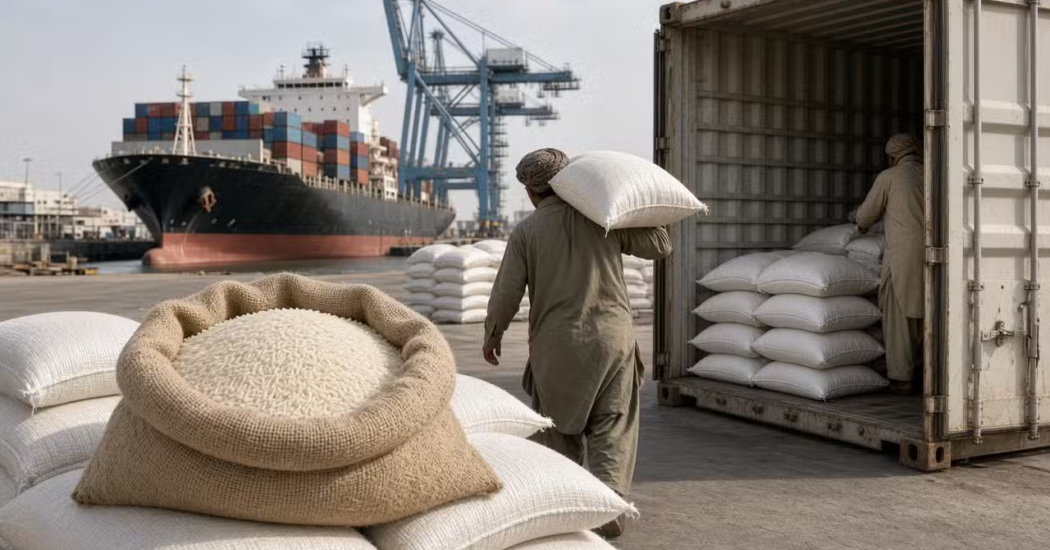
Pakistan’s rice export sector has recorded impressive growth during the opening four months of the fiscal year 2026-27, with Basmati rice shipments increasing by 62% despite ongoing shipping disruptions across the Middle East. The growth highlights the resilience of Pakistan’s agricultural export industry amid rising transportation costs, regional tensions and intense competition in international markets.
According to the latest export figures, Pakistan shipped approximately 301,000 tonnes of Basmati rice between July and October 2026. This represents an increase of 116,000 tonnes compared with the corresponding period last year.
Non-Basmati rice exports also maintained a positive trend, rising by 140,000 tonnes year-on-year to reach 1.049 million tonnes. Combined, the two categories brought Pakistan’s total rice exports to approximately 1.351 million tonnes during the first four months of the current fiscal year.
The increase is particularly significant because Pakistani exporters have faced considerable challenges in transporting agricultural products to international destinations.
Shipping activity across the Red Sea, Strait of Hormuz and other important Middle Eastern trade routes has been affected by regional tensions involving Iran. These developments have forced shipping companies to reconsider their routes, resulting in higher ocean freight charges and increased marine insurance premiums.
Despite these obstacles, Pakistan’s rice exports continued to expand, supported by stronger domestic production and favourable agricultural conditions.
Market analysts attribute much of the improvement to a bumper Basmati harvest. Several factors contributed to higher production, including an expanded cultivation area, double-cropping practices in certain regions, improved per-acre yields and favourable weather conditions.
The extension of the Drawback of Local Taxes and Levies (DLTL) scheme until September also provided additional support to exporters. Meanwhile, substantial carryover stocks helped maintain sufficient supplies to meet international demand.
Non-Basmati rice exporters also managed to increase shipments despite considerable pressure from competing countries. India has remained a major challenge for Pakistani suppliers because of its heavily subsidised rice exports and competitive international pricing.
Thailand, Vietnam, Cambodia and Myanmar have also continued offering competitive prices to attract international buyers. This competition previously affected Pakistan’s position in global rice markets, putting pressure on export volumes and prices.
However, the latest figures indicate that Pakistani exporters have managed to regain momentum, supported by increased availability and demand from overseas markets.
The Philippines emerged as Pakistan’s largest individual rice buyer in October 2026, importing 87,478 tonnes during the month. This reflects the country’s continued importance as a destination for Pakistani agricultural exports.
Tanzania ranked among the other leading buyers, importing 43,747 tonnes, followed by Kenya with 33,078 tonnes. The United Arab Emirates purchased 25,305 tonnes, while European Union markets imported approximately 21,200 tonnes.
Pakistan also maintained export activity across Central Asia, China and Saudi Arabia. Central Asian markets purchased 16,400 tonnes, China imported 11,949 tonnes, and Saudi Arabia received 7,655 tonnes during October.
The latest export performance provides encouraging signs for Pakistan’s agricultural economy, particularly as rice remains one of the country’s important export commodities and a significant source of foreign exchange earnings.
However, sustaining this growth will depend on maintaining competitive prices, improving agricultural productivity, managing transportation expenses and ensuring reliable access to international shipping routes.
With production levels improving and demand continuing across several international markets, Pakistan’s rice industry has an opportunity to strengthen its position in the global agricultural trade. The ability to manage regional shipping challenges and competition from other major exporters will remain important for maintaining this upward export trend.