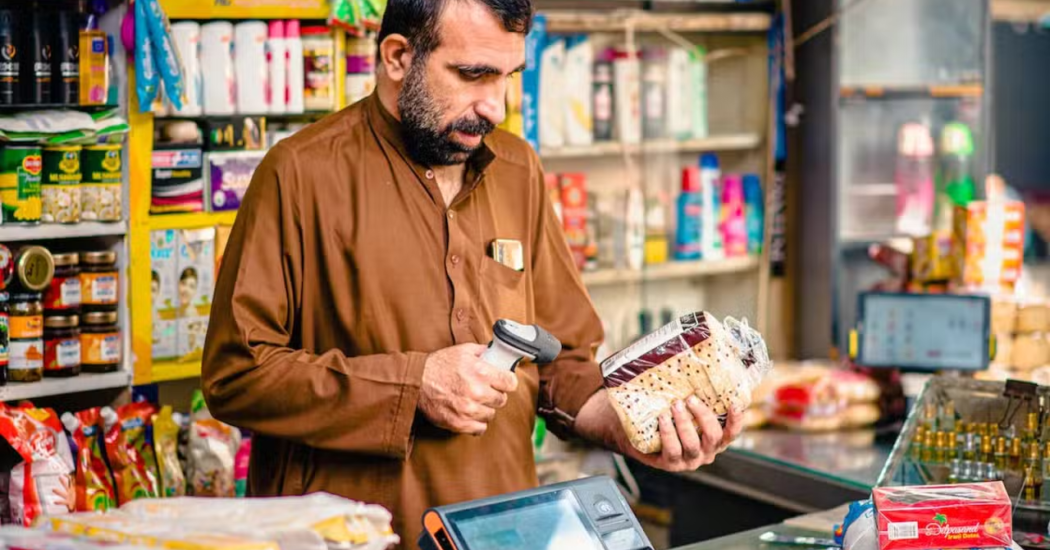
Pakistan’s Federal Board of Revenue is implementing a simplified tax scheme for small shopkeepers and retailers, allowing eligible businesses with annual turnover of up to Rs200 million — Rs20 crore — to enter the tax system through a simpler filing process.
The Special Tax Scheme for Small Shopkeepers, supported by the government’s Asaan Tajir initiative, is designed to reduce the complexity traditionally associated with income tax registration and return filing for small retail businesses.
Under the scheme being rolled out in 2026, eligible shopkeepers are subject to a 1% tax based on annual turnover, with a minimum annual tax of Rs25,000.
FBR confirmed on September 29, 2026 that the scheme is currently in its initial implementation stage and that it is working with traders and business organisations to resolve registration and technical issues.
What Is the FBR Small Shopkeepers Tax Scheme?
The Small Shopkeepers Tax Scheme is a simplified income tax framework aimed at bringing more retailers and traders into Pakistan’s documented economy without requiring them to follow the same complex compliance procedures that may apply to larger businesses.
The framework was developed under Section 99B of the Income Tax Ordinance, 2001.
The Finance Act 2026 broadened the government’s powers under Section 99B to prescribe special procedures covering matters including tax rates, fixed tax, payment of tax, filing of returns and audits for small traders and shopkeepers.
The government subsequently launched the Asaan Tajir system to make registration and return filing easier for eligible retailers.
Who Can Apply for the Small Shopkeepers Tax Scheme?
The simplified scheme is intended for eligible shopkeepers and retailers with annual turnover of up to:
Rs200 million per year — equivalent to Rs20 crore.
This threshold means the scheme is not limited only to very small neighbourhood shops. A substantial number of small and medium-sized retail businesses may potentially fall within its turnover limit.
However, turnover alone should not be treated as confirmation of eligibility.
A retailer must also meet the conditions prescribed by FBR and should confirm eligibility through the Asaan Tajir system or FBR before choosing the scheme.
FBR Small Shopkeepers Tax Scheme at a Glance
| Feature | Current Scheme |
|---|---|
| Turnover Limit | Up to Rs200 million / Rs20 crore annually |
| Tax Rate | 1% of annual turnover |
| Minimum Annual Tax | Rs25,000 |
| Registration | Simplified registration through FBR / Asaan Tajir |
| Return | Simplified return process |
| App | Asaan Tajir |
| POS Requirement | Not required for eligible shopkeepers under the simplified scheme |
| Routine Audit | Scheme provides relief from routine audit for compliant eligible participants |
| Tax Basis | Turnover / annual sales rather than accounting profit |
| Current Status | Initial implementation stage |
How Is the 1% Tax Calculated?
The tax is based on the shopkeeper’s annual turnover or sales rather than simply the profit earned by the business.
At a 1% rate, the basic calculation would look like this:
| Annual Sales | 1% Calculation | Indicative Tax |
|---|---|---|
| Rs1 million | Rs10,000 | Rs25,000 minimum |
| Rs2.5 million | Rs25,000 | Rs25,000 |
| Rs5 million | Rs50,000 | Rs50,000 |
| Rs10 million | Rs100,000 | Rs100,000 |
| Rs20 million | Rs200,000 | Rs200,000 |
| Rs50 million | Rs500,000 | Rs500,000 |
| Rs100 million | Rs1 million | Rs1 million |
| Rs200 million | Rs2 million | Rs2 million |
The Rs25,000 minimum is important for smaller shops.
For example, 1% of Rs1 million in annual sales would normally equal Rs10,000. Because the scheme carries a minimum annual payment of Rs25,000, the minimum would apply instead.
These examples illustrate the basic turnover calculation. A shopkeeper’s actual tax position can depend on eligibility, applicable withholding tax adjustments and other FBR rules.
Is the Tax Based on Sales or Profit?
The simplified tax is based on annual sales or turnover, not the shopkeeper’s net business profit.
This distinction is important.
Suppose a retailer has:
Annual sales: Rs10 million
Net profit after business expenses: Rs1 million
The simplified tax calculation is based on the Rs10 million turnover rather than the Rs1 million profit.
At 1%, the turnover-based amount would be Rs100,000, subject to the scheme’s applicable rules and adjustments.
Retailers operating on very low profit margins should therefore compare the simplified scheme with their normal tax position instead of assuming a turnover-based system will always result in a lower tax bill.
What Is the Asaan Tajir App?
The government launched the Asaan Tajir app in August 2026 to facilitate registration and simplified tax-return filing for retailers.
The system is intended to make compliance easier for shopkeepers who may not have accountants or extensive knowledge of Pakistan’s traditional income tax filing procedures.
The app was initially introduced in Urdu, with plans for additional regional-language support.
Eligible shopkeepers can use the simplified system to register and become tax filers without completing the more complicated process normally associated with conventional business returns.
How to Register Under the Asaan Tajir Scheme
Shopkeepers interested in joining the scheme should use official FBR channels or the Asaan Tajir facility.
The process is designed around simplified registration and filing rather than the more extensive documentation associated with larger taxpayers.
A retailer should generally have accurate information available concerning the business owner, CNIC or tax registration details, business location and annual sales.
Because FBR has acknowledged that the scheme is still in its initial implementation stage, traders encountering technical problems during registration have been advised to contact FBR directly for assistance.
Do Shopkeepers Need a POS System?
One of the important features promoted under the simplified scheme is that eligible small shopkeepers are not required to install an FBR Point of Sale system merely to participate in this particular scheme.
This reduces both technical and compliance costs for smaller retailers.
However, this should not be interpreted to mean that every retailer in Pakistan is exempt from POS or digital-invoicing requirements.
Different requirements can apply to larger retailers, Tier-1 retailers and businesses covered by other provisions of Pakistan’s sales tax and digital-invoicing framework.
The exemption should therefore be understood specifically in the context of eligible participants in the Small Shopkeepers Tax Scheme.
Will Shopkeepers Be Audited?
The scheme has been presented as providing compliant eligible retailers with protection from routine tax audits.
The objective is to provide greater certainty and reduce unnecessary interaction between tax officials and small businesses.
This does not mean a retailer receives complete immunity from Pakistan’s tax laws.
Incorrect declarations, concealment of turnover, fraud or other compliance issues can still potentially lead to action under applicable tax laws.
Shopkeepers should therefore report their sales accurately even under a simplified system.
Can Withholding Tax Already Paid Be Adjusted?
The scheme framework allows relevant withholding taxes to be taken into account against the retailer’s tax liability where applicable.
This matters because shopkeepers can already suffer withholding tax through transactions with suppliers, banks and other parties.
Retailers should retain evidence of taxes already deducted or collected so the amounts can be properly reflected where the scheme permits adjustment.
The exact treatment can vary depending on the nature of the payment and the taxpayer, so businesses with significant withholding-tax deductions should review their position before filing.
Why Did Pakistan Introduce the Scheme?
Pakistan has historically struggled to bring a large portion of its retail economy into the formal income tax system.
Complex returns, accounting requirements, concerns about audits and direct interaction with tax officials have frequently been cited by traders as obstacles to registration and compliance.
The new system attempts to address these concerns through:
simpler registration, a predictable turnover-based tax, simplified returns, fewer routine compliance requirements and digital registration through the Asaan Tajir platform.
FBR says the objective is to encourage voluntary compliance while giving small traders greater certainty and ease of doing business.
Is the Small Shopkeepers Scheme Fully Implemented?
The scheme is operational, but FBR describes it as being in its initial implementation stage.
On September 29, 2026, FBR said it remained in contact with traders, market representatives and trade organisations and was working to resolve practical and technical problems associated with registration.
This is an important update from the original Budget 2026-27 announcement.
The scheme is no longer merely a budget proposal, but its implementation process is still being refined.
Shopkeepers should therefore use current FBR guidance rather than relying on information published when the federal budget was first announced in June.
Important Difference From the Original Budget Reports
Early reports following Budget 2026-27 referred to different turnover thresholds and tax calculations for small retailers.
Since then, the government has moved forward with the broader simplified retail scheme promoted for businesses with annual turnover of up to Rs200 million, together with the Asaan Tajir registration and filing system.
For this reason, retailers should rely on the latest FBR scheme information instead of older June 2026 articles or social-media posts when determining eligibility.
Should a Shopkeeper Join the Scheme?
The simplified framework may be attractive to retailers who want a more predictable tax calculation and easier compliance process.
However, a 1% tax on turnover is different from a tax on profit.
Businesses operating with high sales but very narrow profit margins should calculate the financial impact carefully.
Shopkeepers should also make sure their declared turnover is accurate and that they understand whether taxes already withheld can be adjusted against their liability.
Where the amounts involved are substantial or a retailer is unsure about eligibility, professional tax advice may be appropriate before choosing a tax regime.
Frequently Asked Questions
What is the tax rate for small shopkeepers in Pakistan in 2026?
The current simplified scheme being implemented for eligible small shopkeepers uses a 1% tax on annual turnover, subject to a minimum annual tax of Rs25,000.
What is the turnover limit for the FBR shopkeeper scheme?
The simplified Asaan Tajir framework is intended for eligible retailers with annual turnover of up to Rs200 million, or Rs20 crore.
What is the minimum tax under the shopkeeper scheme?
The minimum annual tax under the scheme is Rs25,000.
Is the tax calculated on profit?
No. The simplified tax is based primarily on annual sales or turnover rather than net accounting profit.
How can a shopkeeper register?
Eligible retailers can use FBR’s simplified Asaan Tajir registration and return-filing facility and official FBR channels.
Do small shopkeepers need an FBR POS machine?
Eligible shopkeepers participating under the simplified scheme are not required to install POS or digital accounting systems merely for participation. Separate rules may continue to apply to other classes of retailers.
Is the scheme currently active?
Yes. FBR confirmed on September 29, 2026 that the Special Tax Scheme for Small Shopkeepers is in its initial implementation stage.
What should I do if the Asaan Tajir registration does not work?
FBR has advised traders facing technical or registration problems to contact the Board directly for assistance while the scheme is being implemented.
Final Word
The FBR Small Shopkeepers Tax Scheme represents a significant change in how Pakistan is attempting to tax the retail sector.
Instead of requiring every small retailer to navigate a conventional business-tax system, the Asaan Tajir framework offers eligible shopkeepers a simplified route based on turnover, easier registration and streamlined filing.
For retailers with turnover of up to Rs20 crore, understanding the 1% tax calculation, Rs25,000 minimum payment and eligibility requirements is important before filing.
Because FBR is still refining the scheme during its initial implementation phase, shopkeepers should continue checking official FBR announcements for any changes to registration procedures, eligibility conditions or filing requirements.
Last Updated: October 1, 2026