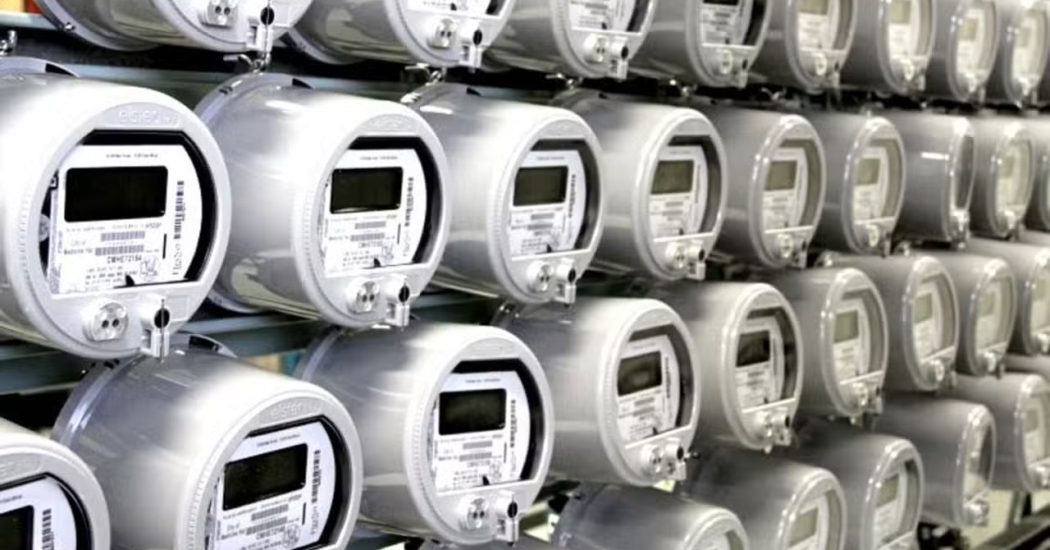
Over 2.1 Million Smart Electricity Meters Installed Across Pakistan
More than 2.1 million smart electricity meters have been installed across Pakistan’s power distribution network, according to a written reply submitted by the Ministry of Energy to the Senate.
The ministry reported that a total of 2,125,296 smart meters have been installed across the distribution companies, highlighting the country’s ongoing shift toward more advanced electricity monitoring and billing systems.
Lahore Electric Supply Company (LESCO) has recorded the largest number of installations, with 1,153,556 smart electricity meters installed across its service area.
Gujranwala Electric Power Company (GEPCO) ranks second among the listed distribution companies, with 348,135 smart meters installed. Multan Electric Power Company (MEPCO) has installed 229,719 meters.
Islamabad Electric Supply Company (IESCO) has installed 119,372 smart meters, while Faisalabad Electric Supply Company (FESCO) has reported 111,948 installations.
The figures provide an indication of the scale at which smart metering is being introduced across Pakistan’s electricity distribution system. Unlike conventional meters, smart meters can support more advanced monitoring and data collection, potentially giving electricity providers better information about consumption.
For consumers, the wider adoption of smart meters could eventually contribute to more accurate electricity monitoring and improved billing processes. The technology can also help distribution companies identify consumption patterns and monitor electricity use more efficiently.
The installation drive is particularly significant as Pakistan continues to face challenges related to electricity distribution, billing and power losses. Modern metering infrastructure can provide distribution companies with additional tools to monitor their networks and manage electricity consumption.
LESCO’s figure stands out among the distribution companies listed in the Senate reply. With more than 1.15 million smart meters installed, the company accounts for more than half of the total installations reported across the listed network.
GEPCO’s 348,135 installations also represent a substantial share, followed by MEPCO with 229,719 smart meters. IESCO and FESCO have each crossed the 100,000-installation mark.
The adoption of smart electricity meters is part of a broader move toward digitalisation within the power sector. Better access to consumption data can support utility management and potentially improve the way electricity demand is monitored.
For households and businesses, the transition could also mean greater visibility into electricity consumption. Over time, smart metering technology may help consumers understand their usage and manage electricity demand more effectively.
However, the benefits of smart meters will depend not only on installation but also on how effectively distribution companies use the technology. Reliable communication systems, accurate data processing and efficient billing infrastructure remain important for achieving the full potential of smart metering.
The latest figures shared with the Senate show that Pakistan has already made significant progress in expanding smart meter coverage. With more than 2.1 million installations reported, the technology is becoming an increasingly visible part of the country’s electricity distribution system.
As the rollout continues, further expansion of smart metering could play a role in improving electricity monitoring and supporting the modernisation of Pakistan’s power sector.
