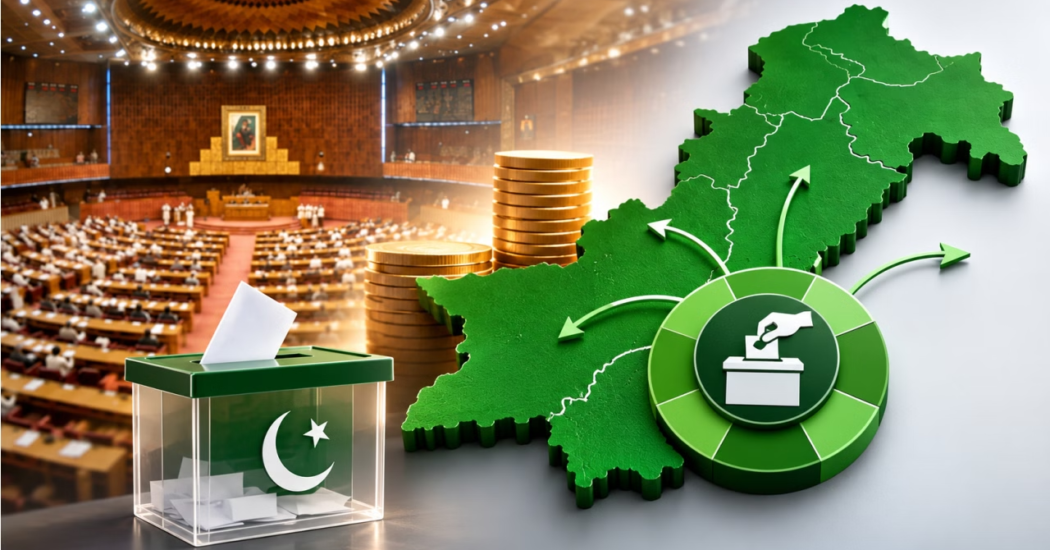
Pakistan’s federal government is reportedly considering a major administrative restructuring plan that could increase the number of provinces in the country from four to as many as 12.
The proposal includes dividing Punjab into four provinces, while Sindh, Khyber Pakhtunkhwa (KP), and Balochistan could each be reorganised into two separate provinces.
According to reports, the government has accelerated preparations for a possible nationwide referendum to seek public opinion on the proposed changes. The initiative comes amid ongoing political discussions about creating smaller administrative units and changing the country’s provincial structure.
Under the proposal being considered, Punjab would undergo the largest division, with four provinces envisioned in place of its current administrative structure. The remaining three provinces could each be divided into two, potentially bringing the national total to between 10 and 12 provinces, depending on the final plan.
Government Considers Referendum Before Senate Elections
Reports suggest that the federal government is considering holding a nationwide referendum before the upcoming Senate elections, which are expected in the first week of March 2027.
The proposed referendum would provide an opportunity to seek public views on the creation of additional provinces and the possible restructuring of existing provincial boundaries.
However, the referendum remains under consideration, and no confirmed voting date or final administrative map has been announced in the information provided.
The government is also reportedly considering approaching the courts to obtain clarity on the constitutional and legal requirements for conducting such a referendum.
This step could help establish the legal framework and identify the procedures required before any nationwide public vote takes place.
Constitutional and Legal Questions
Creating new provinces in Pakistan involves important constitutional considerations. Any change to provincial boundaries would require compliance with the constitutional amendment process.
Under Article 239 of Pakistan’s Constitution, a constitutional amendment affecting the limits of a province requires approval by at least two-thirds of the total membership of the affected provincial assembly, in addition to the required parliamentary approvals.
Therefore, a public referendum alone would not automatically establish new provinces. The relevant constitutional and legislative procedures would also need to be completed.
The legal position surrounding the proposed referendum and its relationship with the constitutional amendment process is expected to remain an important part of the discussion.
What the Proposed Changes Could Mean
The creation of additional provinces could bring significant administrative changes across the country.
Supporters of smaller administrative units generally argue that decentralisation can improve governance, bring government services closer to citizens, and provide greater administrative attention to less-developed regions.
However, dividing existing provinces also raises questions about provincial resources, financial distribution, political representation, government institutions, and the location of new provincial capitals.
These issues would require detailed consideration before any restructuring could move forward.
For now, Pakistan’s proposed expansion to as many as 12 provinces remains a reported government consideration rather than an approved constitutional change.
The coming months could be important in determining whether the government formally advances the referendum proposal and seeks the necessary legal and political consensus.