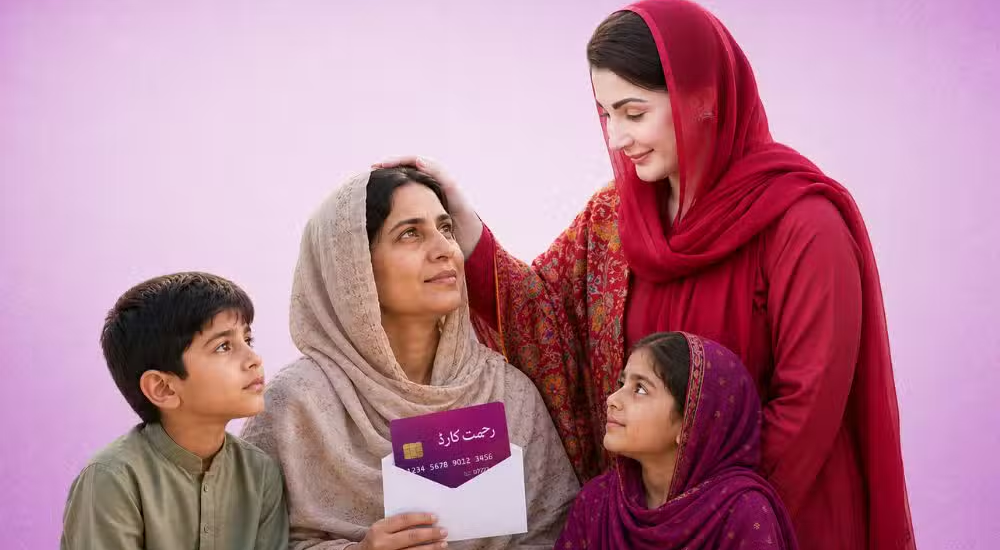
Punjab’s Rahmat Card programme provides Rs100,000 in financial assistance to eligible Zakat-deserving widows and children who have lost both parents.
The first phase of the programme has now reached an important transition point. According to the Punjab Zakat and Ushr Department, Rahmat Card payments were stopped on September 18, 2026, while the department says the second phase is expected to begin soon.
People interested in the next phase should therefore understand the eligibility conditions, documents and selection process in advance rather than relying on outdated launch information.
Punjab Rahmat Card 2026 at a Glance
| Feature | Details |
|---|---|
| Programme | CM Punjab Rahmat Card |
| Province | Punjab |
| Assistance | Rs100,000 |
| Eligible Groups | Zakat-deserving widows and double-parent orphans |
| First Phase Payments | Stopped September 18, 2026 |
| Phase 2 | Expected to start soon |
| Application Channels | Official app, web portal or helpline |
| Helpline | 1077 |
| Selection Database | Punjab Socio-Economic Registry |
| Selection Method | PSER Proxy Means Test |
| Department | Punjab Zakat and Ushr Department |
The scheme operates across Punjab and is designed specifically for vulnerable Zakat-eligible households.
How Much Assistance Does Rahmat Card Provide?
The official Punjab Zakat and Ushr Department currently states that eligible beneficiaries receive:
Rs100,000 per eligible widow
and
Rs100,000 per eligible double-parent orphan child.
A double-parent orphan means a child whose mother and father are both deceased.
Applicants should rely on this official amount rather than unofficial social-media posts quoting different grant figures.
Is Rahmat Card Phase 2 Open?
As of the latest official update, the Punjab Zakat and Ushr Department says:
payments were stopped on September 18, 2026, and Phase 2 is likely to start soon.
This means applicants should not interpret an old application guide as confirmation that the first-phase process is still operating normally.
The best approach is to prepare the required records now and monitor the official Rahmat Card portal, app and Punjab Zakat Department announcements for the Phase 2 opening.
Who Is Eligible for Punjab Rahmat Card?
The programme is targeted at needy and poor Muslim widows and double-parent orphan children who qualify to receive Zakat under Shariah.
The official eligibility conditions also state that an applicant should:
not be a habitual beggar;
not be a government employee;
not be a government pensioner;
not be Sahib-e-Nisab; and
not already be receiving regular financial assistance from another Punjab government scheme.
Eligibility is therefore more specific than simply being a widow or orphan.
Financial circumstances and the programme’s Zakat criteria are also part of the selection process.
Which Widows Can Apply?
An eligible widow must be financially deserving under the programme’s Zakat conditions.
The applicant also needs a valid and updated CNIC reflecting her widow status.
This is particularly important because outdated NADRA marital-status information can create a mismatch during verification.
A widow planning to apply in Phase 2 should therefore check her CNIC record before submitting an application.
Which Orphans Can Apply?
The official Rahmat Card programme covers double-parent orphans, meaning children who have lost both their mother and father.
The child’s B-Form / Child Registration Certificate is required for the application process.
The scheme should therefore not be described broadly as an assistance programme for every child who has lost one parent.
What Documents Are Required?
The official programme information specifically identifies an updated and valid CNIC reflecting widow status for widow applicants and a B-Form for eligible children.
Applicants should also ensure that their personal and household information in the Punjab Socio-Economic Registry is accurate because PSER data is used to determine beneficiary selection.
If NADRA or PSER information is outdated, it is better to address discrepancies before the next application phase.
How to Apply for Punjab Rahmat Card
The Punjab Zakat and Ushr Department provides three official application channels:
CM Punjab Rahmat Card mobile application
Official Rahmat Card web portal
Helpline 1077
The department officially launched these channels when the programme opened in April 2026.
Because the programme is currently between phases, applicants should confirm that Phase 2 applications are active before submitting new information.
What Is the Rahmat Card Helpline?
The official Rahmat Card helpline is:
1077
The Punjab Zakat Department lists this number as one of the channels through which eligible people can obtain programme assistance.
It is particularly useful for people who cannot comfortably use the mobile app or online portal.
How Are Beneficiaries Selected?
Rahmat Card is not simply distributed on a first-come, first-served basis.
The Punjab government uses data from the Punjab Socio-Economic Registry — PSER to identify eligible applicants.
The Zakat Department says the final selection is made through the Proxy Means Test, or PMT, of PSER to support merit-based selection.
This means the economic information stored against the household can directly affect whether the applicant qualifies.
What Is PSER?
The Punjab Socio-Economic Registry is a provincial household database used to assess eligibility for social-protection and relief programmes.
For Rahmat Card, PSER data is used as part of beneficiary assessment and final selection.
Applicants should therefore ensure that household, income and family information registered in PSER is accurate and current.
Simply submitting a Rahmat Card form does not automatically guarantee the Rs100,000 grant.
How Is the District Quota Decided?
The Punjab Zakat Department says programme funding is allocated to District Zakat Committees based on population.
This means programme implementation and the number of beneficiaries can differ by district depending on the budget allocation and eligible population.
How Many People Benefited From Rahmat Card?
For the 2025–26 financial year, the Punjab Zakat and Ushr Department says Rs5 billion was allocated across Punjab for the Rahmat Card programme.
More than 39,000 deserving widows and double-parent orphans were selected through computerized balloting.
These numbers show that the scheme moved beyond the announcement stage and reached tens of thousands of beneficiaries during its initial rollout.
When Was Rahmat Card Launched?
The Chief Minister Punjab Rahmat Card was formally inaugurated on April 30, 2026.
At launch, the Zakat and Ushr Department provided three application routes: the dedicated mobile application, online web portal and 1077 helpline.
The programme was established to provide targeted financial support to widows and children without either parent while using Zakat funds through a computerized eligibility process.
Is Rahmat Card for All Punjab Families?
No.
Rahmat Card is a targeted programme.
It is specifically intended for qualifying Zakat-deserving:
widows, and
double-parent orphan children.
Low income alone does not automatically make every Punjab household eligible.
Applicants must satisfy the programme’s category and Zakat requirements.
Can Government Employees Apply?
No.
The official eligibility criteria state that a government servant is not eligible for Rahmat Card.
Government pensioners are also excluded.
Can Someone Receiving Another Government Allowance Apply?
The official eligibility criteria state that beneficiaries should not be receiving regular financial assistance from another Punjab government scheme.
Applicants already receiving another regular government benefit should therefore confirm their position through the department or helpline before assuming they qualify.
What Does Sahib-e-Nisab Mean for Rahmat Card?
Rahmat Card operates through Punjab’s Zakat system.
One official condition is that an applicant should not be Sahib-e-Nisab, meaning the applicant must fall within the financial eligibility rules for receiving Zakat.
Final determination remains with the responsible authorities using the programme’s eligibility and PSER assessment.
What Should Applicants Do Before Phase 2?
Potential Phase 2 applicants should make sure their core government records are accurate.
A widow should check that her NADRA identity record reflects the correct marital status.
Parents or guardians of an eligible double-parent orphan should make sure the child’s B-Form information is accurate.
Household data recorded in PSER should also be reviewed because the programme uses PSER’s PMT system for beneficiary selection.
Preparing these records before Phase 2 begins can reduce verification problems later.
How Can You Check Rahmat Card Status?
Applicants should use only the official Rahmat Card portal, mobile application or helpline for application and programme information.
Because the programme has entered the transition between Phase 1 and Phase 2, users should not rely on unofficial websites claiming that a new payment or application has already been approved.
The official 1077 helpline is the safest option where an applicant is unsure about the current status of their case.
Beware of Fake Rahmat Card Messages
Government assistance programmes frequently attract unofficial social-media posts, WhatsApp messages and websites promising guaranteed approval.
Rahmat Card applicants should never pay an agent simply for “guaranteed selection.”
Final selection is tied to official eligibility conditions and PSER assessment rather than an individual’s promise to secure approval.
Applicants should also avoid sharing CNIC photographs, B-Forms, verification codes or personal banking information with unofficial social-media accounts.
Rahmat Card Frequently Asked Questions
How much money does Rahmat Card provide?
The official programme currently provides Rs100,000 to each eligible widow and Rs100,000 to each eligible double-parent orphan child.
Is Rahmat Card Phase 2 open?
The latest official update says first-phase payments stopped on September 18, 2026, and Phase 2 is expected to start soon.
Applicants should check the official programme channels for the actual Phase 2 opening.
Who can apply?
Eligible applicants are needy and poor Muslim widows and children who have lost both parents and qualify to receive Zakat under the programme’s criteria.
Can pensioners apply?
No. Government servants and pensioners are excluded under the official eligibility conditions.
What CNIC is required for widows?
A widow should have an updated and valid CNIC reflecting her widow status.
Is B-Form required for an orphan child?
Yes. The official procedure requires the child’s B-Form.
What is the Rahmat Card helpline?
The official helpline is 1077.
How are beneficiaries selected?
Beneficiaries are assessed through the Punjab Socio-Economic Registry, with final selection based on the PSER Proxy Means Test and programme criteria.
How many beneficiaries were selected in the first rollout?
The Punjab Zakat Department says more than 39,000 deserving widows and double-parent orphans were selected in 2025–26.
Punjab Rahmat Card remains an important targeted assistance programme for Zakat-deserving widows and children who have lost both parents.
The most important current development is that the first phase has ended its payment cycle, with payments stopped on September 18, 2026, while the Punjab Zakat and Ushr Department says Phase 2 is expected soon.
Potential applicants should use this period to make sure their CNIC, B-Form and PSER records are accurate and monitor only official programme channels for the Phase 2 announcement.
The current official assistance amount remains Rs100,000 per eligible beneficiary.
Modified Date October 7, 2026