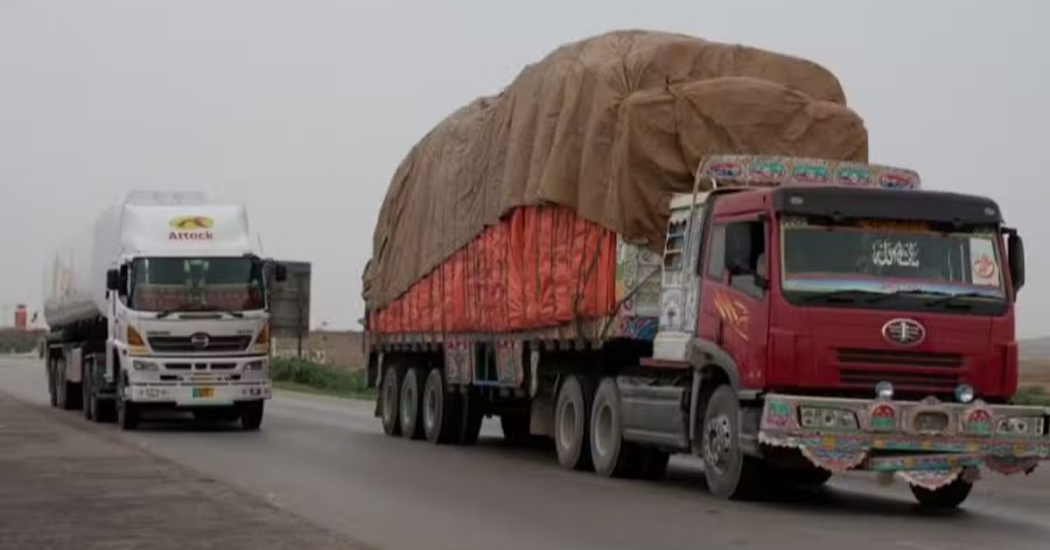
The nationwide goods transporters’ strike has entered its sixth day, with government efforts to resolve the dispute yet to produce a breakthrough. Transporters have made it clear that they will continue their peaceful protest until their key demands are accepted and practical measures are taken.
The prolonged strike has raised concerns about the movement of essential goods and commercial supplies across Pakistan, particularly as the country prepares to observe Independence Day on August 14. The disruption could create additional pressure on businesses, markets and supply chains if the deadlock continues.
Government officials and representatives of the transport sector are scheduled to hold talks in Karachi on Thursday in an effort to find a solution. The meeting is expected to bring senior federal and provincial officials together with representatives of the transport industry.
The government delegation will include Federal Minister for Ports and Shipping Muhammad Junaid Anwar and Sindh Transport Minister Sharjeel Inam Memon. The Sindh chief secretary, Karachi commissioner, Karachi Port Trust chairman and Port Qasim Authority chairman are also expected to participate in the discussions.
The involvement of officials connected with Karachi’s major port facilities highlights the importance of restoring the transportation network. Karachi Port and Port Qasim play a major role in the movement of imported and exported goods, making the transport sector essential for wider economic activity.
All Pakistan Goods Transport Owners Association President Muhammad Owais Chaudhry Advocate said goods transporters across the country were continuing their protest peacefully. According to the association, the strike will not be called off unless the government accepts their demands and takes concrete steps toward implementation.
The dispute has created uncertainty for businesses that depend on road transportation to move goods between ports, industrial areas, warehouses and markets. A prolonged stoppage could also affect the availability and delivery schedules of various products.
With Independence Day approaching, pressure is increasing on both sides to reach an agreement. Government authorities are expected to use Thursday’s negotiations to address the concerns raised by transporters and prevent the strike from extending further.
For transporters, the focus remains on securing practical solutions rather than assurances. Their continued refusal to end the strike indicates that they want clear commitments and measurable action before returning to normal operations.
The outcome of the Karachi talks could therefore have wider implications for Pakistan’s logistics and supply chain system. If an agreement is reached, goods transportation could gradually resume and help businesses manage the disruption caused by the six-day strike.
If negotiations fail, however, the continuation of the nationwide transporters’ strike could increase pressure on commercial activity and supply chains. The coming discussions will be closely watched by traders, businesses, consumers and other stakeholders across the country.