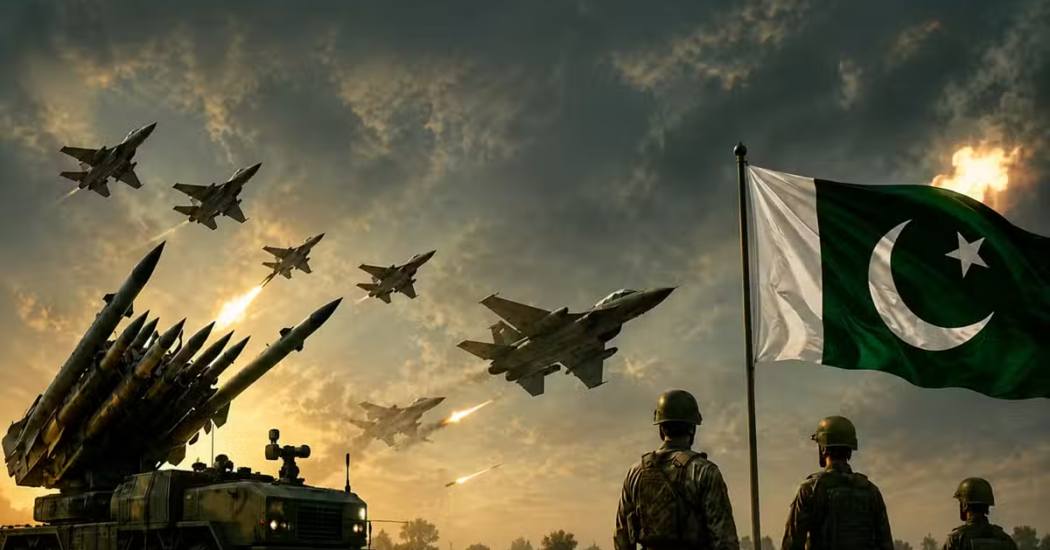
British Research Firm Says Pakistan Held Military and Diplomatic Edge During Marka-e-Haq
A British strategic research and communications firm has released a report claiming that Pakistan demonstrated clear military and diplomatic superiority during the conflict referred to as “Marka-e-Haq.” The findings have sparked renewed discussion over the military engagements and international perceptions surrounding the confrontation.
According to the report published by Pakistan Playbook, Pakistan maintained an advantage not only on the battlefield but also in the diplomatic arena throughout the conflict. The research firm stated that its investigation was based on publicly available information, official statements, and international assessments regarding the military exchanges between Pakistan and India.
One of the report’s key claims is that several Indian Air Force fighter aircraft were destroyed during the conflict. Among the aircraft mentioned were Rafale fighter jets, which have been regarded as one of India’s most advanced combat platforms. The report argues that these losses represented a significant operational setback for India during the engagement.
Pakistan Playbook also highlighted that comments from various international officials were cited as part of its findings. According to the report, U.S. and French intelligence officials, along with statements attributed to India’s Chief of Defence Staff and the country’s defense attaché, acknowledged that India suffered substantial losses during the confrontation.
The report further suggests that Pakistan’s military planning, operational preparedness, and coordinated defense strategy played an important role in shaping the outcome of the conflict. It states that the country’s armed forces effectively responded to emerging threats while maintaining strategic stability throughout the military engagement.
Beyond the battlefield, the British research firm claimed that Pakistan was also able to secure diplomatic advantages. It noted that international attention remained focused on regional stability, while Pakistan’s diplomatic outreach helped present its position on the global stage. According to the report, this combination of military preparedness and diplomatic engagement strengthened Pakistan’s overall standing during the conflict.
The publication has generated interest among defense analysts and observers who closely follow South Asian security affairs. Military assessments of regional conflicts often rely on multiple sources, including official government statements, intelligence evaluations, satellite imagery, and independent research organizations. As with many international conflicts, some claims remain subject to differing interpretations and continued analysis.
Pakistan Playbook described its investigation as an effort to examine the broader strategic implications of the conflict rather than focusing solely on battlefield events. The report emphasizes that military capability, intelligence gathering, diplomacy, and information management collectively influenced the course of the confrontation.
The findings add another perspective to the ongoing debate surrounding the military exchanges between Pakistan and India. Reports issued by independent research organizations frequently contribute to discussions on defense policy and regional security, although governments involved in such conflicts may present differing assessments based on their own official positions.
The release of the report comes as analysts continue to evaluate the strategic lessons from the conflict and its implications for South Asia’s future security environment. Defense experts note that military preparedness, technological capability, and diplomatic engagement will likely remain central factors in maintaining regional stability amid evolving geopolitical challenges.
