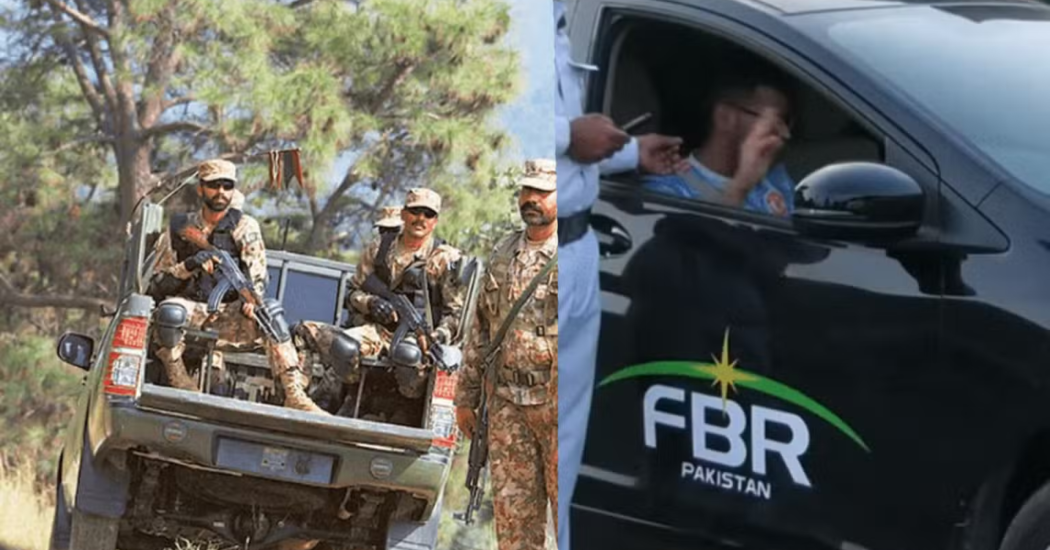
Government Exempts Armed Forces and FBR Operational Vehicles From Fuel Cuts
The federal government has clarified which official vehicles will be exempt from its newly announced fuel conservation measures, with operational vehicles of the Armed Forces and several essential institutions excluded from the 50 percent fuel reduction.
The fuel-saving measure applies to government vehicles for a period of three months as part of a broader austerity campaign aimed at conserving petroleum supplies and reducing public expenditure.
Under the government’s decision, operational vehicles of the Armed Forces will not be affected by the fuel reduction. However, administrative and non-operational military vehicles will remain subject to the 50 percent cut.
The distinction between operational and non-operational vehicles means that vehicles required for essential duties will continue to receive fuel according to their operational needs, while vehicles used for administrative purposes will be covered by the conservation measure.
The exemption also extends to operational vehicles of the Civil Armed Forces. Law enforcement agencies and vehicles used for essential services have similarly been excluded from the fuel reduction.
Operational vehicles of the Federal Board of Revenue (FBR) are also exempt from the restriction.
The government has introduced the measures as part of efforts to conserve fuel and manage public spending amid pressure from rising international petroleum prices and regional tensions.
The fuel restriction is one component of a wider austerity programme announced by the federal government. Authorities are seeking to reduce unnecessary consumption while ensuring that essential government operations continue without disruption.
The three-month duration means government departments will need to operate under the revised fuel allocations during the specified period.
For administrative and non-operational vehicles belonging to the Armed Forces, the 50 percent reduction will continue to apply. This arrangement allows the government to distinguish between vehicles required for essential operational responsibilities and those used for routine administrative functions.
The exemption for law enforcement and essential services is intended to ensure that critical public functions can continue despite the broader fuel conservation drive.
Similarly, exempting operational FBR vehicles allows field activities considered necessary for the revenue authority to continue under the government’s fuel conservation programme.
The latest clarification is important because the original fuel reduction applies broadly to official vehicles but includes specific exemptions based on operational requirements.
Government departments and institutions will therefore have to identify vehicles falling within the exempted categories and implement the reduced fuel allocations for those that remain covered.
The decision comes as Pakistan seeks to conserve petroleum resources and contain government expenditure during a period of heightened economic and regional pressure.
Fuel consumption by official vehicles has become one of the areas targeted under the government’s austerity campaign. Alongside fuel restrictions, the federal government has announced other measures aimed at reducing non-essential spending.
The government’s approach combines conservation with exemptions for essential operations, allowing critical services and security-related activities to continue while reducing fuel use in administrative areas.
The 50 percent fuel reduction will remain in effect for three months for vehicles covered by the policy. Operational vehicles of the Armed Forces, Civil Armed Forces, law enforcement agencies, essential services and FBR will remain exempt under the stated provisions.
Further implementation details will depend on individual government departments and institutions applying the restrictions according to the categories outlined by the federal government.
