Mohsin Naqvi takes strict action against Lahore Passport Office

In a decisive move against corruption, Interior Minister Mohsin Naqvi has taken stringent action targeting malpractices within the Lahore Passport Office. Following his visit to the facility in Garden Town, Naqvi identified Deputy Director Faizul Hassan and Assistant Director Muhammad Naseem as responsible parties and promptly dismissed them from their positions.

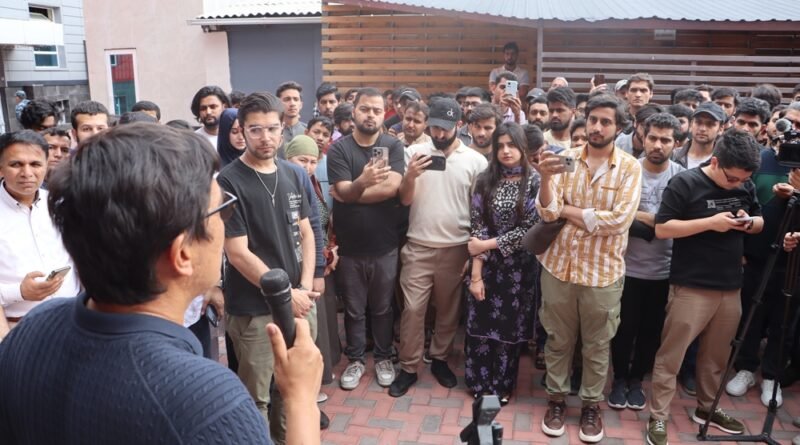
Naqvi’s visit uncovered rampant illegal activities within the office, with citizens lodging numerous complaints about staff involvement in monetary exploitation and collusion with the passport mafia. During his engagement with citizens, Naqvi listened to their grievances firsthand and collected evidence of malpractices, including widespread bribery demands and unauthorized fees for entry.

The prevailing situation has made obtaining a passport without paying a bribe an arduous task for many citizens. Despite challenges, citizens have expressed admiration for Naqvi’s proactive approach, citing his performance as caretaker Chief Minister and expressing optimism that their concerns will be addressed.

However, officials at the passport office failed to provide satisfactory responses to questions regarding public complaints, further highlighting the need for comprehensive reforms to combat corruption and ensure transparency in government services. Naqvi’s swift action underscores the government’s commitment to rooting out corruption and restoring public trust in administrative institutions.

Also, see:

Understanding Riba and Why It’s Prohibited in Pakistan

Understanding Riba and Why It’s Prohibited in Pakistan

Pakistan, a nation deeply rooted in Islamic values, adheres to the prohibition of riba (interest) in its financial system. This concept, considered exploitative and harmful in Islam, is strictly forbidden as outlined in the Quran and Hadith. Let’s delve into the reasons behind this ban and its impact on Pakistan’s economy and society.

What is Riba?

In Islamic finance, riba refers to excessive or unjust gains from lending money or transactions involving interest. The Quran explicitly prohibits riba, emphasizing fair and just financial dealings. This prohibition aims to create a more balanced and ethical financial environment.

Economic Impact of Riba

Conventional banking systems often rely on interest, leading to wealth concentrating in the hands of the wealthy while burdening the poor with debt. This creates inequality and hinders economic growth. Islamic finance, on the other hand, promotes risk-sharing and asset-backed transactions, fostering a more equitable distribution of wealth.

Riba and Fighting Poverty

Pakistan, like many developing nations, struggles with poverty and income inequality. Riba can worsen these issues by trapping individuals and communities in debt cycles. High-interest rates lead to loan defaults and financial hardship, particularly for those already struggling financially. Islamic finance offers alternatives like interest-free microfinance and zakat-based initiatives to help alleviate poverty.

Ethical Concerns

Beyond economics, riba raises ethical concerns. Islam emphasizes ethical business practices that prioritize mutual benefit and social responsibility. Riba can exploit financial vulnerability, prioritizing profit over well-being. In Pakistan, where Islamic values are central to society, the prohibition of riba aligns with fostering integrity in financial transactions.

Pakistan’s Legal Framework

Pakistan’s constitution declares Islam as the state religion, mandating laws to reflect Islamic principles. The prohibition of riba is enshrined in its legal framework, influencing banking and financial regulations. The State Bank of Pakistan regulates both Islamic and conventional banking, ensuring compliance with Shariah principles. This commitment to Islamic values is evident in the growth of Islamic finance within the nation.

Challenges and Opportunities

While the prohibition of riba is clear, challenges exist in its implementation. Coexistence of Islamic and conventional banking systems requires strong regulatory measures to ensure Shariah compliance. Misconceptions about Islamic finance can also hinder its adoption. However, these challenges present opportunities for innovation and collaboration, paving the way for sustainable economic development aligned with Islamic principles.

Conclusion

The prohibition of riba in Pakistan stems from its negative economic, social, and ethical implications. Islamic finance offers a viable alternative that prioritizes fairness, justice, and social well-being. By adhering to Shariah principles, Pakistan fosters inclusive growth, tackles poverty, and upholds its Islamic values in its financial system. This commitment to ethical financial practices serves as a cornerstone for the nation’s economic future.

Navigating the Landscape of Shariah-Compliant Financial Products in Pakistan

Pakistan, a country with a predominantly Muslim population, has witnessed a surge in the demand for Shariah-compliant financial products in recent years. As the principles of Islamic finance continue to gain traction globally, Pakistan stands as a significant player in offering a variety of Shariah-compliant financial instruments. In this comprehensive guide, we delve into the landscape of Shariah-compliant financial products in Pakistan, exploring their significance, types, regulations, and the evolving market dynamics.

Understanding Shariah-Compliant Finance:

Shariah-compliant finance operates under the principles of Islamic law (Shariah), which prohibits certain activities such as charging interest (riba), engaging in excessive uncertainty (gharar), and investing in businesses considered haram (forbidden) such as alcohol, gambling, and pork-related products. Instead, Islamic finance promotes risk-sharing, ethical investment, and asset-backed transactions.

Significance of Shariah-Compliant Finance in Pakistan:

Pakistan, with its large Muslim population, has witnessed a growing demand for Shariah-compliant financial products. This demand stems from both religious adherence and a desire for ethical and socially responsible investment options. Additionally, Shariah-compliant finance offers an alternative to conventional banking for those who seek financial services aligned with Islamic principles.

Types of Shariah-Compliant Financial Products:

  1. Islamic Banking:
    Islamic banks in Pakistan offer a range of Shariah-compliant services, including current accounts, savings accounts, financing for businesses and individuals, and investment products such as Mudarabah (profit-sharing) and Musharakah (joint venture).
  2. Islamic Bonds (Sukuk):
    Sukuk are Shariah-compliant bonds structured to generate returns without violating Islamic principles. These bonds are asset-backed and represent ownership in a tangible asset, project, or investment activity, providing investors with a share of profits rather than interest.
  3. Islamic Mutual Funds:
    Islamic mutual funds pool funds from investors to invest in Shariah-compliant assets such as stocks, commodities, and real estate. These funds adhere to Islamic investment principles and are managed by Shariah-compliant fund managers.
  4. Takaful (Islamic Insurance):
    Takaful is a Shariah-compliant alternative to conventional insurance, where participants contribute funds into a pool system to help protect each other against loss or damage. Takaful operates on the principles of mutual cooperation, shared responsibility, and transparency.

Regulatory Framework for Shariah-Compliant Finance:

The regulatory framework for Shariah-compliant finance in Pakistan is overseen by the Securities and Exchange Commission of Pakistan (SECP) and the State Bank of Pakistan (SBP). These regulatory bodies ensure compliance with Shariah principles, transparency in operations, and the protection of investors’ interests.

Challenges and Opportunities:

While the Shariah-compliant finance industry in Pakistan continues to grow, it faces challenges such as lack of awareness, shortage of skilled professionals, and regulatory complexities. However, with the government’s support and increasing demand for ethical finance, the industry presents significant opportunities for growth and innovation.

Future Outlook:

The future of Shariah-compliant finance in Pakistan appears promising, driven by the country’s large Muslim population, supportive regulatory environment, and increasing awareness of Islamic finance principles. As the industry evolves, we can expect to see a broader range of Shariah-compliant products and services catering to diverse investor needs.

Conclusion:

Shariah-compliant finance has become an integral part of Pakistan’s financial landscape, offering ethical and socially responsible investment options for individuals and businesses. With a robust regulatory framework and growing demand, the industry is poised for continued growth, contributing to the development of a more inclusive and sustainable financial ecosystem in Pakistan. As awareness and understanding of Islamic finance principles deepen, Shariah-compliant financial products are likely to play an even more significant role in shaping the country’s financial future.

Boxer Amir Khan leaves Pakistan after closure of his boxing academy in Islamabad

Former world light-welterweight champion Amir Khan has expressed his deep disappointment following the closure of his boxing academy in Islamabad. Khan, known for his efforts to promote boxing in Pakistan, lamented the lack of support from officials and the government despite his significant investments in the academy.

The academy, inaugurated in 2016 near the Pakistan Sports Complex, aimed to nurture young boxing talent and produce future champions. However, Khan revealed that despite his efforts and a Memorandum of Understanding (MoU) signed with the Director General of Pakistan Sports Board (PSB), the academy had to shut down due to lack of government assistance.

Khan emphasized the urgent need for boxing facilities in Pakistan, citing the enthusiasm among young athletes for training and classes. He disclosed that he had spent over a hundred thousand dollars on the gym, which now remains unused and wasted.

Expressing his frustration, Khan stated,

“My gym was brand new and very clean, but it got shut down. I’m in Pakistan; tomorrow I’m going to England, and I’m very disappointed.”

Despite the setback, Khan remains committed to supporting young boxers and hopes to reopen the academy in the future.

The closure of Khan’s academy signifies a setback for Pakistani boxing and its aspiring athletes. It also reflects broader challenges in sports infrastructure and support in the country. Khan’s disappointment underscores the critical need for sustained investment and government assistance in sports development initiatives, ensuring opportunities for talented athletes to thrive and represent Pakistan on the international stage.

Also, see:

Another Pakistan vs New Zealand series loading soon

Another Pakistan vs New Zealand series loading soon

The Pakistan cricket team is set to embark on a tour of New Zealand following the ICC Champions Trophy next year, marking an important event in the international cricket calendar. PCB chairman Mohsin Naqvi recently met with New Zealand Cricket CEO Scott Weenink to discuss various cricket matters, including the upcoming series between Pakistan and New Zealand.

During the meeting, it was revealed that Pakistan will play five T20I matches and three ODIs during their tour of New Zealand. Naqvi assured Weenink of comprehensive arrangements for the New Zealand team’s visit to Pakistan, emphasizing the paramount importance of security and well-being.

Weenink expressed satisfaction with the arrangements made for the New Zealand team in Rawalpindi and Lahore, praising the facilities and arrangements at both locations. He also confirmed New Zealand’s participation in the tri-nation series in Pakistan before the Champions Trophy.

“Looking after New Zealand team is our responsibility. The team is very close to our hearts and I am myself monitoring the whole arrangements as well as the security arrangements for the tour,” Naqvi was quoted as saying.

The PCB and NZC are working closely to ensure the success of the upcoming series and tours, highlighting their commitment to promoting bilateral cricket relations and ensuring player safety. The tour will provide valuable exposure and competition for both Pakistan and New Zealand teams, contributing to the growth and development of cricket in both countries.

With the Champions Trophy being hosted by Pakistan, the significance of the upcoming tours is further elevated. The meetings between PCB and NZC reflect the positive direction of cricket diplomacy between the two nations, fostering cooperation and mutual respect in the realm of international cricket.

Also, see:

FIH Seeks Clarity as Pakistan’s Hockey Future Hangs in Balance

FIH Seeks Clarity as Pakistan’s Hockey Future Hangs in Balance

The International Hockey Federation (FIH) has stepped in to address the ongoing dispute within the Pakistan Hockey Federation (PHF) by sending a letter directly to the PHF. The FIH seeks clarification regarding the legitimate representatives and leadership of the PHF amidst the presence of parallel bodies led by Tariq Bugti and Shehla Raza.

Failure to resolve this issue by the end of the week could jeopardize Pakistan’s participation in key tournaments, including the Sultan Azlan Shah Cup and the FIH Nations Cup. This uncertainty puts Pakistani players in a precarious situation, with their competitive opportunities hanging in the balance.

To address the matter, the Ministry for Inter-provincial Coordination (IPC) has scheduled a meeting for April 25, aiming to ascertain the PHF’s official stance and hear from the Shehla Raza faction, which has organized a training camp in Karachi after splitting from the federation.

With Pakistan’s participation in upcoming tournaments at stake, swift resolution of the internal conflict within the PHF is imperative to ensure the country’s representation in international hockey competitions.

Also, see:

How is Pakistan Cricket Team’s Environment? Tells Babar Azam

CM Maryam Nawaz in Trouble for Wearing Police Attire

Punjab Chief Minister Maryam Nawaz found herself embroiled in controversy after donning a police uniform at a passing out parade, sparking outrage across social media platforms. Photos of her in the uniform quickly went viral, prompting legal action in response.

A petition was filed in the sessions court by a lawyer, alleging that CM Maryam Nawaz violated regulations by wearing law enforcement attire without the necessary authority. The petition, filed under sections 22-A and B of the Criminal Procedure Code (CR.P.C), called for criminal proceedings against the PML-N leader.

Despite CM Maryam Nawaz’s previous efforts to enhance female representation in the police force, including receiving a guard of honor and presenting awards at the Police Training College, her choice of attire led to significant backlash and criticism from the public.

This controversy comes on the heels of public scrutiny following an incident involving one of CM Maryam’s security vehicles, which tragically resulted in the accidental death of a youngster in Narowal. Despite offering financial compensation to the victim’s family, CM Maryam’s actions failed to quell the growing public discontent and criticism surrounding the incident.

Also, see:

How is Pakistan Cricket Team’s Environment? Tells Babar Azam

How is Pakistan Cricket Team’s Environment? Tells Babar Azam

Pakistan’s newly reinstated white-ball captain, Babar Azam, has refuted reports of a rift within the team and a negative team environment. Azam, who recently replaced Shaheen Afridi as T20I captain, addressed the media to dispel rumors that had been swirling since his appointment.

The return of veteran all-rounders Imad Wasim and Mohammad Amir, who had previously announced retirements, fueled speculation of a divide. Both players had been critical of Babar’s captaincy in the past, with their comments finding airtime on television. Additionally, Babar’s acrimonious departure from the Karachi Kings two years ago hinted at possible friction.

However, Wasim and Amir’s sudden change of heart regarding retirement coincided with Shaheen’s underwhelming start as captain. Pakistan’s T20I series loss to New Zealand 4-1 and the Lahore Qalandars’ last-place finish in the Pakistan Super League under Shaheen’s leadership seemingly prompted the PCB to seek a change. The upcoming T20 World Cup in June likely played a role in the decision as well.

Reports suggested that Wasim and Amir’s return was contingent on Shaheen’s captaincy, hinting at their strained relationship with Babar. Social media trolls further fueled the flames when the captaincy switch was announced. Shaheen himself added to the speculation with a cryptic Instagram post.

Babar Azam Dismisses Rumors of Team Discord, Vows Focus on T20 World Cup

Despite the rumors, Babar insists on a positive team environment.

“Our bonding is good,” he declared at a press conference. “When we lose, we discuss the merits and demerits, and that strengthens our bond as a team.”

Looking ahead to the World Cup, Babar emphasized experimentation to find the right combination.

“The basic motive is to form a good combination,” he explained. “We’ll try to give enough chances to players who are going to the World Cup, especially in the top four slots.”

Transparency and communication are key for Babar.

“We’ll switch players around only after discussing it with them,” he asserted. “Everything is happening through proper understanding and communication. Every player is being taken into confidence.”

With the World Cup on the horizon, Babar’s leadership will be under close scrutiny. His ability to unite the team and create a winning atmosphere will be crucial for Pakistan’s success.

Also, see:

IMF Set to Discuss $1.1 Billion Loan for Pakistan: What’s Next?

IMF Set to Discuss $1.1 Billion Loan for Pakistan: What’s Next?

The IMF’s executive board is poised to convene on April 29 to deliberate on the approval of a $1.1 billion loan for Pakistan as part of its 9-month Stand-By Arrangement (SBA) with the IMF. Pakistani authorities and the IMF reached a staff-level agreement on the second and final review of the SBA in March, which was approved last year for $3 billion.

With an immediate disbursement of $1.1 billion, Pakistan received a second disbursement of $700 million in January, totaling $1.9 billion. Finance Minister Muhammad Aurangzeb aims to secure a Staff-Level Agreement on a larger loan program with the IMF by June-July 2024, outlining a strategy to avoid future IMF programs by seeking a new, larger, and longer 24th program.

The last loan tranche is anticipated to be disbursed next week, with further inflows expected in June, potentially boosting foreign exchange reserves to $10 billion. Despite ongoing discussions, Pakistan has yet to formally request a new program from the IMF.

Also, see:

Pakistan Pacer Amir Buries Hatchet, Praises Babar Azam for Positive Team Culture

Prime Minister can no longer make appointments and create posts

The Federal Cabinet has made a significant decision by revoking the Prime Minister’s authority to initiate appointments and create posts. This power has been redistributed to Ministers, Ministers of State, and Secretaries, marking a departure from the previous exclusive control held by ex-Prime Minister Imran Khan. The Cabinet’s endorsement of proposals has led to this restructuring of authority.

Under the new arrangement, a broader range of officials including Ministers, Advisors, Ministers of State, and Secretaries will now have the authority to initiate appointments and create vacancies. This move is aimed at enhancing ministries and divisions with skilled professionals. The Ministry of Finance, in collaboration with the Establishment Division, will spearhead efforts to establish positions for these experts, ensuring a competitive recruitment process overseen by a specialized selection board.

Consultants will be subject to scrutiny and approval by the respective authorities, while the appointment of research associates and young professionals will require approval from the relevant Secretary. Notably, the appointment of technical advisors will still necessitate approval from the Prime Minister.

This restructuring initiative aims to inject expertise and efficiency into governmental operations while ensuring a meritocratic approach to appointments across diverse sectors. With authority decentralized, a more streamlined and responsive administrative structure is anticipated, promising improved governance and effectiveness in delivering public services.

Also, see:

Beat the Heat: Hyundai Motor’s Innovative Nano Cooling Film to Help Pakistani Customers Keep Cool

This new WhatsApp feature will blow your mind

WhatsApp is set to introduce a new feature that will allow users to assign their favorite contacts for easier access. As per information shared by WABetaInfo, this feature will enable users to conveniently find their preferred contacts in a dedicated list.

Screenshots of the feature’s appearance have also been shared, depicting the ability to add, remove, and reorder favorite contacts at any time. With this update, users won’t need to scroll extensively to locate their most contacted friends and family members.

While the rollout of this feature is yet to happen, even beta users do not have access to it. However, it is anticipated that the development process won’t take much time, given the simplicity of the feature.

Once implemented, users can expect a more streamlined and user-friendly experience on WhatsApp, making it easier to connect with their preferred contacts quickly and efficiently.

Also, see:

Pakistan Pacer Amir Buries Hatchet, Praises Babar Azam for Positive Team Culture

“To err is human”: Amir is not sure if he would avoid past mistakes

Mohammad Amir, the Pakistani cricketer who made a comeback to international cricket after retiring in 2020, has expressed uncertainty about repeating past behaviour. Amir, along with Mohammad Asif and Salman Butt, was banned for involvement in the spot-fixing scandal during the 2010 series against England.

In the current ongoing series against New Zealand, Amir returned to the international arena, featuring in the five-match T20I series at home. When questioned about the possibility of repeating past mistakes, he candidly admitted,

“No one could guarantee that. To err is human as I am not in a position to guarantee anything like that. We can only try and that is in my power.”

Despite Amir’s return, Pakistan faced a setback as they lost the third T20I to New Zealand at Rawalpindi on April 21. The series is now tied 1-1 after the first match was spoiled by rain, with only two balls bowled. Despite New Zealand sending a depleted squad, Pakistan, boasting a lethal pace attack including Shaheen Shah Afridi, Naseem Shah, and Amir, couldn’t defend their total of 179 runs.

As Pakistan looks ahead to the remaining matches in the series, they will aim to regroup and put up a stronger performance to secure victory against New Zealand.

Also, see:

Pakistan Pacer Amir Buries Hatchet, Praises Babar Azam for Positive Team Culture

Beat the Heat: Hyundai Motor’s Innovative Nano Cooling Film to Help Pakistani Customers Keep Cool

·         Hyundai Motor launches campaign to install the world’s first Nano Cooling Film for free on more than 70 Hyundai vehicles in the test market, Lahore, Pakistan
·         Nano Cooling Film blocks external heat and emits internal radiant heat to the outside while maintaining high transparency to allow unobstructed vision 
·         The material significantly reduces a vehicle’s interior temperature without violating local regulations, resulting in increased comfort and reduced energy consumption
·         To expect entering mass production of the technology in the future
Credit: Hyundai

LAHORE, PAKISTAN, April 22, 2024 – Hyundai Motor Company (Hyundai Motor) today launched the ‘Made Cooler By Hyundai’ campaign in Lahore, Pakistan, to bring relief to local drivers struggling with summer heat and energy costs.

Through the campaign, the company will apply the world’s first Nano Cooling Film to the windows of more than 70 Hyundai vehicles.

Nano Cooling Film not only blocks solar heat but also radiates infrared rays from inside the vehicle to the outside. This innovative transparent film maximizes heat dissipation by incorporating a nanostructure with excellent heat transfer characteristics.

Hyundai Motor selected the Lahore market to introduce its transparent film, where attaching tinted film to windows is prohibited for security reasons.

This innovative solution aims to provide relief to local drivers who face the challenges of scorching summer heat exceeding 50°C and high energy costs caused by excessive air conditioning. Nano Cooling Film can reduce the interior temperature by over 10°C without darkening the windows and complies with local laws.

Credit: Hyundai

Hyundai Motor has actively promoted the campaign through local media and influencers and is also displaying exclusively designed “Made Cooler By Hyundai’ stickers on the vehicles that have the film applied.

Nano Cooling Film surpasses conventional tint films in its ability to block heat while maintaining high transparency and unobstructed vision. This is achieved through its unique composition of three layers that selectively block or emit specific wavelengths of solar heat.

Credit: Hyundai

The film’s outer layer radiates heat at mid-infrared wavelengths from the interior of the vehicle to the exterior, while the inner two layers reflect incoming heat at near-infrared wavelengths, reducing the total amount of heat that reaches the inside of the vehicle.

Hyundai Motor plans to use empirical data from this pilot campaign to ensure quality and enter mass production of the film in the near future.

Pakistan Pacer Amir Buries Hatchet, Praises Babar Azam for Positive Team Culture

Mohammad Amir, the fiery Pakistani fast bowler, has seemingly put past tensions with skipper Babar Azam to rest. His comments come after years of reported friction between the two players, fueled by Amir’s retirement in 2020 and subsequent criticism of Babar’s captaincy.

Amir’s recent return to international cricket, specifically for the ongoing five-match T20I series against New Zealand, has sparked a noticeable change in tone. After a crucial performance in the second T20I, where he bagged two wickets for just 13 runs in three overs, Amir went on to praise both the team management and Babar for fostering a positive environment.

“In the previous video that I recorded with the Pakistan Cricket Board (PCB), I gave them credit to their management. The current management, which includes Azhar [Ali] bhai, [Mohammad] Yousuf bhai, Wahab [Riaz] bhai, and Babar [Azam] is the captain they are all trying to create a positive environment and I think that at this time, the team’s atmosphere is very good,” Amir said after the match.

“The seniors and juniors are getting along well. Our goal is to win the World Cup and that is our only focus and we believe that if we keep the team’s environment great, we will be able to deliver for the team greatly.”

This newfound camaraderie stands in stark contrast to past years. Amir’s 2020 retirement, followed by critical comments about Babar’s captaincy on television and a lack of social media praise, created a rift between the two players. Fans even noted their frosty interactions on the field.

However, the emotional hug shared between Amir and Babar after Amir dismissed Tim Robinson and Dean Foxcroft in the second T20I melted hearts. It was a heartwarming display of unity, especially considering it was Amir’s first international match since 2019.

Pakistan’s dominant seven-wicket victory against a depleted New Zealand side further highlighted the team’s potential. With a resurgent Amir and a seemingly united team spirit under Babar’s leadership, Pakistan’s quest for T20 World Cup glory appears to be on track. The fans will be eagerly watching to see if this newfound camaraderie translates into consistent on-field success.

Also, see:

Another leadership shake-up loading in Pakistan Cricket

Another leadership shake-up loading in Pakistan Cricket

Pakistan Cricket Board (PCB) is set for another leadership shake-up, reported ARY News. After a period of experimentation, Babar Azam is poised to return as captain for both ODIs and T20Is.

This move comes after Shaheen Afridi’s short stint as T20I captain. Shaheen, who took over the reins following Pakistan’s disappointing World Cup 2023 campaign, struggled to find success. A poor 4-1 series loss to New Zealand and a lackluster performance with the Lahore Qalandars in the Pakistan Super League (PSL) seem to have influenced the decision.

While Babar’s return brings back a familiar face, the news doesn’t end there. Wicket-keeper batter Mohammad Rizwan, previously considered a captaincy contender, is now expected to be named Babar’s deputy. This would fill the void left by Shadab Khan, who served as Babar’s vice-captain across formats before the recent changes.

The upcoming leadership announcement comes amidst a crucial five-match T20I series against New Zealand at home, currently led by Babar. With the T20 World Cup 2024 just around the corner (starting June 1st), PCB seems to prioritize experienced leadership for the mega-event.

Reports suggest Shaheen isn’t thrilled with the decision, but skipper Babar has recently refuted rumors of any rift between them.

Pakistan’s cricketing calendar is packed before the World Cup, with tours to Ireland and England for T20I series scheduled. The official announcement regarding Rizwan’s vice-captaincy is expected in the coming days. This reshuffle signifies PCB’s search for stability and experience as they aim for glory in the upcoming World Cup.

Also, see:

Twitter drama continues in Pakistan

Government to suspend mobile and internet services during by-elections

As by-elections are scheduled to take place in 22 constituencies across Pakistan, the Punjab government has urged the federal government to suspend mobile and internet services in the districts where the polls will be held.

This move comes in the wake of recent disturbances during the general elections on February 8, where internet and mobile services were already suspended, causing platforms like Twitter, now named X, to remain inaccessible.

In a letter from Punjab’s home department, it is specified that the suspension of mobile phone and internet services is being requested for several cities, including Lahore, Sheikhupura, Kasur, Sadiqabad, Kot Chutta, and Dera Ghazi Khan. Furthermore, service suspensions are sought in the tehsils of Talagang, Chakwal, Kallar Kahar, Gujrat, Ali Pur Chatha, Zafarwal, and Bhakkar city.

The Punjab government’s decision aims to prevent potential disturbances during the by-elections. However, concerns have been raised regarding the impact of such suspensions on communication and information dissemination during the electoral process.

What are by-elections?

By-elections, also known as special elections or midterm elections, are held to fill political offices that have become vacant between general elections. These vacancies can occur due to various reasons such as the death, resignation, or disqualification of an incumbent lawmaker. By-elections are conducted in specific constituencies or electoral districts where the vacancy has arisen.

Also, see:

Twitter drama continues in Pakistan

PIA to resume international flights in Skardu

Pakistan International Airlines (PIA) is set to resume its international flights from Skardu after a hiatus caused by adverse weather conditions, including fog and winter weather. The resumption of flights will bring relief to travellers in the region as operations return to normal.

Starting on April 29, PIA will initiate two weekly flights to Dubai, UAE, reinstating a service that was suspended due to weather challenges. PIA had initially launched international flights to Dubai in August last year.

However, the current weather situation in Dubai is far from ideal, with heavy rainfall causing flooding and vehicles to drown. Consequently, flight operations to Dubai are likely to resume only once conditions improve significantly, possibly within two weeks. Since April 16, PIA has cancelled 22 flights to Sharjah and Dubai due to the adverse weather conditions in the UAE.

The resumption of flights from Skardu underscores PIA’s commitment to providing connectivity to remote regions despite weather-related challenges. Travellers can anticipate smoother operations once weather conditions stabilize in both Skardu and Dubai.

Also, see:

Twitter drama continues in Pakistan

Babar Azam Refutes Rumors of Rift with Shaheen Afridi

Pakistan’s newly reinstated white-ball captain Babar Azam has addressed speculation of a strained relationship with former T20I skipper Shaheen Afridi. The rumors swirled after Azam replaced Afridi following a leadership change within the Pakistan Cricket Board (PCB).

Afridi’s brief stint as T20I captain under the previous chairman, Zaka Ashraf, ended abruptly with the arrival of Mohsin Naqvi. Azam’s return to leadership, coupled with Afridi’s cryptic social media post hinting at betrayal, fueled media reports of a potential rift.

However, Azam has rubbished these claims. “Our bond goes back a long way,” he asserted. “We support each other in every situation. Our aim is to put Pakistan first.” [Hindustan Times] He emphasized team unity and national pride, dismissing suggestions of individual competition.

Afridi’s leadership tenure coincided with a disappointing run for the Lahore Qalandars in PSL 2024, raising questions about his captaincy skills. This, along with Pakistan’s underwhelming performance in the 2023 World Cup under Azam’s captaincy, likely factored into the PCB’s decision.

Azam’s return reportedly came with conditions, including regaining control of white-ball formats and a guarantee to remain captain until the T20 World Cup later this year. This move resulted in Afridi’s removal as skipper.

While the situation sparked concerns, Azam’s statement appears to be a clear attempt to quell any rumors of animosity. Only time will tell if their on-field chemistry remains unaffected as Pakistan gears up for the upcoming World Cup.

Also, see:

Twitter drama continues in Pakistan

Twitter drama continues in Pakistan

In a significant development, the Sindh High Court has directed Pakistan’s Interior Ministry to retract its closure notice targeting social media platform X, commonly known as Twitter. The court emphasized the immediate withdrawal of the notice within a week, warning of further intervention if not complied with.

This comes amidst an ongoing tussle between the government and platform X. The Islamabad High Court is also hearing a separate petition challenging the platform’s potential shutdown. While the Interior Ministry argues the petitioner hasn’t been deprived of any rights, the Sindh High Court has set a stricter deadline of May 9th for the Ministry to justify its actions against X.

The crux of the issue lies in X’s alleged non-compliance with Pakistani regulations. The Interior Ministry claims the platform hasn’t responded to requests from the Federal Investigation Agency (FIA) and isn’t registered in Pakistan under Pakistani laws. This lack of cooperation, they argue, necessitates regulatory measures like temporary closure.

The Sindh High Court’s ruling throws a wrench into the government’s plans and could pave the way for continued operation of X in Pakistan. Whether the Islamabad High Court follows suit or the government manages to justify its stance within the given timeframe remains to be seen.

Also, see:

Pakistan Court Orders Revival of Social Media Platform X

PCB warns Mohammad Amir about his contract with betting surrogate companies

The Pakistan Cricket Board (PCB) has issued a stern warning to Mohammad Amir following revelations of his association with betting surrogate companies. Amir, who recently reversed his retirement decision, faced scrutiny over his contractual ties with such entities. The controversy unfolded against the backdrop of changes within the PCB hierarchy, with Mohsin Naqvi assuming the chairman’s role.

Amir’s retirement reversal coincided with the reappointment of Babar Azam as the white-ball captain, replacing Shaheen Shah Afridi in T20Is. The cricketer’s decision to return to international cricket was fueled by his desire to participate in the upcoming T20 World Cup 2024, slated to commence on June 1.

While Amir asserted that the contract with betting surrogate companies was signed before his retirement reversal, the PCB cautioned him against any involvement with such entities. He assured the PCB that his likeness would not be utilized for promotional or sponsorship activities by betting companies. However, Amir faced backlash after being observed promoting betting companies on social media platforms.

Sources revealed details of Amir’s one-year contract with the betting company, amounting to Rs12.5 million and entailing the obligation to make 60 social media posts. The revelation sparked concerns within the cricketing fraternity and among fans, raising questions about ethical standards and player conduct.

Despite the controversy surrounding his off-field engagements, Amir finds himself named in Pakistan’s squad for the upcoming five-match T20I series against New Zealand, set to commence on April 18. As the cricketing world awaits the unfolding of events, the spotlight remains on Amir as he navigates through the repercussions of his contractual associations and seeks to focus on his on-field performances.

Also, see:

Pakistan Court Orders Revival of Social Media Platform X