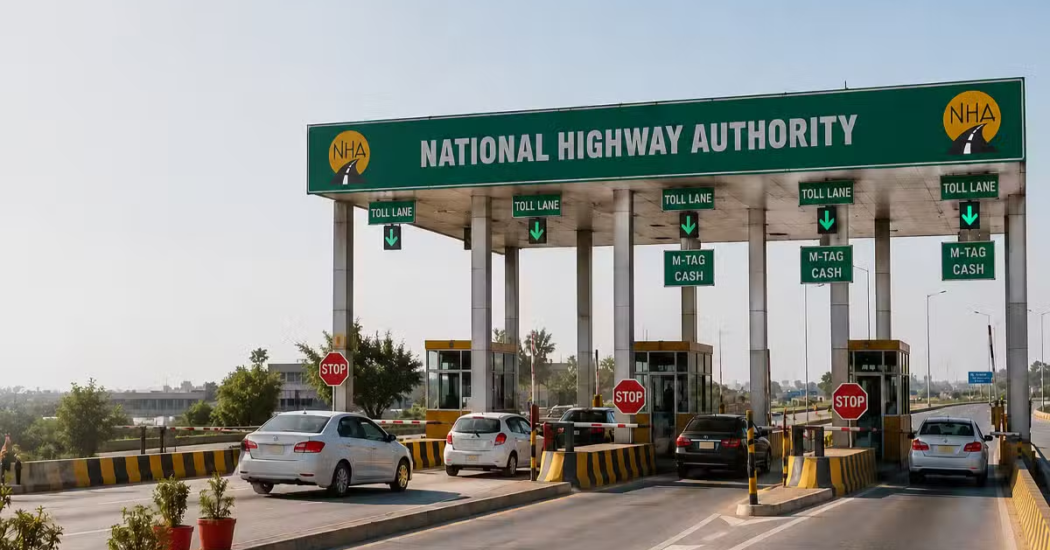
The federal government has stepped up efforts to modernize Pakistan’s road infrastructure by accelerating the implementation of Intelligent Transportation Systems (ITS) and introducing cashless electronic toll collection across major motorways and highways.
Federal Minister for Communications Abdul Aleem Khan issued the directives during a high-level review meeting held at the National Highways and Motorway Police Headquarters. The meeting focused on improving traffic management, enhancing road safety, and adopting modern technologies to streamline transportation services nationwide.
One of the key decisions taken during the meeting was the immediate inclusion of the M2 Motorway in the Intelligent Transportation Systems program. The move is expected to strengthen monitoring capabilities, improve traffic flow, and facilitate more efficient management of one of Pakistan’s busiest motorway corridors.
The proposed cashless toll collection system aims to replace traditional cash-based payments with electronic transactions, reducing delays at toll plazas and improving convenience for motorists. Officials believe the transition will help minimize congestion, shorten travel times, and create a more efficient toll collection process.
Intelligent Transportation Systems utilize advanced technologies such as digital monitoring, automated traffic management, surveillance systems, and real-time data analysis to enhance road operations. The implementation of ITS on major highways is expected to improve both safety and operational efficiency across Pakistan’s transportation network.
The government’s initiative aligns with broader efforts to modernize infrastructure and adopt smart transportation solutions commonly used in developed economies. By introducing electronic tolling and digital traffic management systems, authorities hope to improve service quality while increasing transparency in revenue collection.
Officials also discussed the importance of integrating modern technology into motorway operations to better respond to traffic incidents, monitor vehicle movement, and provide real-time information to commuters. Such measures are expected to contribute to safer and more reliable travel experiences for road users.
The inclusion of the M2 Motorway in the ITS framework highlights the government’s focus on upgrading critical transport routes that connect major cities and support economic activity. Enhanced technological capabilities are expected to improve the overall performance of Pakistan’s motorway network.
Experts believe cashless toll collection can significantly reduce operational inefficiencies by eliminating the need for manual cash handling and speeding up vehicle processing at toll booths. The system may also help improve record-keeping and support data-driven decision-making for transportation authorities.
As Pakistan continues investing in infrastructure modernization, the rollout of Intelligent Transportation Systems and electronic tolling represents an important step toward creating a smarter and more efficient road network. Motorists and transport operators are expected to benefit from faster travel, improved traffic management, and enhanced convenience once the system is fully implemented.
The latest initiative reflects the government’s commitment to embracing technology-driven solutions that support economic growth, improve public services, and strengthen the country’s transportation infrastructure for the future.