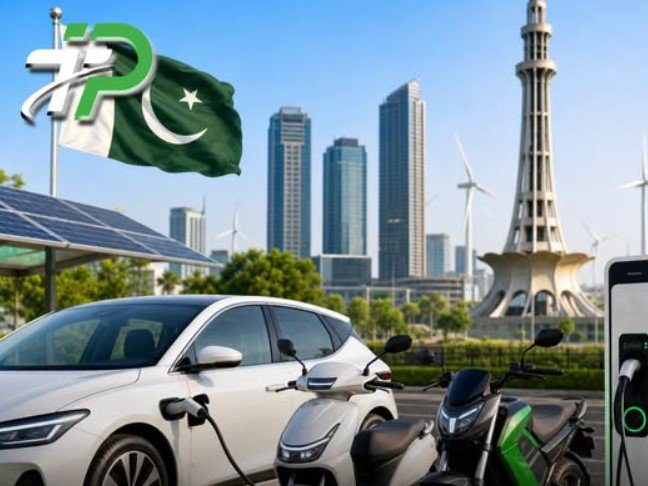
Pakistan EV Target 2030: 30% of New Vehicle Sales to Be Electric
Pakistan expects its transition toward electric vehicles to accelerate as sharply higher petrol and diesel prices make battery-powered transport increasingly economical for consumers.
The government’s New Energy Vehicle Policy 2025–30 targets electric and other qualifying new-energy vehicles accounting for 30% of all new vehicle sales by 2030.
Prime Minister’s Adviser on Industries and Production Haroon Akhtar said on October 8 that the government now believes this target could be achieved earlier than originally expected.
The shift is being driven in part by higher fuel prices, which have reduced the time required for buyers to recover the additional upfront cost of an electric vehicle.
What Is Pakistan’s EV Target for 2030?
Pakistan’s official policy target is:
30% of all new vehicle sales by 2030
The target applies across vehicle categories rather than only passenger cars.
Pakistan’s New Energy Vehicle Policy covers:
- electric motorcycles and scooters;
- three-wheelers;
- cars;
- light commercial vehicles;
- buses; and
- trucks.
The government estimates that more than 2.2 million new-energy vehicles could be supported during the policy period.
Why Is EV Adoption Expected to Accelerate?
The biggest immediate factor is the increased cost of petrol and diesel.
Haroon Akhtar said rising fuel prices have shortened the estimated period required for consumers to recover the higher purchase price of an EV to roughly:
one to one-and-a-half years.
The exact payback period will differ significantly depending on:
- the vehicle price;
- annual kilometres driven;
- electricity tariff;
- petrol price;
- charging method; and
- maintenance costs.
The government’s figure should therefore be understood as a broad market assessment rather than a guaranteed saving for every buyer.
Fuel Prices Are Changing the Economics
Petrol and diesel prices have risen significantly since the Middle East conflict escalated earlier in 2026.
Current reporting citing Pakistan State Oil data says petrol prices have increased about 54%, while diesel is around 43% higher compared with levels before the conflict intensified.
For motorists who drive large distances every month, this can make the lower energy cost of an EV increasingly important when comparing total ownership costs.
Are Electric Vehicle Sales Already Increasing?
Government officials say EV demand has accelerated.
Current reporting says sales of electric motorcycles and scooters have roughly tripled year-on-year, while electric-car sales have approximately doubled.
However, comprehensive publicly available industry-wide EV sales data remains limited.
For this reason, these reported growth rates should not be treated as a complete count of Pakistan’s entire electric-vehicle market.
Pakistan’s Official NEV Policy
The government formally launched the New Energy Vehicle Policy 2025–30 in June 2025.
The policy aims to:
- reduce imported fuel consumption;
- lower transport emissions;
- support domestic vehicle manufacturing;
- expand charging infrastructure;
- create green jobs; and
- increase adoption of electric transport.
The federal government estimated that achieving the 2030 targets could save roughly 2 billion litres of fuel annually and around US$1 billion in foreign exchange.
Does the 30% Target Mean 30% of Cars Already on Roads?
No.
This is an important distinction.
The policy target refers to the share of new vehicle sales, not 30% of the entire vehicle fleet already operating in Pakistan.
Millions of petrol- and diesel-powered vehicles will remain on the road even if 30% of new vehicles sold annually become electric.
Replacing the country’s total vehicle fleet will take much longer.
What About Electric Cars Specifically?
Electric passenger cars form one part of the broader NEV policy.
Government targets also include much larger volumes of electric motorcycles and scooters because two-wheelers account for a major share of personal transport in Pakistan.
The policy document includes annual adoption targets for two-wheelers, three-wheelers, four-wheelers and commercial vehicle categories.
Therefore, headlines saying “30% of new cars will be electric” oversimplify the actual policy.
The more accurate wording is:
30% of new vehicle sales are targeted to be new-energy vehicles by 2030.
New Auto Policy Could Bring More EV Incentives
Pakistan is also preparing another automobile policy.
Haroon Akhtar said the new policy could be placed before the federal cabinet soon.
The government is considering additional tax incentives aimed at reducing the price difference between electric and conventional vehicles.
No final new tax package should be treated as confirmed until the policy receives formal approval and the relevant tax or regulatory notifications are issued.
Why Electric Vehicles Matter for Pakistan’s Import Bill
Pakistan imports a large amount of petroleum every year.
Current reporting puts petroleum imports at approximately US$16.9 billion in the year through June 2026, accounting for a substantial portion of the country’s overall import bill.
Reducing fuel demand is therefore not only an environmental policy.
It can also affect:
- Pakistan’s trade deficit;
- foreign-exchange demand;
- exposure to global oil-price shocks; and
- domestic transport costs.
What Is Still Holding EV Adoption Back?
Despite improving economics, several obstacles remain.
Higher Purchase Price
Many EVs remain more expensive upfront than comparable petrol vehicles.
Charging Infrastructure
Charging availability remains limited outside major urban centres and highways.
Apartment and Street Parking
Consumers without dedicated parking may find home charging difficult.
Battery Concerns
Buyers often consider battery warranty, degradation and eventual replacement costs before purchasing.
Resale Value
Pakistan’s used-EV market is still developing, making future resale values less predictable than those of established petrol models.
Will Petrol Cars Disappear by 2030?
No.
The 2030 goal does not ban petrol or diesel vehicles and does not mean all new vehicles will become electric.
It is a market-share target for new-energy vehicles.
Conventional vehicles will continue to make up part of new sales and a much larger portion of the existing fleet for years.
Frequently Asked Questions
What percentage of new vehicles does Pakistan want to be electric?
Pakistan’s NEV Policy targets 30% of new vehicle sales by 2030.
Does that mean 30% of new cars?
The target covers multiple vehicle categories, including motorcycles, rickshaws, cars, buses and commercial vehicles.
Could Pakistan reach the target before 2030?
The government currently believes adoption could accelerate enough to reach the target earlier, largely because higher petrol and diesel prices have improved the economics of EV ownership.
How quickly can an EV recover its higher purchase price?
A government adviser currently estimates roughly one to one-and-a-half years under present fuel-price conditions, although actual savings vary significantly by vehicle and usage.
Is a new auto policy coming?
The government says a new automobile policy is being prepared and may include additional EV tax incentives, but the final measures are not yet confirmed.
