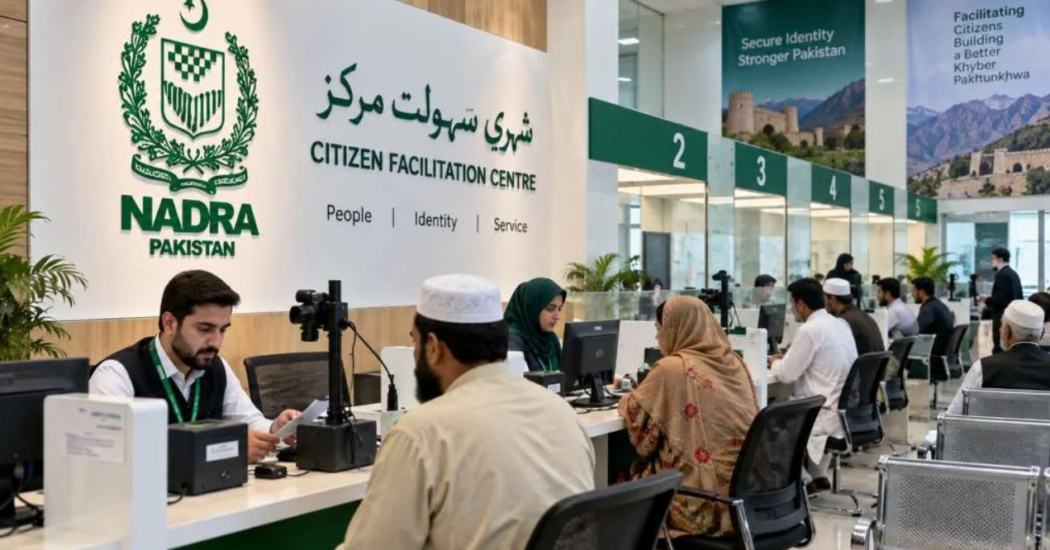
NADRA says 43 Citizen Facilitation Centres are now operational across 11 districts of Khyber Pakhtunkhwa, providing multiple government and identity-related services under one roof.
The centres are part of the Khyber Pakhtunkhwa Citizen Centre Services Delivery Project, designed to make essential services more accessible, particularly for communities that previously needed to visit several government offices.
What Services Are Available?
According to NADRA, the centres provide services including:
- NADRA registration and CNIC processing;
- birth and other vital-event registration;
- e-Sahulat services;
- e-domicile services;
- child wellness grants;
- health-awareness services;
- child immunisation; and
- banking-related facilities.
The centres are intended to serve as one-stop public-service points.
How Many Citizens Have Used the Services?
NADRA’s official project statistics show substantial usage.
More than 656,000 CNIC-related cases have been processed through the project, while the centres have recorded over 808,000 CRMS transactions relating to civil registration.
NADRA also reports more than 71,000 e-Sahulat transactions and over 31,000 Child Wellness Grant cases.
How Many Districts Are Covered?
The current network consists of:
43 centres in 11 districts of Khyber Pakhtunkhwa.
A project update reported on October 17 says implementation has reached around 72%, with completion targeted for December 31, 2026.
Are These Ordinary NADRA Registration Centres?
Not exactly.
NADRA already operates a wider network of registration centres across KP. Its current nationwide statistics list 233 NADRA centres in Khyber Pakhtunkhwa, including mega centres, double-shift centres and female-focused facilities.
The 43 facilities in this project are broader Citizen Facilitation Centres, combining NADRA services with other government, welfare and administrative services.
That distinction is worth making in the article so readers do not assume KP has only 43 NADRA offices.
Why Does the Project Matter?
The one-window model reduces the need for citizens to travel between different offices for identity, civil-registration, welfare and other government services.
It can be particularly useful in districts where distance and administrative complexity make accessing government services difficult.