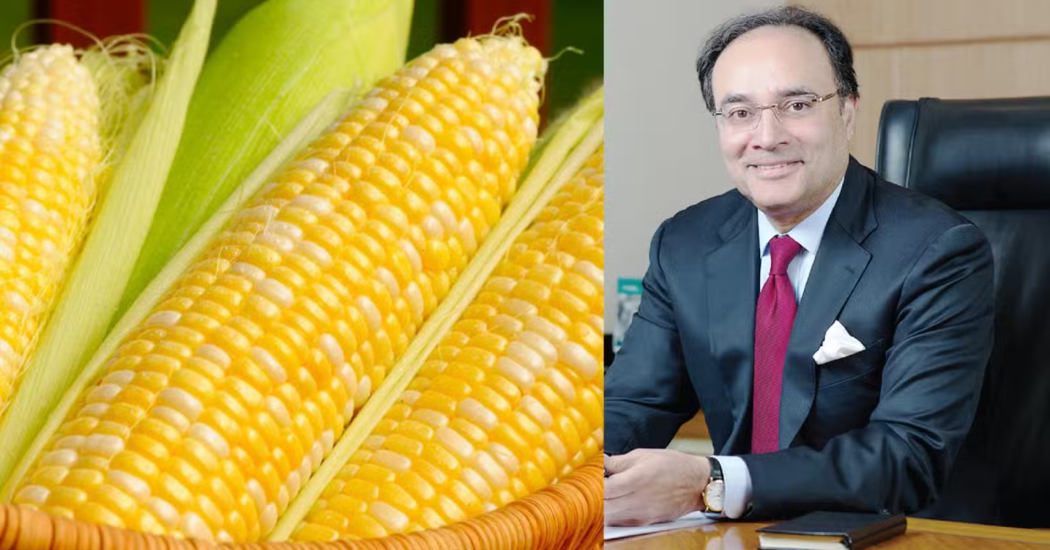
Finance Minister Muhammad Aurangzeb has called for concrete steps to bring genetically modified (GM) corn to Pakistan’s commercial market, signaling a potential shift in the country’s approach to agricultural biotechnology.
Aurangzeb chaired a government committee meeting in Islamabad on Monday to review Pakistan’s policy concerning genetically modified maize and examine the framework required for its commercial introduction.
The meeting focused on developing a clear and practical roadmap for moving locally developed GM corn from research and regulatory stages toward wider market availability.
The committee reached an agreement on the way forward and decided to prepare a detailed plan for the transition and implementation of genetically modified corn in Pakistan.
The development could have significant implications for Pakistan’s agriculture sector, particularly as farmers continue to face challenges related to crop productivity, rising input costs, pests and changing weather conditions.
Genetically modified maize is developed by introducing specific genetic traits that can provide advantages such as improved resistance to certain pests or greater tolerance to particular environmental stresses.
For Pakistan, the commercial availability of locally developed GM corn could potentially support efforts to improve agricultural efficiency while reducing dependence on imported agricultural technologies.
The government’s latest move also highlights the importance of establishing an effective regulatory framework before GM crops are introduced on a wider commercial scale.
Such a framework would need to address issues including biosafety, cultivation standards, seed approval, monitoring and compliance to ensure that the technology is deployed responsibly.
The committee’s decision to finalize a detailed implementation plan suggests that the government is moving beyond policy discussions and looking at practical steps for commercialization.
Finance Minister Muhammad Aurangzeb’s support could also provide greater momentum to coordination among government departments, agricultural institutions, researchers and other stakeholders involved in the development of genetically modified maize.
Pakistan has a large agricultural economy, and maize is an important crop used for food, livestock feed and industrial purposes. Any improvement in maize productivity could therefore have wider effects across the agricultural and food supply chain.
However, the introduction of genetically modified crops also requires careful consideration of farmers’ needs, environmental safeguards and public concerns.
Clear regulations and transparent monitoring will be important to ensure that farmers and consumers have confidence in the process.
The government’s planned transition framework is expected to provide greater clarity on how locally developed GM corn could be introduced into the market and what requirements would apply to its commercial cultivation.
If implemented effectively, the initiative could become part of Pakistan’s broader efforts to modernize agriculture through science, research and technology.
The next phase will focus on finalizing the detailed plan for transitioning genetically modified corn toward commercial implementation, following the committee’s agreement on the proposed way forward.