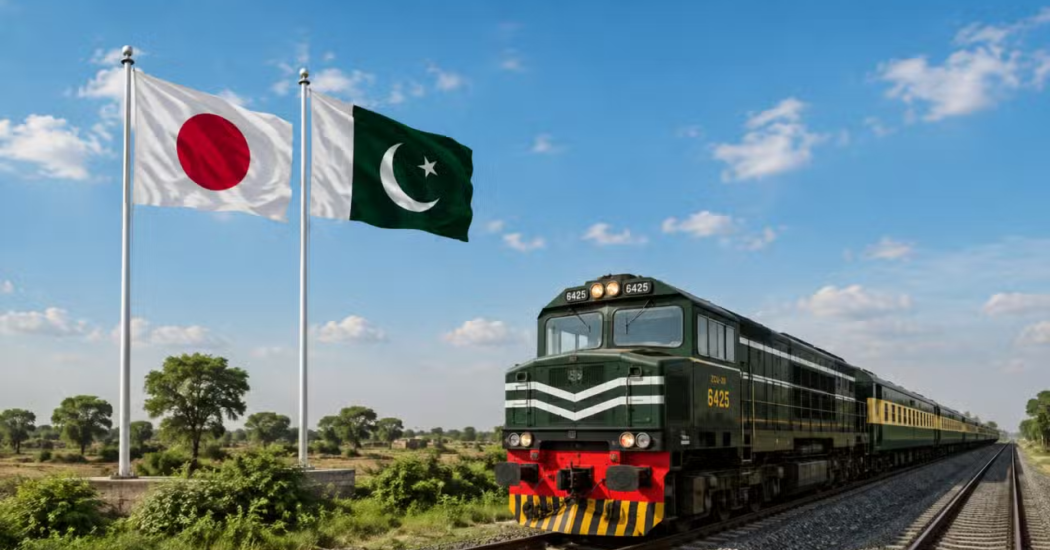
Pakistan Invites Japan to Co-Finance ML-1 Railway Project to Strengthen Infrastructure Partnership
Pakistan has formally invited the Japan International Cooperation Agency (JICA) to co-finance the Main Line-1 (ML-1) Railway Project, one of the country’s largest transport infrastructure initiatives. The proposal highlights Islamabad’s efforts to diversify international partnerships and accelerate the modernization of its railway network through global development cooperation.
The invitation was discussed during a high-level meeting between Minister for Economic Affairs Ahad Cheema and JICA President Dr. Tanaka Akihiko, who visited Pakistan with a senior delegation to explore new opportunities for collaboration in key development sectors.
The ML-1 Railway Project is regarded as the backbone of Pakistan’s rail transportation system. Stretching from Karachi to Peshawar, the corridor serves as the country’s primary railway route, connecting major cities, industrial centers, ports, and commercial hubs. Upgrading this strategic network is expected to significantly improve passenger services, freight transportation, and overall logistics efficiency.
By inviting JICA to participate in financing the multibillion-dollar project, Pakistan aims to attract additional international investment while strengthening its long-standing development partnership with Japan. Officials believe diversified financing can help accelerate implementation and ensure the project’s long-term sustainability.
The discussions also reflected both countries’ commitment to expanding cooperation beyond traditional development assistance. During the meeting, both sides explored opportunities to enhance collaboration in infrastructure, transportation, economic development, and other priority sectors that support Pakistan’s long-term growth objectives.
The Japan International Cooperation Agency has remained one of Pakistan’s key development partners for decades, supporting numerous projects in infrastructure, education, healthcare, disaster management, water resources, and capacity building. Its involvement in the ML-1 project could bring valuable technical expertise alongside financial support.
The ML-1 modernization project seeks to upgrade Pakistan’s aging railway infrastructure through track rehabilitation, improved signaling systems, modern communication technology, enhanced safety measures, and faster train operations. Once completed, the project is expected to reduce travel times, improve reliability, and increase the railway network’s freight-handling capacity.
A modernized rail system would also strengthen trade and logistics by enabling more efficient movement of goods between Pakistan’s ports and inland markets. Improved freight services could lower transportation costs for businesses while supporting industrial growth and regional connectivity.
Economic experts view railway modernization as an essential component of Pakistan’s broader infrastructure development strategy. Efficient rail transport not only facilitates domestic commerce but also enhances the country’s ability to participate in regional trade corridors connecting South Asia, Central Asia, and neighboring markets.
The government’s outreach to JICA demonstrates its intention to broaden international financing sources for major infrastructure projects. Engaging multiple development partners can help distribute financial risks, encourage knowledge sharing, and promote the adoption of global best practices in project execution.
The meeting between Minister Ahad Cheema and Dr. Tanaka Akihiko also underscored the strong diplomatic and economic relationship between Pakistan and Japan. Both countries have consistently cooperated on initiatives aimed at promoting sustainable development, improving public infrastructure, and strengthening institutional capacity.
For Pakistan, successful financing of the ML-1 project could become a transformational milestone for the transportation sector. Enhanced railway infrastructure has the potential to stimulate economic activity, create employment opportunities, improve supply chain efficiency, and support long-term national development goals.
As discussions continue with international development partners, the ML-1 Railway Project remains one of Pakistan’s highest-priority infrastructure initiatives. Any future collaboration with JICA would represent another important step toward modernizing the country’s rail network and reinforcing economic cooperation between Pakistan and Japan.
