The NADRA Family Registration Certificate (FRC) is one of the most commonly requested documents when Pakistanis need to show their registered family relationships for immigration, visa, legal or administrative purposes.
In 2026, an FRC can be obtained through NADRA’s PakID mobile app as well as through NADRA registration facilities.
The current NADRA fee is Rs1,000 for an individual family category and Rs2,000 for the combined family certificate, with the official fee schedule listing approximately one-day processing.
However, the FRC is often misunderstood. It is not the same as a B-Form, CNIC or birth certificate, and the family members appearing on it depend on the family relationships recorded in NADRA’s database.
This guide explains the NADRA FRC fee in 2026, types of FRC, online application process, eligibility, payment methods and what to do when a family member is missing or incorrect.
What Is a NADRA Family Registration Certificate?
The Family Registration Certificate is an official NADRA document showing the family composition data of a registered person.
NADRA issues the FRC under Rule 19 of the NADRA (NIC) Rules, 2002.
It is generally used for purposes including:
- immigration applications;
- visa processing;
- family relationship verification;
- administrative documentation; and
- certain legal procedures.
NADRA describes the FRC specifically as proof of the family composition recorded in its database.
NADRA FRC Fee 2026
The current NADRA fee structure is:
| FRC Type | Fee | Processing Time |
|---|---|---|
| One family category — Alpha, Beta or Gamma | Rs1,000 | 1 day |
| Combined family categories | Rs2,000 | 1 day |
Unlike CNIC applications, the current fee structure does not offer separate Normal, Urgent and Executive prices for FRC.
The certificate is effectively processed under the single listed FRC category.
What Are the Different Types of FRC?
NADRA currently provides four FRC application options:
FRC By Birth
An FRC By Birth shows the applicant’s family relationships through birth.
It generally includes:
- father;
- mother;
- brothers; and
- sisters.
NADRA also refers to this family grouping as the Alpha family.
This type can be useful when someone needs to establish their relationship with parents or siblings.
FRC By Marriage
An FRC By Marriage reflects family relationships created through marriage.
It generally includes:
- spouse; and
- children.
This is commonly referred to as the Beta family.
For a married applicant requiring documentation showing a spouse and children, this is normally the relevant category.
FRC By Adoption
NADRA also provides an FRC By Adoption.
This category reflects:
- guardian; and
- adopted family members.
This grouping corresponds to what NADRA’s rules describe as the Gamma family.
FRC By All
The By All option combines the applicable family relationships rather than limiting the certificate to only one family grouping.
NADRA describes this option as including both Alpha and Beta family members.
FRC Types at a Glance
| FRC Category | Usually Shows |
|---|---|
| By Birth / Alpha | Parents and siblings |
| By Marriage / Beta | Spouse and children |
| By Adoption / Gamma | Guardian and adopted family |
| By All | Combined applicable family composition |
Choosing the correct category matters because the information displayed on the certificate depends on the type selected.
Who Can Apply for an FRC?
NADRA says family members should generally be registered in its system and possess valid 13-digit identification numbers.
The applicant needs a valid NADRA identification number associated with a document such as:
- CNIC;
- NICOP;
- Child Registration Certificate;
- Juvenile Card; or
- Pakistan Origin Card.
Current NADRA rules also allow certain unregistered deceased or living family members to be reflected in specific circumstances based on information provided by the applicant.
For most ordinary applications, the important requirement is that the applicant’s family relationships are properly linked in NADRA’s database.
Can You Apply for NADRA FRC Online?
Yes.
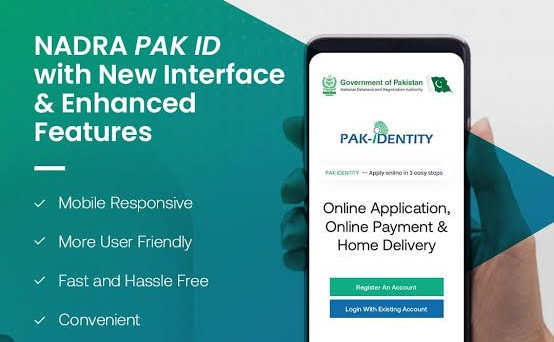
NADRA officially supports FRC applications through the PakID mobile app.
This means many applicants can obtain the certificate without waiting in a traditional NADRA queue.
The PakID application includes a dedicated Family section containing options for:
- FRC;
- CRC/B-Form; and
- Family Composition.
NADRA’s official FRC user guide instructs applicants to select FRC or Family Composition from this section to start the process.
How to Apply for FRC Through PakID
The basic process is:
- Download and open the official NADRA PakID mobile app.
- Sign in to your PakID account.
- Go to the Family section.
- Select FRC or Family Composition.
- Review the family members linked to your NADRA record.
- Select the FRC category you require.
- Complete the application information.
- Pay the applicable fee.
- Submit the application.
- Download the certificate after processing.
NADRA’s official PakID FRC guide shows applicants selecting among By Birth, By Marriage, By Adoption and By All during the application process.
How Do You Receive an Online FRC?
One major advantage of applying digitally is that an online FRC does not need to wait for conventional card delivery.
NADRA’s Services Charter states that FRCs applied for online can be downloaded from the PakID application inbox.
This corrects an important outdated statement on the old Trending Pakistan article.
An FRC is a certificate, not a physical identity card that must necessarily be delivered to your home.
How Can You Pay the NADRA FRC Fee?
NADRA currently supports several digital payment methods.
Applicants can pay through:
- Visa or Mastercard credit card;
- debit card;
- Raast;
- Easypaisa;
- JazzCash; and
- e-Sahulat franchises.
NADRA specifically lists FRC and Smart NIC applications among those eligible for payment through Easypaisa, JazzCash and e-Sahulat.
This gives applicants considerably more flexibility than older NADRA processes that relied heavily on in-person payments.
Can You Apply for FRC at a NADRA Centre?
Yes.
PakID is not the only way to obtain an FRC.
Applicants can also use a NADRA Registration Centre.
An in-person visit can be particularly useful where:
- a family relationship is missing;
- family data appears incorrect;
- the digital application cannot proceed;
- verification is required; or
- the applicant prefers physical assistance.
NADRA officially lists both registration centres and PakID as channels for accessing identity services including FRC.
What If a Family Member Is Missing From the FRC?
This is one of the most common FRC problems.
An FRC is generated from the family composition information held in NADRA’s database.
Therefore, if a spouse, child, parent or sibling is missing, simply applying for another FRC may not solve the problem.
The underlying family relationship may first need to be corrected or linked in NADRA’s records.
NADRA’s PakID FRC interface allows applicants to review family-member information before applying, and its official FRC page addresses scenarios where family information needs correction.
Applicants should therefore check their family composition carefully before paying for the final certificate.
Can You Directly Edit an FRC?
Think of the FRC as an output of NADRA’s family database, rather than a document whose individual lines can simply be edited.
If the family composition is wrong, the relevant NADRA record should be corrected.
Once the underlying family data has been updated, a fresh FRC can be generated reflecting the revised information.
The amended NADRA rules provide for correcting discrepancies in family composition before an FRC is issued.
Does a NADRA FRC Expire?
This is an important distinction.
The amended NADRA rules state that the Family Registration Certificate does not have a fixed expiration date.
However, it represents the family composition stored by NADRA on the date the certificate was issued.
If the family composition later changes — for example because of marriage, birth, death, divorce or another family-record update — an older FRC may no longer reflect the current family structure and a new certificate can be obtained.
So the practical answer is:
An FRC does not have a standard expiry date, but it should be updated when the underlying family composition changes.
An embassy, university, immigration authority or other institution may also ask applicants to submit a recently issued certificate under its own document requirements.
Is an FRC Proof of Pakistani Nationality?
An FRC should primarily be understood as proof of family composition recorded by NADRA.
It is not the same as a CNIC, NICOP or passport.
NADRA’s official description defines the certificate around family-composition information and separately identifies CNIC and NICOP as identity documents issued to Pakistani citizens.
Therefore, if an authority specifically requests proof of nationality, applicants should check which identity or citizenship document that authority accepts rather than assuming an FRC alone will satisfy the requirement.
Is FRC Required for a Visa?
There is no universal rule requiring an FRC for every visa.
However, NADRA specifically identifies immigration and visa processing as common uses of the Family Registration Certificate.
Different embassies, universities and immigration authorities have their own documentation requirements.
An FRC may be requested when the institution needs evidence of:
- parents;
- siblings;
- spouse;
- children; or
- general family relationship.
Applicants should follow the checklist issued by the embassy or authority handling their individual case.
Does FRC Show Deceased Family Members?
NADRA’s current eligibility guidance acknowledges that unregistered deceased family members can be included in certain circumstances, with their particulars recorded according to the information provided by the applicant
The exact family information displayed will depend on the applicant’s NADRA family record and the FRC type being requested.
Where a death has not been properly recorded in NADRA’s system, families may need to update the underlying identity record.
What If My Spouse Does Not Appear on FRC By Marriage?
If a spouse does not appear on an FRC by marriage, this can indicate that the marital relationship is not correctly reflected in the applicant’s NADRA family composition.
Do not repeatedly pay for new FRC applications expecting the spouse to appear automatically.
Instead, check the family record and have the underlying relationship corrected through NADRA if required.
After the database is updated, a fresh FRC can reflect the corrected family composition.
What If My Child Is Missing From the FRC?
A child should be properly linked in the family’s NADRA records.
If a child is missing, check whether the child’s own NADRA registration — such as their B-Form/Child Registration Certificate or other appropriate identity document — has been completed correctly.
This is where our separate NADRA B-Form 2026 guide becomes useful.
A B-Form registers the individual child, while an FRC shows the broader family composition.
They are related documents, but they are not interchangeable.
FRC vs B-Form: What Is the Difference?
| Document | What It Shows |
|---|---|
| B-Form / CRC | Identity and registration of an individual child under 18 |
| FRC | Registered family composition and relationships |
For example:
If you need to register a child with NADRA, you generally need a B-Form/CRC.
If you need a certificate showing your parents and siblings, or spouse and children, you generally need an FRC.
NADRA treats them as separate identity/family services.
FRC vs CNIC
A CNIC establishes an adult Pakistani citizen’s identity.
An FRC displays family composition.
So a person can have a valid CNIC but still need a separate FRC when an organisation requests proof of family relationships.
The two documents serve different purposes.
FRC vs Birth Certificate
A birth certificate records the registration of an individual’s birth through the relevant civil-registration authority.
An FRC shows the family relationships reflected in NADRA’s database.
They should not be treated as substitutes unless the particular authority receiving the documents specifically allows an alternative.
Can Overseas Pakistanis Apply for FRC?
Yes.
FRC is particularly useful to overseas Pakistanis because family documentation is frequently required for immigration, residency, education and visa procedures.
PakID’s online availability means applicants can access FRC services digitally without necessarily being physically present at a NADRA centre in Pakistan. NADRA includes FRC among the services available through PakID.
Applicants should still ensure that their family composition in NADRA is accurate before submitting the certificate to a foreign authority.
How Long Does NADRA FRC Take?
NADRA’s current official fee structure lists an FRC processing timeline of approximately:
1 day.
However, an application involving incorrect or incomplete family data may take longer because the underlying record may need to be corrected or verified first.
The one-day timeframe should therefore be understood as the listed processing time for a straightforward FRC application.
NADRA FRC 2026 FAQs
What is the NADRA FRC fee in 2026?
The fee is currently Rs1,000 for an Alpha, Beta or Gamma family FRC and Rs2,000 for the combined family certificate.
Can I apply for FRC online?
Yes. NADRA supports FRC applications through its official PakID mobile app.
How long does FRC take?
The current official fee schedule lists one-day processing for FRC.
What is FRC By Birth?
It shows the applicant’s parents and siblings and corresponds to the Alpha family category.
What is FRC By Marriage?
It shows the applicant’s spouse and children and corresponds to the Beta family category.
What is FRC By Adoption?
It shows the guardian and adopted family members.
Does FRC expire?
The amended NADRA rules do not give the FRC a fixed expiry date. It remains a record of the family composition as it existed at issuance, so a fresh certificate should be obtained after relevant family-record changes.
Can I pay the FRC fee through Easypaisa or JazzCash?
Yes. NADRA currently permits FRC payments through Easypaisa and JazzCash, along with cards, Raast and e-Sahulat.
How do I receive an online FRC?
NADRA says an FRC applied for online can be downloaded through the PakID app inbox.
What should I do if a family member is missing?
Check and correct the underlying family composition in NADRA’s records before requesting the final FRC.
Final Word
The NADRA FRC process in 2026 is considerably easier than older manual procedures because applicants can now review their family composition, submit an application, pay digitally and obtain the certificate through PakID.
The most important figures to remember are:
Rs1,000 — one family category
Rs2,000 — combined family categories
1 day — current listed processing time.
Before applying, however, check that your parents, siblings, spouse and children appear correctly in NADRA’s family records.
An FRC simply reflects the family composition recorded by NADRA. If the underlying record is wrong, obtaining another certificate will not fix the relationship automatically.
For families with children, it is also important to distinguish the FRC from the B-Form/CRC. The B-Form registers the child, while the FRC shows how registered family members are connected.