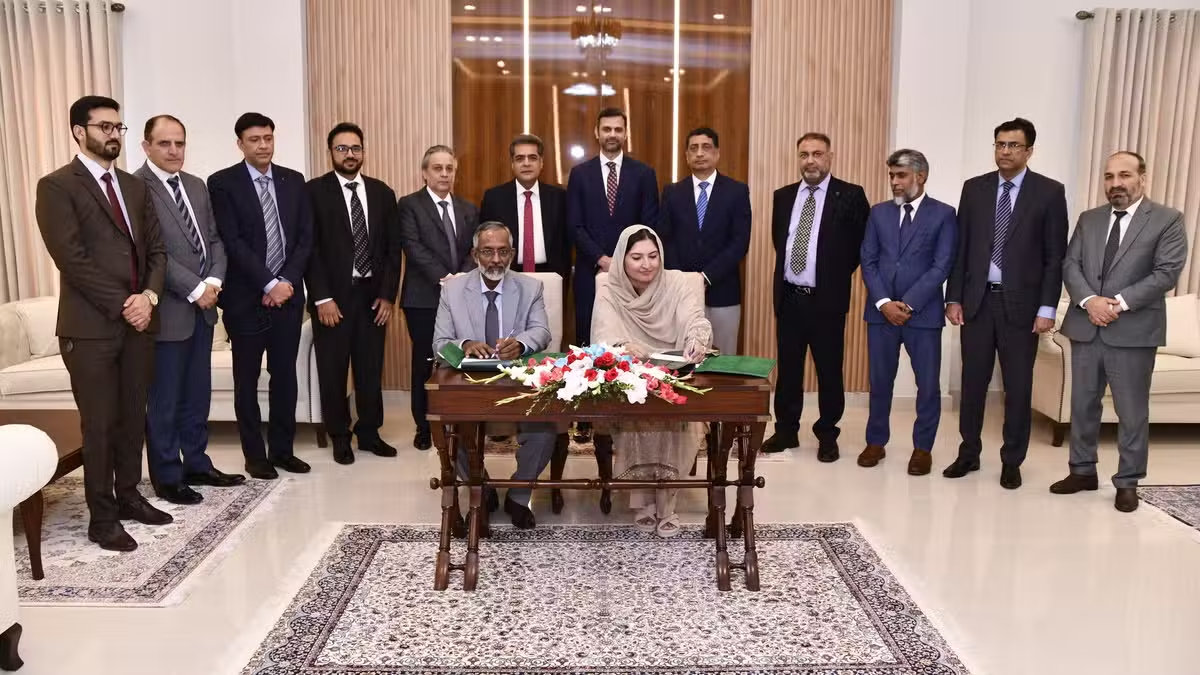
Three PSX Firms to Be Delisted After Failure to Clear Outstanding Dues

The Pakistan Stock Exchange has ordered mandatory share buybacks for three listed companies after their failure to clear outstanding financial obligations. The decision affects Haseeb Waqas Sugar Mills Limited, Dadabhoy Construction Technology Limited, and Imperial Limited.

According to the exchange, majority shareholders of these firms will be required to provide an exit mechanism for minority investors. This move is intended to protect small shareholders while ensuring compliance with market regulations.

The buyback process must be completed within 90 days, with a final deadline set for July 20, 2026. During this period, investors holding shares in the affected companies will be offered an exit opportunity under conditions determined by the exchange.

The PSX has also stated that it will determine the buyback price itself. This ensures that valuations remain consistent with regulatory standards and reflect fair market considerations rather than internal company estimates.

The decision comes amid ongoing efforts by the exchange to strengthen corporate governance and enforce stricter compliance rules for listed entities. Companies that fail to meet financial or regulatory obligations face increasing scrutiny as part of broader market reforms.

For minority shareholders, the mandatory buyback provides a structured exit route, reducing the risk of prolonged exposure to financially distressed companies. It also reinforces investor protection mechanisms within Pakistan’s capital markets.

Market observers note that such actions are part of a wider push to improve transparency and accountability on the stock exchange. By enforcing delisting and buyback rules, the PSX aims to maintain investor confidence and ensure cleaner market operations.

Overall, the move signals a stricter regulatory stance by the exchange, emphasizing compliance and financial discipline among listed companies.

Beko Invests $20 Million in Dawlance to Upgrade Manufacturing Capabilities in Pakistan

Beko, a subsidiary of Koç Holding, has announced a $20 million investment to modernize the manufacturing infrastructure of Dawlance. The move marks a significant step toward strengthening industrial capabilities and expanding advanced production in Pakistan’s home appliances sector.

The investment focuses on upgrading Dawlance’s refrigerator manufacturing operations. It aims to introduce modern production techniques, enhanced assembly systems, and global engineering standards to improve overall efficiency and product quality.

Senior leadership from Koç Holding and Beko attended the inauguration ceremony, reinforcing the group’s long-term commitment to Pakistan. Officials highlighted that this initiative is part of a broader strategy to deepen localization while aligning local manufacturing practices with international benchmarks.

Pakistan continues to be a key market for Koç Group due to its growing population and evolving consumer demand. Since 2016, Beko has invested over $375 million in Dawlance, reflecting sustained confidence in the country’s industrial and economic potential.

The latest upgrade will enable Dawlance to integrate automation technologies and develop workforce capabilities. It also includes the adoption of international manufacturing practices, allowing the company to enhance product innovation and operational efficiency.

As part of this transformation, Dawlance is expanding its refrigerator lineup with new No-Frost and Combi models. These additions are designed to meet the changing needs of Pakistani consumers while maintaining competitive standards in performance and energy efficiency.

The investment also supports broader economic goals by strengthening local engineering talent and reducing reliance on imported goods. By enhancing domestic production capacity, Dawlance is better positioned to explore export opportunities and contribute to Pakistan’s industrial growth.

Executives from Beko emphasized that Asia remains central to the company’s global expansion strategy, with Pakistan playing a crucial role. Through Dawlance, the group aims to establish a regional benchmark for appliance manufacturing, combining global expertise with local market insight.

This development highlights the growing collaboration between Türkiye and Pakistan in industrial and economic sectors. With bilateral trade already reaching approximately $1.4 billion in 2024, both countries are working toward further expanding trade volumes in the coming years.

Overall, the $20 million investment signals a strong commitment by Koç Group and Beko to drive innovation, improve manufacturing standards, and support long-term economic development in Pakistan.

2 Pakistani Astronauts Selected for China’s Space Mission

Pakistan has taken a historic step in its space ambitions as two astronauts have been selected for participation in China’s human spaceflight program. This development marks a significant milestone, signaling the country’s growing presence in advanced space exploration initiatives.

The selected candidates, Muhammad Zeeshan Ali and Khurram Daud, are set to travel to China to begin intensive training. Their preparation will take place at a specialized astronaut training facility, where they will undergo advanced simulations and mission readiness programs as part of a joint collaboration.

This initiative is being led by the Space and Upper Atmosphere Research Commission (SUPARCO), which confirmed that the mission is part of Pakistan’s first planned involvement in a future flight to China’s space station. The mission is currently expected to take place in late 2026, making it a landmark moment for the nation.

One of the two astronauts is likely to be selected as a payload specialist. If confirmed, this individual would become the first foreign astronaut to visit China’s space station, further strengthening bilateral cooperation between the two countries in the field of space science and technology.

Officials have described the selection as a breakthrough for Pakistan’s Human Spaceflight Program. It places the country among a select group of nations contributing to manned space missions, highlighting its progress in scientific research and technological development.

During the mission, the Pakistani astronaut is expected to conduct experiments in microgravity. These studies will focus on critical fields such as material science, fluid physics, biotechnology, and life sciences. The outcomes of such research could contribute to advancements in climate resilience, food security, and industrial innovation.

The selection process follows a cooperation agreement signed in February 2025 between SUPARCO and the China Manned Space Agency. Under this agreement, two Pakistani candidates were to receive formal astronaut training, paving the way for future joint missions.

This collaboration also reflects China’s broader strategy to expand international partnerships in space exploration. By involving countries like Pakistan, it is fostering scientific exchange while strengthening diplomatic ties through shared technological goals.

Pakistan’s participation in this mission represents more than just a scientific achievement. It symbolizes the country’s aspirations to become an active contributor to global space exploration and innovation, opening new opportunities for research, education, and technological growth.

PSL 11: Lahore Qalandars Edge Past Quetta Gladiators in Thrilling Nine-Run Victory

Defending champions Lahore Qalandars secured a tense nine-run win over Quetta Gladiators at Gaddafi Stadium in one of the most closely contested matches of the PSL 11. The victory marked their fourth win of the tournament and reinforced their strong form in the ongoing season.

Batting first, Lahore Qalandars posted a competitive total of 198 runs, setting a challenging target for Quetta. In response, Quetta Gladiators fought hard but finished at 188 for 7, falling short despite several impactful batting performances.

Quetta’s chase began positively as opener Shamyl Hussain and captain Saud Shakeel built a solid partnership of 49 runs. However, the momentum shifted when Sikandar Raza struck to dismiss the Quetta skipper for 17 off 17 balls, breaking a promising start.

Shamyl Hussain continued to anchor the innings with confident stroke play and later joined forces with Rilee Rossouw to keep the chase alive. The young batter reached his third PSL half-century, scoring 53 off just 31 deliveries, including five boundaries and three sixes.

His innings came to an abrupt end following a sharp run-out, as a direct throw from Daniel Sams was collected cleanly by wicketkeeper Haseebullah Khan, turning the game further in Lahore’s favor.

Despite resistance from Quetta’s middle order, the disciplined bowling effort from Lahore Qalandars in the final overs ensured they successfully defended their total and walked away with a crucial victory.

The result further strengthens Lahore’s position in the PSL 11 standings, while Quetta Gladiators will look to regroup after a narrow defeat in a high-pressure encounter.

FIA and Customs Launch Joint Probe Into Disappearance of 400kg Silver Consignment

Pakistan’s law enforcement and revenue agencies are investigating a high-profile case involving the alleged disappearance and tampering of a large quantity of seized silver during official transit.

The Federal Investigation Agency (FIA) and Pakistan Customs have agreed to form a joint investigation committee after serious discrepancies were discovered in a consignment originally seized in Quetta and destined for Lahore.

According to officials from the Federal Board of Revenue (FBR), Customs Enforcement had confiscated 698 kilograms of silver bars in Quetta as part of an enforcement action. The consignment was later transferred under official custody and dispatched to the Pakistan Mint for verification and processing.

However, upon arrival at the destination, authorities reportedly discovered a major discrepancy. Around 400 kilograms of the silver were allegedly replaced with lead during transit, raising serious concerns about internal handling procedures and possible criminal involvement.

The case has prompted Pakistan Customs to formally request the Federal Investigation Agency to intervene and conduct a detailed inquiry alongside customs officials. The joint committee is expected to examine the entire chain of custody, from seizure to transportation and final delivery.

Officials say the investigation will focus on identifying where the tampering occurred and who may have been responsible for the alleged substitution. The involvement of both agencies indicates the seriousness of the breach, particularly given the high-value nature of the seized material.

The incident has also raised broader questions about the security protocols governing the movement of confiscated goods. Ensuring transparency and accountability in such cases is considered essential to maintaining trust in enforcement institutions.

The formation of a joint committee between Customs and the Federal Investigation Agency reflects an effort to address potential gaps in oversight and strengthen procedural safeguards for future operations.

As the investigation progresses, authorities are expected to review documentation, transport records, and personnel involved in the shipment process to determine how such a significant discrepancy could have occurred.

Pakistan Budget 2026-27 Likely to Offer Limited Relief for Salaried Class Amid IMF Conditions

Pakistan’s upcoming federal budget for 2026-27 is expected to bring only modest relief for salaried individuals, while introducing stricter fiscal measures to align with commitments made to the International Monetary Fund.

According to early indications, the government is preparing a budget framework that prioritizes economic stability over broad-based tax relief. This means salaried taxpayers may see minimal reductions in their tax burden, as authorities focus on meeting revenue targets and maintaining financial discipline.

One of the key features of the budget is likely to be the gradual removal of certain tax exemptions. These measures are aimed at widening the tax base and improving revenue collection, in line with recommendations from the International Monetary Fund. While this approach may strengthen fiscal health, it could also increase the financial pressure on individuals and businesses.

Electricity tariffs are also expected to rise more frequently under the new budget plan. The adjustments are part of ongoing energy sector reforms designed to reduce circular debt and ensure cost recovery. However, higher power bills could add to inflationary pressures, especially for middle-income households.

The government is set to unveil the budget in the first week of June, with policymakers walking a tightrope between economic reform and public expectations. Maintaining access to international financial support remains a top priority, particularly as Pakistan continues to navigate external financing challenges.

Economic analysts suggest that adherence to International Monetary Fund conditions is crucial for ensuring timely disbursements and restoring investor confidence. However, the social impact of these measures, particularly on the salaried class, will remain a key concern.

The focus on fiscal consolidation reflects the broader strategy to stabilize Pakistan’s economy, control deficits, and manage debt obligations. While these steps are necessary for long-term sustainability, they may limit the government’s ability to provide immediate financial relief.

As the budget announcement approaches, businesses, investors, and households will be closely watching for final details. The balance between reform and relief will ultimately determine how the budget is received by the public and markets alike.

Australia-Pakistan Emerging Scholars Network Launched to Support Students Planning Study in Australia

The Consulate General of Pakistan in Sydney has launched the Australia-Pakistan Emerging Scholars Network, a new initiative designed to connect Pakistani students already studying in Australia with those preparing to pursue higher education there.

The platform aims to strengthen academic support and mentorship by enabling experienced students to share practical guidance with incoming applicants. It focuses on key areas such as university admissions, academic preparation, and adapting to life in Australia.

The initiative is expected to benefit a growing number of Pakistani students seeking educational opportunities abroad, particularly in Australian universities, which remain a popular destination for international higher education.

Through this network, students will be able to access firsthand insights from peers who have already navigated the academic and cultural transition. This includes advice on course selection, visa processes, accommodation, and managing day-to-day life in a new environment.

The Consulate General of Pakistan, Sydney, emphasized that the program is intended to build a stronger sense of community among Pakistani students in Australia. It also aims to reduce challenges faced by new arrivals by offering structured peer-to-peer guidance.

Education experts view such initiatives as increasingly important in a global academic environment where international students often face administrative, financial, and cultural adjustments. Mentorship-based networks can play a key role in easing this transition and improving student outcomes.

Australia continues to be a leading destination for Pakistani students due to its high-quality education system and diverse academic programs. As enrollment numbers grow, structured support systems like this network are expected to become more valuable.

The Australia-Pakistan Emerging Scholars Network is also seen as a step toward strengthening educational ties between the two countries. By fostering collaboration among students, the initiative contributes to long-term academic and professional linkages.

Overall, the program reflects a broader effort to support Pakistani youth in accessing global education opportunities while ensuring they are better prepared for academic and social integration abroad.

PSL 11 Week 4 Power Rankings Highlight Rising Stars and Shifting Momentum

Week 4 of the 2026 edition of the Pakistan Super League has delivered a compelling mix of high-scoring encounters, match-winning bowling spells, and intensifying competition as teams push toward the निर्णing phase of the tournament. With the stakes rising, performances are now carrying greater weight in shaping both team standings and individual reputations.

The latest power rankings reflect a dynamic shift in form, with several players making notable leaps due to consistent contributions. Experienced campaigners have stepped up in crucial moments, showcasing composure under pressure, while emerging talents continue to make a strong impression with impactful performances across departments.

Franchises across the Pakistan Super League are now relying heavily on their key players to deliver in tight situations. Batters have dominated headlines with aggressive stroke play and match-defining innings, while bowlers have countered with disciplined spells that have often turned games around.

However, not all players have maintained consistency. The rankings also highlight those who have slipped due to underwhelming performances in recent matches. In a tournament as competitive as the PSL, even minor dips in form can significantly impact a player’s standing and their team’s overall momentum.

As the league approaches its business end, the margin for error continues to shrink. Teams are not only competing for playoff spots but also striving to build momentum that could prove decisive in knockout stages. This has added an extra layer of intensity to every match, making individual performances even more critical.

The evolving rankings underscore the unpredictable nature of T20 cricket, where a single standout performance can dramatically alter perceptions. For fans and analysts alike, Week 4 has reinforced why the Pakistan Super League remains one of the most exciting tournaments in the cricketing calendar.

With more high-pressure games ahead, players will be looking to cement their positions and deliver consistent performances. The coming weeks are expected to further reshape the rankings, setting the stage for a thrilling conclusion to PSL 11.

Pakistan Expands Eurobond Issuance to $750 Million Amid Strong Global Investor Demand

Pakistan has successfully increased its latest Eurobond issuance to $750 million, signaling renewed investor confidence in the country’s economic outlook. The move comes after strong demand from international institutional investors, prompting authorities to activate a $250 million green shoe option.

Initially launched at $500 million, the three-year Eurobond quickly gained traction in global capital markets. The oversubscription reflects a growing appetite for Pakistani debt instruments, especially as the country works to stabilize its macroeconomic indicators and strengthen external financing.

The decision to upsize the bond highlights improved sentiment among foreign investors who are closely monitoring Pakistan’s fiscal reforms and policy direction. It also demonstrates the government’s ability to tap international markets at a time when liquidity conditions remain uncertain across emerging economies.

Analysts view this development as a positive step toward rebuilding Pakistan’s credibility in global financial circles. The increased participation not only diversifies the investor base but also provides the government with additional financial flexibility to manage external obligations.

The Eurobond issuance is part of Pakistan’s broader strategy to secure foreign inflows and reduce pressure on its foreign exchange reserves. By successfully leveraging strong demand, authorities have been able to optimize borrowing without significantly altering the bond’s tenure.

Market experts suggest that continued investor interest will depend on Pakistan’s commitment to structural reforms and economic stability. While the upsized issuance is encouraging, sustained confidence will require consistent policy implementation and transparency.

This development also reflects a cautious return of emerging market investors to higher-yield assets. Pakistan’s ability to attract demand in such an environment signals that global investors are willing to re-engage, provided economic indicators continue to show improvement.

Looking ahead, the success of this Eurobond could pave the way for future international issuances. It may also help Pakistan negotiate better terms in subsequent funding rounds, strengthening its overall financial position.

Punjab Cuts Public Transport Fares by 5% After Diesel Price Reduction

The Punjab Transport Department has ordered a reduction in public transport fares across the province following a decrease in diesel prices announced by Shehbaz Sharif.

The decision was finalized during a meeting between transport authorities and transporters held at Transport House, where both sides agreed to pass on the benefit of lower fuel costs to passengers. After consultations, transporters consented to a 5 percent fare reduction.

Officials confirmed that the revised fares will be implemented immediately. The Regional Transport Authority has been directed to prepare updated fare lists and ensure they are displayed prominently for public awareness on the same day.

The move is aimed at providing direct relief to commuters who rely on public transport for daily travel. With fuel prices playing a major role in fare calculations, any reduction in diesel costs typically results in lower transportation expenses.

Authorities have emphasized the importance of strict implementation, ensuring that transport operators adhere to the new pricing structure. Monitoring mechanisms are expected to be put in place to prevent overcharging and protect passenger rights.

Transport experts believe that such measures not only ease the financial burden on the public but also help improve trust between commuters and service providers. Lower fares can also encourage greater use of public transport, potentially reducing traffic congestion in urban areas.

The latest development highlights the government’s focus on delivering economic relief through adjustments in essential services. As fuel prices continue to fluctuate, further revisions in transport fares may be expected in line with market trends.

PSL 11 Playoff Race Heats Up as Teams Battle for Crucial Qualification Spots

The playoff race in Pakistan Super League Season 11 has entered a decisive stage, with multiple teams still fighting for a place in the next round as the league phase nears its conclusion.

A total of 12 points is emerging as the likely cut-off for qualification, making every remaining match critical. Teams are not only chasing wins but also keeping a close eye on net run rate, which could ultimately decide the final standings.

Peshawar Zalmi have already secured their playoff spot, becoming the first team to qualify. On the other end, RawalPindiz have been officially eliminated after failing to register any points, ending their campaign early.

The battle for the remaining spots includes Islamabad United, Multan Sultans, Quetta Gladiators, Hyderabad Kingsmen, Karachi Kings, and Lahore Qalandars, all of whom remain in contention.

Islamabad United are in a relatively strong position, needing two wins from their remaining three matches to reach the 12-point mark. Multan Sultans also require two victories but have four matches left, giving them slightly more flexibility in their campaign.

The situation becomes more intense for Quetta Gladiators and Hyderabad Kingsmen, both of whom must win all three of their remaining matches. This leaves them with no margin for error, where even a single loss could end their playoff hopes.

Karachi Kings face a similarly tough challenge, needing three wins from their last four games to stay in the race. Meanwhile, Lahore Qalandars are under the most pressure, as they must win all four of their remaining fixtures to have a realistic chance of qualification.

With only a handful of matches left, momentum will play a decisive role. Teams hitting form at the right time could surge into the playoffs, while inconsistent performances may prove costly in such a tightly contested season.

As PSL 11 approaches its final stretch, fans can expect high-intensity clashes where every ball could impact the playoff picture. The coming days will determine which teams rise to the occasion and secure their place in the knockout stage.

Gold Price Rebounds Sharply, Approaches Rs. 5.1 Lakh Mark in Pakistan

Gold prices in Pakistan staged a swift recovery after recent declines, reflecting renewed momentum in both local and international bullion markets. The rebound comes amid a noticeable surge in global rates, particularly influenced by trading activity across Gulf and European regions.

In the international market, gold prices climbed by $45 per ounce, reaching $4,837 per ounce. This upward movement has directly impacted domestic rates, pushing prices higher across key benchmarks. Market analysts link this rise to increased investor demand for safe-haven assets and short-term fluctuations in global economic indicators.

Locally, the price of gold per tola recorded a significant increase of Rs. 4,500, bringing it to Rs. 506,062. This sharp jump signals a strong recovery after the previous session’s dip and highlights the volatility that continues to define the precious metals market in Pakistan.

Similarly, the rate for 10 grams of gold witnessed an increase of Rs. 3,858, reaching Rs. 433,866. The consistent upward trend in both measurements indicates growing alignment between domestic and international pricing patterns.

Traders suggest that the quick rebound reflects not just global market pressure but also local demand dynamics. As inflation concerns persist and currency fluctuations continue, gold remains a preferred investment option for many in Pakistan. This renewed rise may encourage further buying activity, especially among investors seeking stability.

The current trajectory suggests that gold prices may continue to test higher levels if international trends remain supportive. However, short-term corrections cannot be ruled out given the market’s sensitivity to geopolitical and economic developments.

For investors and consumers alike, the latest price surge underscores the importance of closely monitoring market signals. With gold nearing the Rs. 5.1 lakh threshold, its movement in the coming days will be crucial in determining whether this rally sustains or stabilizes.

PAA Extends Advisory Requiring Airlines to Carry Extra Fuel Amid Regional Constraints

The Pakistan Airports Authority has extended its Notice to Airmen (NOTAM) until April 30, directing all airlines operating flights to and from Pakistan to carry additional fuel from international stations. The advisory reflects continued precautionary measures to ensure uninterrupted flight operations.

According to the directive, airlines are required to uplift extra fuel before arriving in Pakistan due to ongoing disruptions in jet fuel availability. The decision aims to reduce operational risks and maintain schedule stability across domestic airports.

Officials indicate that the measure is linked to broader regional challenges affecting fuel supply chains, particularly disruptions in the Middle East. These conditions have created uncertainty in fuel logistics, prompting aviation authorities to implement preventive steps.

By extending the NOTAM, the Pakistan Airports Authority seeks to ensure that aircraft can complete return or alternate routing requirements without facing refueling constraints locally. This is especially important for international carriers operating long-haul and transit flights through Pakistani airspace.

The aviation sector has occasionally faced similar advisories during periods of regional instability, where fuel supply or logistical bottlenecks could impact operational safety and efficiency. Such directives are typically issued as temporary risk-management measures.

Airlines are expected to adjust their operational planning accordingly, including fuel uplift strategies and route management, to comply with the advisory. While it may slightly increase operational costs, the measure is intended to safeguard flight continuity and passenger safety.

Aviation experts note that maintaining sufficient fuel reserves is a standard precaution in volatile supply environments. The extension of this directive highlights the authorities’ focus on ensuring resilience in Pakistan’s aviation operations amid external pressures.

The NOTAM will remain in effect until April 30, unless further extended or revised depending on the evolving regional situation and fuel supply conditions.

Islamabad Revises Market Timings as Energy Conservation Measures Expand

The administration in Islamabad has issued a revised notification introducing stricter closing hours for businesses as part of ongoing energy conservation efforts. The updated directive broadens the scope of earlier restrictions and reflects increasing urgency to manage electricity consumption.

The order, released by the office of Deputy Commissioner Irfan Nawaz Memon, updates a previous notification issued on April 6. Under the new rules, all shops, markets, and shopping malls across the capital are now required to close by 8 pm, effective from April 16.

In a notable expansion, the revised timings also apply to additional sectors, including bakeries and sports facilities. This move indicates a more comprehensive approach to reducing energy usage, as authorities aim to ensure compliance across a wider range of commercial activities.

Officials say the decision is part of broader measures to address power shortages and improve energy efficiency. With rising demand and ongoing supply challenges, limiting business hours is being viewed as a necessary step to balance consumption.

The inclusion of bakeries and recreational venues highlights the administration’s focus on uniform enforcement. Previously, some of these sectors operated with extended hours, but the new policy brings them in line with general market regulations.

While the restrictions may pose challenges for business owners, particularly those relying on evening footfall, authorities emphasize the importance of collective responsibility during periods of energy strain. The government has urged traders and the public to cooperate in ensuring smooth implementation.

Such measures are not new in Pakistan, especially during times of heightened electricity demand. However, the latest revision underscores a stricter stance by the capital administration to enforce compliance and achieve measurable energy savings.

As the policy takes effect, its impact on commercial activity and energy consumption will be closely monitored. Further adjustments could follow depending on the evolving power situation and feedback from stakeholders.

Bilal Azhar Kiani to Engage Karachi’s Business Leadership in Key Economic Consultations

Minister of State for Finance Bilal Azhar Kiani is set to visit Karachi on April 18 and 19 for a series of high-level engagements with the country’s leading business and trade organizations. The visit comes at a crucial time as Pakistan navigates ongoing economic challenges and seeks stronger collaboration between the government and the private sector.

During his two-day visit, the minister will meet representatives from major industry bodies to discuss pressing economic concerns, investment opportunities, and policy measures aimed at improving the business climate. These interactions are expected to provide a platform for stakeholders to share their perspectives directly with the finance ministry.

The schedule begins with a visit to the Overseas Investors Chamber of Commerce and Industry, where Kiani will engage with international investors and corporate leaders. A working lunch with members is also planned, offering an opportunity for in-depth discussions on foreign investment trends, regulatory hurdles, and potential reforms.

The minister will also hold meetings at the Karachi Chamber of Commerce and Industry and the Federation of Pakistan Chambers of Commerce and Industry. These sessions are expected to focus on domestic business challenges, taxation policies, and measures to support industrial growth and exports.

Karachi, being Pakistan’s economic hub, plays a vital role in shaping the country’s financial outlook. Engagements with its business community are often seen as a key step in aligning government policies with market realities. Industry leaders are likely to raise concerns regarding inflation, currency stability, and ease of doing business.

The visit also signals the government’s intent to strengthen dialogue with the private sector. Such interactions are essential for building investor confidence and ensuring that economic policies reflect the needs of businesses across different sectors.

Analysts believe that outcomes from these meetings could influence upcoming fiscal strategies and reforms. As Pakistan looks to stabilize its economy and attract investment, collaborative efforts between policymakers and business leaders remain critical.

Overall, Bilal Azhar Kiani’s Karachi visit underscores the importance of continuous engagement with stakeholders to drive sustainable economic growth and address structural challenges within the business environment.

PSCA Issues Warning Over Rising Fake E-Challan SMS Scam Targeting Citizens

The Punjab Safe Cities Authority (PSCA) has issued an alert to citizens regarding an increase in fraudulent SMS messages posing as official e-challan notifications. The authority has urged the public to remain vigilant as scammers attempt to steal sensitive financial information through deceptive tactics.

According to a PSCA spokesperson, cybercriminals are sending fake messages from various mobile numbers, often containing malicious links designed to access banking credentials and personal data. These messages are being circulated widely, targeting unsuspecting users with claims of traffic violations and pending fines.

The authority clarified that official e-challan notifications are only issued through the designated shortcode “9915”. These authentic messages do not contain any links, nor do they require users to make payments through external websites or unofficial channels.

Citizens have been strongly advised not to click on any suspicious links or respond to unknown messages claiming to represent traffic enforcement agencies. Instead, they should verify any e-challan information directly through official government platforms or authorized channels.

The warning highlights the growing threat of digital fraud in Pakistan, where scammers are increasingly exploiting public awareness of government services to carry out phishing attacks. Authorities have emphasized the importance of digital literacy and cautious online behavior to prevent financial loss.

The Punjab Safe Cities Authority continues to work on improving urban surveillance and digital safety systems, while also educating citizens about cybercrime risks.

Officials have encouraged the public to report suspicious messages and help authorities track fraudulent networks. They also reiterated that no legitimate government service will request sensitive banking details via SMS links.

As digital services expand, cybersecurity awareness is becoming increasingly critical. Experts say that simple precautions, such as verifying sender IDs and avoiding unknown links, can significantly reduce the risk of falling victim to scams.

The PSCA’s advisory serves as a timely reminder for citizens to stay alert and rely only on verified sources for official communications regarding traffic violations and payments.

Hyderabad Kingsmen Cruise Past RawalPindiz in PSL 11 With Five-Wicket Win

The Hyderabad Kingsmen continued their strong run in the 2026 Pakistan Super League (PSL 11) with a convincing five-wicket victory over RawalPindiz at the National Bank Stadium in Karachi. The win further strengthens their momentum in the tournament as they climb the points table with improved consistency.

Chasing a modest target of 122, Hyderabad Kingsmen reached the total in 16.3 overs, despite losing five wickets during the chase. The innings briefly came under pressure after a mid-order collapse, but a composed partnership ensured the team stayed on track.

The Kingsmen had a shaky start when Maaz Sadaqat fell early for just four runs. However, Marnus Labuschagne and Saim Ayub attempted to rebuild the innings before wickets began to fall at regular intervals. Saim was dismissed for 15, followed by Usman Khan who departed without scoring, adding to early tension in the chase.

Labuschagne contributed a quick 32 off 21 deliveries, striking six boundaries before his dismissal further deepened the batting concerns. The situation worsened when Glenn Maxwell was dismissed for a first-ball duck, leaving Hyderabad struggling at 68 for 5.

Despite the collapse, Kusal Perera and Irfan Khan Niazi steadied the innings with an unbeaten 50-run partnership. Perera played a controlled knock of 32 not out from 24 balls, while Irfan supported with 34 not out off 29 deliveries. Their calm approach ensured the Kingsmen comfortably crossed the finish line.

Earlier in the match, RawalPindiz failed to build momentum after being put into bat. Their innings ended at 121 for 9 in 20 overs, with early breakthroughs putting them under immediate pressure.

Key wickets from Glenn Maxwell and Mohammad Ali disrupted the top order, while Hunain Shah further dented the lineup by removing Daryl Mitchell for a duck. RawalPindiz never recovered from their early setbacks and continued to lose wickets at regular intervals.

A brief resistance came from Yasir Khan and Sam Billings, but Mohammad Ali broke the partnership, further limiting scoring opportunities. Despite a late unbeaten effort from Asif Afridi, the total remained below par on a batting-friendly surface.

For the Kingsmen, Mohammad Ali and Hunain Shah stood out with three wickets each, while other bowlers contributed crucial breakthroughs to restrict the opposition effectively.

The result marks another important win for Hyderabad Kingsmen, highlighting their ability to recover from pressure situations and finish games strongly in PSL 11.

International Buyers Reject Pakistani Salt Exports Over Packaging Concerns

Pakistan’s salt exports have recently come under scrutiny as international buyers begin rejecting shipments due to substandard packaging practices. The issue has raised concerns across the export sector, prompting authorities and industry stakeholders to take immediate corrective action.

In response, the Pakistan Customs Export Collectorate has issued clear directives requiring exporters to adopt proper and standardized packaging methods. This move aims to ensure that consignments meet global quality expectations and are not held back or rejected in competitive international markets.

The decision followed a high-level meeting between Collector Customs Exports Rizwan Mehmood and representatives of the Salt Manufacturers Association. The delegation included founding chairman Ismail Sattar and Chairperson Saima Akhtar, along with other key officials. The discussion focused on addressing persistent challenges that have been damaging the credibility of Pakistani salt exports.

Industry representatives acknowledged that poor packaging has been a recurring issue, leading to dissatisfaction among international buyers. In many cases, shipments failed to meet basic handling and presentation standards, resulting in financial losses and strained trade relationships. Exporters agreed that immediate improvements are necessary to restore confidence in Pakistan’s salt industry.

Authorities emphasized that packaging is not just a logistical requirement but a critical factor in branding and product perception. High-quality packaging protects the product, ensures compliance with international regulations, and enhances its appeal in global markets. Without these standards, even high-quality salt products risk rejection.

The meeting concluded with a consensus on implementing strict packaging guidelines and monitoring compliance more effectively. Exporters have been urged to invest in better materials, adopt modern packaging techniques, and align their practices with international benchmarks.

This development highlights a broader challenge for Pakistan’s export sector, where maintaining quality standards is essential for sustaining growth. The salt industry, known for its significant contribution to exports, must now prioritize packaging as a key component of its value chain.

Improved packaging standards are expected to reduce shipment rejections and help rebuild trust with global buyers. If implemented effectively, these measures could strengthen Pakistan’s position in the international salt market and open doors to new trade opportunities.

ConnectHear Expands Sign Language AI Nationwide in Partnership with GSMA and Ufone

ConnectHear has announced the nationwide rollout of its Sign Language AI system in collaboration with GSMA and Ufone, marking a major milestone in accessible communication technology for the Deaf community in Pakistan.

The announcement was made during the “National Deployment of Sign Language AI for Public Broadcast” event held at the Serena Hotel Islamabad. The gathering brought together representatives from government institutions, telecom companies, UN agencies, and humanitarian organizations to strengthen cooperation on inclusive communication systems at a national level.

The initiative also served as the closing ceremony for ConnectHear’s GSMA-supported Early Warning AI project, SUNO, which focused on delivering disaster-related information in sign language. The project is now transitioning from pilot testing to full-scale national deployment, signaling a shift toward more integrated accessibility solutions in public communication infrastructure.

During its pilot phase, SUNO reportedly reached nearly 2,000 beneficiaries across more than 10 disaster-affected districts in Sindh. The system was designed to function even in low-bandwidth environments, ensuring that Deaf individuals could receive critical emergency alerts during disasters. With the latest expansion, the platform is expected to extend its reach to over 50,000 users across the country.

The urgency of such initiatives is underscored by the fact that millions of people in Pakistan live with hearing disabilities, making accessible communication during emergencies a critical public safety concern. By integrating AI-powered sign language interpretation into broadcasting systems, the project aims to bridge long-standing communication gaps in disaster response.

International and industry leaders have also praised the initiative. British High Commissioner Jane Marriott highlighted the importance of inclusive, AI-driven solutions in strengthening disaster preparedness and ensuring equal access to life-saving information for persons with disabilities.

Similarly, Kimberly Brown emphasized that the project reflects a broader shift from pilot programs to scalable solutions capable of delivering real-world humanitarian impact. She noted that AI-based accessibility tools could set new global standards for inclusive emergency communication.

From the telecom sector, PTCL and Ufone representatives stressed the importance of leveraging nationwide networks to ensure that critical information reaches underserved communities. They emphasized that digital inclusion must go beyond connectivity to ensure equal access for all citizens.

ConnectHear co-founder Arhum Ishtiaq described the initiative as a step toward building technology that is inherently inclusive. He noted that the goal is to ensure that both digital platforms and physical communication systems become accessible to Deaf communities through AI-driven solutions.

The event also featured live demonstrations of AI-powered sign language broadcasting and showcased collaboration with organizations such as HANDS and DeafReach, which work in humanitarian response and Deaf education in Pakistan.

With its nationwide rollout, the SUNO initiative represents a significant step forward in integrating assistive technology into public communication systems, with the potential to improve disaster preparedness, emergency response, and everyday accessibility for Deaf individuals across Pakistan.

K-Electric Appoints Shaheryar Chishti as New Chairman Following Board Elections

K-Electric Limited has announced the appointment of Shaheryar Chishti as the new Chairman of its Board of Directors, marking a significant leadership transition for one of Pakistan’s largest power utilities.

The development was formally communicated to the Pakistan Stock Exchange through an official notification on Wednesday. According to the filing, the decision was finalized during a Board of Directors meeting held on April 15, 2026, following the conclusion of recent board elections.

The appointment comes at a time when K-Electric continues to play a critical role in managing power distribution and energy infrastructure in Karachi. As Chairman, Shaheryar Chishti is expected to oversee strategic direction, corporate governance, and long-term planning for the company.

Leadership changes at the board level are often seen as pivotal moments for publicly listed companies, especially in sectors as vital as energy. K-Electric has been undergoing continuous transformation efforts aimed at improving operational efficiency, reducing transmission losses, and enhancing service delivery to millions of consumers.

While the company has not disclosed further details about upcoming policy shifts, industry observers believe the new chairman’s appointment could influence future investment strategies, regulatory engagement, and infrastructure development initiatives.

K-Electric’s role in Pakistan’s energy sector remains crucial, particularly as the country navigates challenges related to power demand, fuel costs, and sustainability. Strong leadership at the board level is expected to support the company’s efforts in addressing these issues while maintaining investor confidence.

The announcement has also drawn attention from market participants, as leadership transitions in major listed companies often impact shareholder sentiment and stock performance. Investors will be closely monitoring how the new chairman steers the organization in the coming months.

With Shaheryar Chishti now at the helm of the board, K-Electric enters a new phase of governance that could shape its operational and financial trajectory in Pakistan’s evolving energy landscape.