








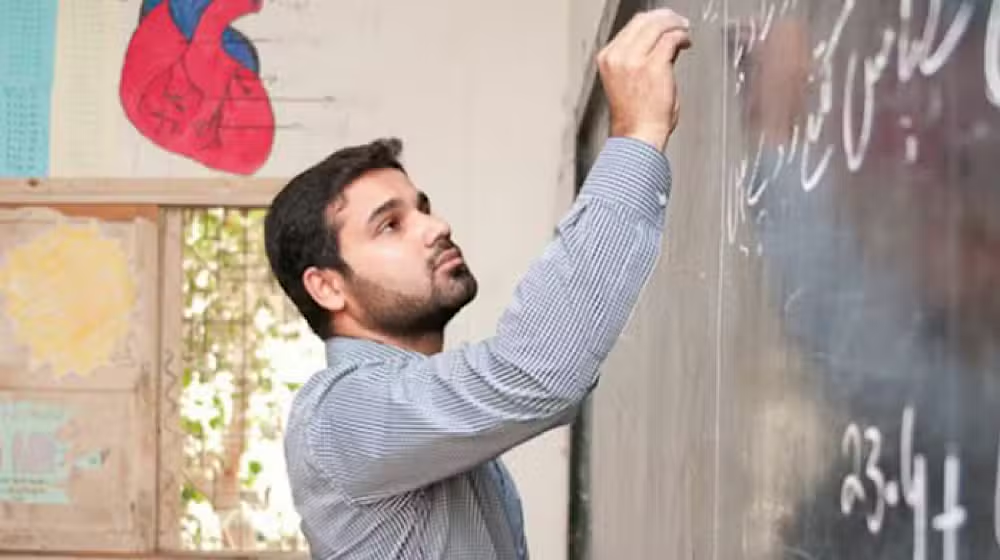
Punjab Government Announces Recruitment of 3,000 Nurses on Temporary Basis

In a significant move to address the ongoing shortage of healthcare professionals, the Punjab Government has announced the recruitment of 3,000 nurses on a temporary basis across various hospitals in the province. This initiative aims to bolster the healthcare workforce and ensure the delivery of quality medical services to the public.

Background and Rationale

The decision to hire 3,000 nurses comes in response to the critical shortage of healthcare staff in Punjab’s public hospitals. Reports indicate that the province has been grappling with an insufficient number of nursing professionals, leading to increased workloads for existing staff and potential compromises in patient care. By temporarily augmenting the nursing workforce, the government seeks to alleviate these challenges and enhance the efficiency of healthcare delivery.

Details of the Recruitment

The recruitment process will be managed by the Specialized Healthcare & Medical Education Department (SHC&MED) of Punjab. The positions will be offered on a temporary basis, with the possibility of extension based on the evolving needs of the healthcare sector. The roles are primarily for female nurses, though provisions may be made for male candidates in certain circumstances. Selected individuals will be appointed as Charge Nurses (BS-16) and will be deployed across various hospitals in the province.

Eligibility Criteria

To be eligible for these temporary nursing positions, candidates must meet the following criteria:

  • Educational Qualifications: A diploma or degree in nursing from a recognized institution.
  • Professional Registration: Possession of a valid Pakistan Nursing Council (PNC) registration number.
  • Age Limit: Typically between 18 and 35 years, though age relaxations may apply as per government policies.
  • Domicile: Candidates must be residents of Punjab

Additional requirements may include relevant work experience and proficiency in specific medical procedures, depending on the nature of the assigned duties.

Application Process

Interested candidates are required to submit their applications through the official channels designated by the SHC&MED. This may involve completing an online application form, submitting necessary documents such as educational certificates, PNC registration, and proof of domicile, and possibly attending an interview or written test. Detailed instructions and deadlines will be provided in the official recruitment notifications.

Impact on Healthcare Services

The temporary recruitment of 3,000 nurses is expected to have a positive impact on healthcare services in Punjab. With an increased number of nursing professionals, hospitals can better manage patient loads, reduce burnout among existing staff, and improve the overall quality of care provided. Moreover, this initiative underscores the government’s commitment to strengthening the healthcare infrastructure and addressing the pressing challenges faced by the sector.

Future Prospects

While the current recruitment is on a temporary basis, there is potential for these positions to become permanent, contingent on the sustained need for nursing staff and the availability of funding. The success of this initiative may also pave the way for similar recruitment drives in other regions of Pakistan, contributing to the national effort to enhance healthcare services.

In conclusion, the Punjab Government’s decision to recruit 3,000 nurses on a temporary basis is a proactive step towards addressing the healthcare workforce shortage. By augmenting the nursing staff, the government aims to improve healthcare delivery, ensure better patient outcomes, and reinforce the healthcare system’s resilience in the face of ongoing challenges.

Pakistan Announces Squad for Billie Jean King Cup 2025

Pakistan has unveiled its squad for the 2025 Billie Jean King Cup, marking a significant step in the nation’s tennis journey. The team, captained by Mehboob Khan, is set to compete in the Asia/Oceania Group II division, aiming to build on previous performances and strive for promotion to Group I.

Team Composition

The squad features a blend of experienced players and emerging talents:

  • Ushna Suhail: A stalwart of Pakistan’s tennis scene, Ushna brings invaluable experience to the team. Having represented Pakistan in numerous international competitions, she holds the record for the most individual wins in the country’s Billie Jean King Cup history.
  • Meheq Khokhar: A rising star in Pakistani tennis, Meheq has previously represented the country in the Billie Jean King Cup and is known for her aggressive playing style and mental toughness.
  • Sarah Mahboob Khan: A seasoned player with a wealth of experience, Sarah has been a consistent performer for Pakistan in past editions of the tournament.
  • Amna Ali Qayyum: A promising talent, Amna’s inclusion in the squad highlights Pakistan’s focus on nurturing young players for future success.
  • Sara Ibrahim Khan: Known for her resilience and adaptability, Sara is expected to contribute significantly to the team’s efforts.

Recent Performances

In the 2023 edition of the Billie Jean King Cup, Pakistan faced challenges but demonstrated resilience. The team secured a crucial 2-0 victory over Turkmenistan in the relegation playoff, ensuring their retention in Asia/Oceania Group II. Ushna Suhail and Sara Ibrahim Khan won their respective singles matches, leading to the team’s overall success.

Goals for 2025

The primary objective for the 2025 squad is to advance to Asia/Oceania Group I. Achieving this will require a combination of individual brilliance and cohesive team efforts. The team aims to build on past experiences, learn from previous encounters, and approach each match with determination and strategic planning.

Support and Development

The Pakistan Tennis Federation (PTF) has been instrumental in supporting the national team. Through training camps, international exposure, and strategic planning, the PTF aims to elevate Pakistan’s standing in women’s tennis. The inclusion of young talents like Amna Ali Qayyum signifies a commitment to long-term development and success.

Conclusion

As Pakistan prepares for the 2025 Billie Jean King Cup, the team embodies a blend of experience and youthful energy. With a clear goal of advancing to Group I, the squad is poised to make a significant impact on the international tennis stage. The support from the PTF and the dedication of the players provide a strong foundation for a successful campaign.

Fans and supporters are encouraged to rally behind the team as they embark on this exciting journey, aiming to bring pride and recognition to Pakistan in the world of tennis.

Are ATMs and Banks Really Disrupted in Pakistan Amid Tensions with India?

In recent weeks, escalating tensions between India and Pakistan have led to widespread rumors suggesting disruptions in Pakistan’s Banks services, particularly ATMs and online banking platforms. These claims have sparked concern among the public, but multiple authoritative sources have debunked these rumors, assuring that Pakistan’s banking infrastructure remains secure and operational.

The Origin of the Rumors

The rumors began circulating on social media platforms like WhatsApp and X (formerly Twitter), warning users to avoid using ATMs and online banking due to alleged cyberattacks. One such message claimed, “ATMs will be closed for next two to three days probably, due to ransomware cyber-attack within Pakistan.” These messages also cautioned against conducting online transactions during this period. Notably, some of these messages falsely attributed the information to BBC Radio, which has not been operational in Pakistan since December 31, 2022.

Official Rebuttals

In response to these circulating rumors, 1LINK, Pakistan’s largest inter-bank payment gateway, issued a public statement clarifying that there was no truth to the claims of a cyberattack affecting ATMs or online banking services. 1LINK emphasized that all financial and non-financial transactions, including ATM withdrawals, inter-bank funds transfers, and bill payments, were functioning normally and securely. The organization urged the public to disregard the baseless rumors and continue using banking services as usual.

Similarly, the State Bank of Pakistan (SBP) and various commercial banks have confirmed that their services remain unaffected. For instance, Bank Alfalah and the National Bank of Pakistan (NBP) both reported that their ATMs and online banking platforms were operating without any issues. NBP further stated that despite a previous cyber incident in 2021, all services had resumed promptly, and no customer data was compromised.

Understanding the Context

While the rumors have been debunked, it’s essential to recognize that the geopolitical tensions between India and Pakistan have had other economic implications. For example, the Pakistani rupee has experienced fluctuations due to investor sentiment and market reactions to the heightened tensions. However, these financial market movements are separate from the operational status of the banking sector.

Conclusion

Despite the spread of misinformation, Pakistan’s banking infrastructure, including ATMs and online banking services, remains secure and fully operational. Authorities and financial institutions continue to monitor the situation closely to ensure the safety and reliability of banking services. Customers are advised to remain vigilant against misinformation and to rely on official sources for accurate information regarding banking operations.

Trains Operating Smoothly Amid Regional Tensions

In the face of mounting regional tensions and geopolitical uncertainties, the continued smooth operation of Trains services has emerged as a symbol of resilience and coordination. Across regions affected by political unrest, border disputes, or economic sanctions, rail networks have demonstrated remarkable adaptability and strength, ensuring the uninterrupted flow of passengers, goods, and essential services. This steady operation underlines not only the logistical robustness of rail systems but also their critical role in maintaining stability and connectivity in times of crisis.

In areas where air travel or road transport becomes restricted due to security concerns or fuel shortages, trains have proven to be a reliable alternative. Railways, by their nature, require significant planning and infrastructure investment, which gives them a degree of insulation from sudden shocks. Even in zones where borders are tense or conflict is brewing, collaborative agreements between railway authorities have helped keep train schedules on track. This cooperation speaks to a shared understanding that transportation networks must transcend politics, particularly when civilian needs and economic continuity are at stake.

For instance, in Eastern Europe and parts of the Middle East, despite heightened military activity or political standoffs, train routes remain operational, albeit with increased security protocols. Governments and railway operators have taken proactive steps to bolster infrastructure security, including surveillance enhancements, personnel training, and contingency planning. These measures are not only reassuring to passengers but also vital in preserving supply chains, especially for essential goods like food, medicine, and fuel.

The uninterrupted operation of freight trains is particularly crucial in regions where sanctions or import restrictions have disrupted other forms of trade. Rail corridors allow for large-scale transport of goods across vast distances with relative efficiency and safety. In some cases, countries have redirected trade routes to rely more heavily on trains, avoiding congested or risky shipping lanes and volatile airspace. The adaptability of rail systems in response to these shifting dynamics has been a key factor in ensuring economic resilience.

From a symbolic standpoint, trains continuing to run on schedule represent a form of societal stability. In countries where internal political divisions or social unrest might threaten normal life, the predictability of the daily train service offers a sense of continuity. For many citizens, the simple act of commuting by train, attending work or school, and receiving goods by rail reflects an enduring normalcy that counters the anxiety fueled by broader regional uncertainty.

Furthermore, international rail links are increasingly seen as tools for diplomacy and cooperation. Even between rival states, shared railway infrastructure can foster dialogue and interdependence. For example, regional rail initiatives in parts of Asia and Africa have continued despite diplomatic rifts, driven by mutual economic interests and the recognition that integrated transport systems are beneficial to all parties involved. In some cases, neutral third-party operators or multinational consortia have helped mediate disputes and ensure smooth operations.

Technology has also played a significant role in maintaining railway efficiency during turbulent times. Real-time tracking systems, automated signals, and predictive maintenance tools have enabled rail companies to anticipate and respond to disruptions more effectively. Moreover, digital ticketing and remote customer support reduce the need for physical presence in high-risk areas, keeping operations safer for staff and travelers alike.

In conclusion of this topic of Trains , while regional tensions pose undeniable challenges to all facets of public infrastructure, the rail sector stands out as a beacon of reliability and cooperation. Trains that continue to operate smoothly amid political or military instability demonstrate the power of infrastructure to unite rather than divide. As the world grapples with an increasingly complex geopolitical landscape, railways will remain not just a mode of transport, but a vital link in preserving societal cohesion and economic functionality.

Remaining PSL 10 Matches Shifted to UAE Due to India-Pakistan Tensions

In a dramatic turn of events, the HBL PSL 10 Matches are shifted to UAE for its final clashes, leaving fans shocked but hopeful. The Pakistan Cricket Board (PCB) confirmed the relocation of the last eight matches, originally set for Rawalpindi, Multan, and Lahore, due to escalating security threats.

The PSL 10 moves to UAE as a precautionary measure, ensuring player safety amid rising tensions. With foreign and local stars at risk, the PCB prioritizes mental well-being and smooth tournament progression. The HBL PSL X moves to UAE, reinforcing cricket’s spirit over political strife.

Why Are PSL 10 Matches Shifted to UAE? Safety First, Says PCB

PCB Chairman Mohsin Naqvi didn’t mince words, citing “reckless targeting” of Rawalpindi Stadium as the tipping point. “Politics and sports must stay separate,” he stressed, but India’s alleged aggression forced the board’s hand. The UAE, a neutral and secure venue, will now host the high-stakes clashes, keeping players and fans out of harm’s way.

While the abrupt change disrupts home-ground excitement, Naqvi assures stakeholders of uninterrupted action. “We’ve overcome bigger challenges,” he said, urging fans to stand united for cricket’s sake.

Details on match dates and UAE stadiums remain under wraps, but the PCB promises an update shortly. With electrifying playoffs and finals ahead, the league’s shift ensures no drop in thrill, only a change in scenery.

Also, see:

DG ISPR Welcomes Government-PTI Dialogue

CDA Starts Charging Fees in Under-Developed Islamabad Sectors

The Capital Development Authority (CDA) has initiated the collection of development charges from allottees in under-developed sectors of Islamabad, including E-12, C-14, C-15, I-12, and I-15. These sectors have faced significant delays in development due to various challenges, including land acquisition issues and financial constraints. The move to charge development fees has sparked controversy among residents and stakeholders, raising questions about the timing and fairness of the decision.

Background of the Development Delays

Development work in several new residential sectors of Islamabad has been facing inordinate delays due to various reasons, raising questions about the CDA’s efficiency. The sectors where development work has either been halted or is moving at a slow pace include E-12, C-14, C-15, I-12, and I-15. The work in these sectors was started some years ago but has not been completed yet. In particular, work in sectors C-15 and E-12 has been halted. The main reasons for the slow pace include funding issues and adverse possession of land. For instance, the E-12 sector was launched by the CDA in 1989, and the same year, it sold plots to around 4,000 people with a promise that development work would complete within a year. However, despite the passage of over three decades, the development work has not been completed, and many who purchased plots in 1989 are no longer alive. Similarly, the development work in sector C-15 has been stopped since October 2024 due to disputes between landowners and the CDA over compensation for built-up property. The CDA had announced to settle all claims of land affectees in sectors C-14, C-15, and C-16 in late 2023 and early 2024, but the built-up property owners have not been fully compensated to date.

Introduction of Development Charges

In March 2025, the CDA issued notices to allottees in these under-developed sectors, informing them of the requirement to deposit development charges. The notice for sector E-12, dated March 20, 2025, specifies the implementation of development charges for plot owners. The CDA has set deadlines for the payment of these charges, warning that failure to comply may result in the cancellation of plots. For example, in August 2023, the CDA asked I-15 allottees to deposit development charges by August 30 or face cancellation of their plots. The CDA’s Member Estate defended the move, stating that a significant portion of the sector’s development work had been completed and that the development charges were justified.

Controversy and Criticism

The CDDA’s decision to charge development fees has been met with criticism from residents and stakeholders. Allottees argue that the CDA is responsible for the delays in development and that imposing additional financial burdens is unfair. They point out that when the plots were initially allotted, the CDA did not request development charges, and now, after years of inaction, residents are being asked to pay for services that have not been provided. This situation has led to frustration and distrust among the public towards the CDA’s management and accountability.

CDA’s Justification

The CDA justifies the imposition of development charges by emphasizing the need for funds to complete the stalled development projects. The authority argues that the collection of these charges is essential to expedite the development process and provide allottees with the promised amenities and infrastructure. CD`A Chairman Anwarul Haq has expressed his displeasure over the slow progress of development work and directed the engineering wing to remove hurdles and expedite the process. He emphasized that no delay in the development of these sectors can be tolerated and that the CDA’s main priority is sector development.

Conclusion

The CD`A’s decision to charge development fees in under-developed sectors of Islamabad highlights the ongoing challenges in urban development and governance. While the authority’s intent to complete the development work is commendable, the timing and fairness of imposing additional financial burdens on residents remain contentious issues. Moving forward, it is crucial for the CDA to engage in transparent communication with allottees, address the underlying issues causing delays, and ensure that the collected funds are utilized effectively to complete the development projects. Only through collaborative efforts and accountability can the CDA hope to resolve the longstanding issues and fulfill its commitment to providing quality housing and infrastructure to the residents of Islamabad.

Major Pakistani Airports Suddenly Reopened Amid Heightened Tensions

In a significant development, Pakistan has reopened its major airports, including Jinnah International Airport in Karachi and Allama Iqbal International Airport in Lahore, following a temporary closure due to escalating tensions with India. The closures were prompted by India’s missile and drone strikes on Pakistani territory, which led to heightened security concerns and the suspension of air traffic.

Background of the Closure

On May 6, 2025, India launched a series of missile and drone strikes targeting multiple locations within Pakistan, including areas in Azad Jammu and Kashmir. The Indian government described the operation, termed “Operation Sindoor,” as a retaliatory measure against alleged terrorist infrastructure linked to groups such as Jaish-e-Mohammed and Lashkar-e-Taiba. In response, Pakistan condemned the strikes as unprovoked aggression and authorized “corresponding actions,” including shooting down several Indian jets and engaging in artillery exchanges along the Line of Control.

The Pakistani authorities, prioritizing national security, decided to temporarily close major airports, including those in Karachi, Lahore, and Sialkot, to safeguard civilian aviation and prevent potential threats. The airspace was also restricted, with heightened surveillance and security measures implemented across the country.

Reopening of Airports

As of May 8, 2025, the Pakistan Civil Aviation Authority (PCAA) announced the reopening of all major airports across the country. The authority confirmed that the national airspace is now fully functional and safe for civil aviation. This decision was based on a comprehensive assessment of the security situation and consultations with relevant defense and intelligence agencies.

The reopening of airports is a positive step towards restoring normalcy in the aviation sector and facilitating the resumption of domestic and international flights. However, authorities have emphasized that strict security protocols remain in place, and all flights will be subject to enhanced screening and monitoring procedures to ensure the safety of passengers and aircraft.

Impact on International Aviation

The temporary closure of Pakistani airspace had significant implications for international aviation. Several airlines, including United Airlines, Korean Air, and Lufthansa, were forced to reroute flights to avoid affected airspace, leading to longer travel times and increased operational costs. Additionally, a dozen Indian airports were shut down, and major Indian airlines, such as Air India, IndiGo, and SpiceJet, suspended operations to and from affected areas.

With the reopening of Pakistani airports, international carriers are expected to gradually resume their operations. However, the situation remains fluid, and airlines are closely monitoring developments to make necessary adjustments to their flight schedules. Passengers are advised to check with their respective airlines for the latest updates on flight statuses and potential delays.

Conclusion

The reopening of major Pakistani airports marks a significant development in the ongoing efforts to stabilize the situation following the recent escalation with India. While the immediate threat to civil aviation has been mitigated, authorities continue to monitor the security landscape closely. The resumption of air travel is a positive sign for the aviation industry and the broader economy, signaling a return to normalcy. However, the situation remains delicate, and all stakeholders are urged to remain vigilant and prepared for any further developments.

Azerbaijan Condemns Indian Attack on Pakistan Amid Rising Tensions

In a significant diplomatic development, Azerbaijan has condemned Indian`s recent military strikes on Pakistan, expressing deep concern over the escalating tensions between the two nuclear-armed neighbors. This condemnation underscores Azerbaijan’s commitment to regional stability and its support for Pakistan in the face of external aggression.

The Incident: Indian Strikes on Pakistan

On May 6, 2025, India launched a series of missile and air strikes on multiple locations within Pakistan and Pakistan-administered Kashmir. Indian officials termed the operation “Operation Sindoor,” claiming it targeted terrorist infrastructure linked to the April 22 massacre of 26 civilians, predominantly Hindu tourists, in Indian-administered Kashmir. Pakistan vehemently denied any involvement in the attack and condemned the Indian strikes as unprovoked aggression. The Pakistani military reported at least 31 civilian casualties, including children, and claimed to have shot down several Indian jets in retaliation. The strikes have led to heightened military alertness and a breakdown of bilateral agreements between the two countries .Wikipedia+1Latest news & breaking headlines+1Latest news & breaking headlines

Azerbaijan’s Response

In response to the Indian strikes, Azerbaijan’s Ministry of Foreign Affairs issued a statement expressing grave concern over the escalation of tensions between India and Pakistan. The statement condemned the military attacks against Pakistan, which resulted in significant civilian casualties. Azerbaijan reiterated its support for Pakistan and called for immediate cessation of hostilities to prevent further loss of life and potential regional instability.

This condemnation aligns with Azerbaijan’s consistent foreign policy stance of opposing the use of force in international relations and advocating for peaceful resolution of conflicts. Azerbaijan has previously expressed support for Pakistan on various occasions, including condemning terrorist attacks within Pakistan and offering condolences to the victims .

Implications for Regional Relations

Azerbaijan’s condemnation of the Indian strikes is significant given its strategic partnerships in the region. Azerbaijan and Pakistan share a history of diplomatic and military cooperation, with both countries emphasizing their strategic partnership. Azerbaijan’s support for Pakistan during this crisis reinforces the strength of their bilateral relations and sends a clear message to the international community about the importance of solidarity among allies.

Furthermore, Azerbaijan’s stance may influence other countries in the region and beyond to reconsider their positions on the India-Pakistan conflict. As a member of the international community, Azerbaijan’s call for restraint and peaceful dialogue could contribute to broader efforts aimed at de-escalating tensions and promoting stability in South Asia.

Conclusion

Azerbaijan’s condemnation of India’s military strikes on Pakistan highlights the critical role of diplomatic engagement in addressing international conflicts. By voicing its opposition to the use of force and advocating for peaceful resolution, Azerbaijan contributes to the global call for de-escalation and dialogue. As the situation develops, Azerbaijan’s continued support for Pakistan and its commitment to regional peace will be pivotal in shaping the trajectory of South Asian geopolitics.

PSX Plunges Over 8,000 Points Amid India-Pakistan Escalation

On May 7, 2025, the Pakistan Stock Exchange (PSX) experienced a catastrophic plunge, with the KSE-100 index shedding over 8,000 points—its steepest single-day drop in history. This unprecedented crash was triggered by escalating military tensions between India and Pakistan, following India’s Operation Sindoor, which targeted what it described as “terrorist infrastructure” in Pakistan-administered Kashmir and other regions.

The Catalyst: Operation Sindoor

The immediate catalyst for the market turmoil was India’s missile strikes on May 7, 2025, which hit nine sites across Pakistan, including Bahawalpur, Muridke, and Muzaffarabad. India claimed these strikes targeted terrorist facilities in retaliation for the Pahalgam attack on April 22, which killed 26 people, including 25 Hindu tourists. Pakistan denied involvement in the attack and condemned the Indian strikes as “cowardly acts of war.” In response, Pakistan reported shooting down five Indian fighter jets and engaging in artillery exchanges along the Line of Control, resulting in civilian casualties on both sides .

Market Reaction: A Historic Collapse

The PSX’s reaction was swift and severe. Investors, already wary of Pakistan’s fragile economic recovery, fled the market in panic. The KSE-100 index plummeted over 8,000 points, erasing billions of dollars in market capitalization. Trading was halted multiple times as the market hit circuit breakers, reflecting the depth of the crisis. This collapse marks the worst single-day performance in the PSX’s history, surpassing previous downturns during periods of political instability and economic uncertainty.

Economic PSX Implications

The stock market crash underscores the vulnerability of Pakistan’s economy to geopolitical tensions. The country, already grappling with inflation, a depreciating currency, and a looming debt crisis, faces increased risks as foreign investors pull back. The escalation with India threatens to derail ongoing economic reforms and jeopardize international financial aid. Analysts warn that prolonged instability could lead to a full-blown economic crisis, further exacerbating the hardships faced by ordinary Pakistanis.

Global Repercussions

The India-Pakistan standoff has drawn international concern, particularly given both nations’ nuclear capabilities. Global leaders, including those from the United States, China, and the United Kingdom, have called for restraint and dialogue to prevent further escalation. The conflict has already led to the suspension of the Indus Waters Treaty and the Simla Agreement, marking a significant breakdown in bilateral relations .

Conclusion

The PSX’s historic plunge is a stark reminder of the profound impact that geopolitical tensions can have on financial markets. As India and Pakistan navigate this perilous standoff, the world watches closely, hoping for de-escalation and a return to diplomacy. For Pakistan, the path forward will require not only addressing immediate security concerns but also stabilizing its economy to prevent further damage to investor confidence and national prosperity.

Saudi Railways (SAR) Expands Services for Hajj 2025

Saudi Arabia Railways (SAR) has unveiled an extensive operational plan for the Hajj 2025 season, significantly enhancing its services to accommodate the increasing number of pilgrims. The Haramain High-Speed Railway, a pivotal component of this plan, has seen substantial upgrades to ensure a seamless and efficient travel experience for Hajj participants.

Increased Capacity and Frequency

In response to the growing demand, SAR has increased the seating capacity of the Haramain High-Speed Railway to approximately 1.6 million seats, up from over 1.3 million in the previous year. This expansion includes more than 430 additional trips, bringing the total number of scheduled journeys to over 3,800 between May 9 and June 25, 2025. On peak days, the number of trips will reach 126, ensuring that pilgrims can travel comfortably and efficiently.

High-Speed and Eco-Friendly Travel

The Haramain High-Speed Railway operates at speeds up to 300 km/h, making it one of the fastest electric trains globally. With a fleet of 35 trains, each capable of carrying 417 passengers, the railway offers a modern and rapid mode of transportation. Notably, the system is designed with an environmentally friendly approach, featuring zero carbon emissions, which aligns with Saudi Arabia’s commitment to sustainability.

Strategic Route and Connectivity

The 453-kilometer railway line connects key cities and stations, including Makkah, Madinah, Jeddah Main Station, King Abdulaziz International Airport Station, and King Abdullah Economic City. This strategic route facilitates easy access for pilgrims traveling between the Two Holy Mosques and other significant locations, enhancing the overall pilgrimage experience.

Collaborations for Enhanced Services

To further streamline travel for pilgrims, SAR has expanded its partnership with Careem, the leading multi-service app in the region. This collaboration includes the establishment of dedicated pick-up and drop-off areas at five additional train stations, providing passengers with convenient access to ride-hailing services. This initiative aims to offer a seamless and integrated transportation experience for intercity commuters.

Operational Excellence

SAR’s commitment to operational excellence is evident in its meticulous planning and execution. The railway system has demonstrated a high commitment rate, with over 97% of scheduled trips adhering to their departure and arrival times. This reliability is crucial during the Hajj season, where timely transportation is essential for pilgrims to perform their religious duties without delays.

Conclusion Saudi

Saudi Arabia Railways’ expansion of services for Hajj 2025 reflects the Kingdom’s dedication to providing pilgrims with efficient, comfortable, and sustainable transportation options. Through increased capacity, enhanced connectivity, strategic partnerships, and a focus on operational excellence, SAR is poised to facilitate a smooth and memorable Hajj experience for all participants. These initiatives not only support the religious significance of the pilgrimage but also align with Saudi Arabia’s broader goals of modernization and sustainability in line with Vision 2030.

World leaders react to Indian strikes in Pakistan amid renewed regional tensions

Following a deadly terrorist attack on tourists in Indian-administered Kashmir last month, India launched early-morning airstrikes on Pakistani territory on Wednesday. Pakistan confirmed at least eight casualties in the incident and vowed to respond. The incident has reignited fears of full-scale conflict between two nuclear-armed rivals.

As tensions escalate in South Asia, world leaders react to Indian strikes in Pakistan with statements ranging from support to caution, underscoring both global concern and geopolitical sensitivities.

Here is How World Leaders React to Indian Strikes in Pakistan:

United States: Monitoring Closely, Hopes for Peace

U.S. President Donald Trump called the escalation “a shame,” adding,

“Just heard about it. I guess people knew something was going to happen based on a little bit of the past. They’ve been fighting for a long time. I hope it ends very quickly.”

Secretary of State Marco Rubio issued a more diplomatic note:

“I am monitoring the situation between India and Pakistan closely. I echo @POTUS’s comments earlier today that this hopefully ends quickly and will continue to engage both Indian and Pakistani leadership towards a peaceful resolution.”

The U.S. continues to emphasize the need for dialogue while keeping communication open with both sides.


United Nations: Calls for Maximum Restraint

UN Secretary-General António Guterres expressed grave concern over the strikes. His spokesperson said:

“The Secretary-General is very concerned about the Indian military operations across the Line of Control and international border. He calls for maximum military restraint from both countries. The world cannot afford a military confrontation between India and Pakistan.”

The UN is urging a return to diplomacy amid rising regional instability.


China: Calls Indian Strike ‘Regrettable’

China’s Foreign Ministry condemned the action, saying:

“China finds India’s military operation early this morning regrettable. We are concerned about the ongoing situation. We urge both sides to act in the larger interest of peace and stability, remain calm, exercise restraint and refrain from taking actions that may further complicate the situation.”

Beijing, traditionally close to Islamabad, emphasized that any military escalation would be detrimental to regional development.


Russia: Urges Both Sides to De-Escalate

Moscow voiced concern about the unfolding events, especially in the wake of the Kashmir attack. The Russian FM’s spokesperson said:

“We are deeply concerned about the escalation of military confrontation between India and Pakistan following the terrorist attack near Pahalgam. We call on the parties involved to exercise restraint in order to prevent further deterioration of the situation in the region.”

Russia stopped short of assigning blame, instead prioritizing regional peace.


France: Warns Against Prolonged Confrontation

French Foreign Minister Jean-Noël Barrot made a direct appeal:

“We call on India as well as on Pakistan to show restraint in order to avoid escalation. Nobody has anything to gain from prolonged confrontation between India and Pakistan. These are two major military powers, that is why we call for restraint.”

France joined other nations in expressing concern over the nuclear implications of further escalation.


United Kingdom: Concerned, Encourages Dialogue

British Foreign Minister David Lammy stated:

“Current tensions between India and Pakistan are a serious concern. The UK government is urging India and Pakistan to show restraint and engage in direct dialogue to find a swift, diplomatic path forward.”

London emphasized the importance of civilian safety and regional stability.


Japan: Condemns Terrorism, Warns of Escalation

Chief Cabinet Secretary Yoshimasa Hayashi addressed both the original attack and India’s response:

“In regard to the terrorist act that occurred in Kashmir on April 22, our country firmly condemns such acts of terrorism. Furthermore, we express strong concern that this situation may lead to further retaliatory exchanges and escalate into a full-scale military conflict.”

Tokyo is pressing for stability in South Asia, which is crucial to its broader Indo-Pacific strategy.


UAE: Urges Both Sides to Pull Back

The UAE, which has strong ties with both nations, issued a balanced statement:

“Deputy Prime Minister and Minister of Foreign Affairs of the UAE Sheikh Abdullah bin Zayed has called on India and Pakistan to exercise restraint, de-escalate tensions, and avoid further escalation that could threaten regional and international peace.”

The Gulf state has positioned itself as a potential mediator.


Israel: Supports India’s Right to Defend Itself

Israel offered unequivocal support for India. Ambassador Reuven Azar stated:

“Israel supports India’s right for self-defense. Terrorists should know there’s no place to hide from their heinous crimes against the innocent.”

Israel’s position aligns with its broader counterterrorism stance and strategic ties with India.


Egypt: Concerned, Pushes for Diplomatic Channels

The Egyptian Ministry of Foreign Affairs said it was “following with great concern” and urged dialogue:

“Egypt calls on both sides to exercise the highest levels of restraint and uphold dialogue through diplomatic channels. The ministry stressed the need to exert efforts to defuse the crisis and avoid further escalation.”


World leaders react to Indian strikes in Pakistan with a mix of support, criticism, and concern. As the region braces for possible retaliation, the international community is urgently calling for de-escalation to prevent the crisis from erupting into full-scale war.

Also, see:

Fierce Pakistan Air Force response, two Indian jets shot down after air strikes

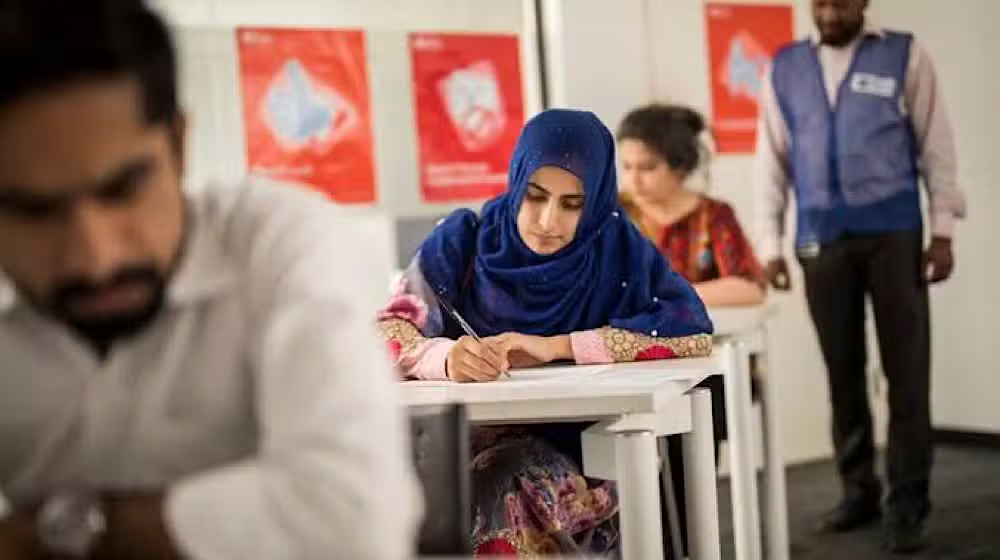
British Council Confirms All Exams Proceeding as Scheduled Amid Regional Tensions

In a reassuring update for students across Pakistan, the British Council has officially confirmed that all scheduled examinations will proceed as planned, with no cancellations or delays anticipated. This announcement comes despite recent regional tensions and security concerns that have affected various sectors.

Commitment to Examination Schedules

The British Council has emphasized its commitment to maintaining the integrity and continuity of its examination services. In a statement released on May 7, 2025, the organization affirmed that all upcoming exams, including IELTS, Cambridge International (IGCSE, O-Level, A-Level), and Pearson Edexcel assessments, are set to take place at their designated times and venues across Pakistan.

This decision underscores the British Council’s dedication to providing students with consistent opportunities to achieve their academic and professional goals, despite external challenges.

Safety Measures and Precautions

While the British Council has confirmed that exams will proceed as scheduled, it has also assured candidates that comprehensive safety protocols are in place to ensure the well-being of all participants. These measures include enhanced security at examination centers, adherence to health guidelines, and contingency plans to address any unforeseen circumstances.

The organization has urged all candidates to remain vigilant and follow any additional instructions provided by local authorities or examination centers to ensure a smooth and secure examination experience.

Support for Students

Recognizing the challenges posed by the current situation, the British Council has reiterated its commitment to supporting students throughout the examination process. Dedicated helplines and online resources are available to assist candidates with any queries or concerns they may have regarding their exams. Additionally, the British Council is working closely with educational institutions to provide timely updates and facilitate any necessary accommodations for students.

Looking Ahead

As the examination dates approach, students are encouraged to stay informed through official British Council channels and to prepare diligently for their assessments. The British Council remains steadfast in its mission to deliver high-quality educational services and to support students in achieving their academic aspirations.

In conclusion, despite the prevailing regional tensions, the British Council’s confirmation that all exams will proceed as scheduled provides a sense of stability and assurance for students across Pakistan. With robust safety measures in place and ongoing support for candidates, the organization continues to uphold its commitment to educational excellence.

UK Plans to Restrict Visa Applications from Pakistan, Nigeria, and Sri Lanka

The United Kingdom is reportedly considering measures to restrict visa applications from nationals of Pakistan, Nigeria, and Sri Lanka. This potential policy shift aims to address concerns over high rates of visa overstays and asylum claims from these countries.

Background and Rationale

According to reports, the UK Home Office, in collaboration with the National Crime Agency (NCA), is developing data-driven models to identify visa applicants who may overstay their visas or seek asylum upon arrival. These models would assess factors such as the likelihood of overstaying or making asylum claims based on applicants’ nationalities and other criteria. The goal is to prevent individuals from entering the UK under work or study visas with the intention of remaining unlawfully.

In 2024, over 10,500 asylum claims were made by Pakistani nationals, many of whom had initially entered the UK legally. Similarly, Nigeria and Sri Lanka have been identified as countries with high rates of visa overstays and subsequent asylum applications. The UK government views this trend as an abuse of the immigration system and is considering tightening visa regulations to mitigate these issues.

Potential Policy Changes

The proposed changes may include:

  • Stricter Visa Screening: Enhanced scrutiny of visa applications from nationals of Pakistan, Nigeria, and Sri Lanka to identify potential risks of overstaying or making asylum claims.
  • Data-Driven Profiling: Utilization of data analytics to assess the likelihood of applicants overstaying their visas or seeking asylum, allowing for more informed decision-making.
  • Increased Financial Requirements: Raising the financial thresholds for visa applicants, ensuring that individuals can support themselves without relying on public funds.
  • Limited Access to Public Services: Restricting access to public services, such as healthcare and housing, for individuals from countries with high rates of visa overstays and asylum claims.

Implications for Affected Nationals

If implemented, these measures could significantly impact individuals from Pakistan, Nigeria, and Sri Lanka seeking to work or study in the UK. The stricter visa requirements may deter potential applicants and complicate the process for those who wish to pursue opportunities in the UK.

For students, the proposed changes could affect their ability to obtain student visas, potentially limiting access to UK education. Similarly, professionals seeking employment in the UK may face increased challenges in securing work visas.

Moreover, the heightened scrutiny could lead to delays in visa processing and increased uncertainty for applicants from these countries.

Criticisms and Concerns

Critics argue that these proposed measures may disproportionately affect individuals from Pakistan, Nigeria, and Sri Lanka, potentially leading to discrimination. They contend that the focus should be on addressing the root causes of asylum claims and visa overstays, such as political instability and economic hardship, rather than imposing blanket restrictions based on nationality.

Additionally, there are concerns that these policies could damage diplomatic relations between the UK and the affected countries, potentially leading to retaliatory measures and a decline in bilateral cooperation.

Conclusion

The UK’s consideration of restricting visa applications from Pakistan, Nigeria, and Sri Lanka reflects ongoing concerns over immigration control and the integrity of the visa system. While the government aims to prevent abuse of the immigration system, it is essential to balance security measures with fairness and non-discrimination. As discussions continue, it remains to be seen how these potential policy changes will be implemented and what impact they will have on individuals from the affected countries seeking to enter the UK.

BISE Lahore Postpones Inter and Matric Exams Amid Escalating Pakistan-India Tensions

In a significant development, the Board of Intermediate and Secondary Education (BISE) Lahore has announced the postponement of both intermediate (Inter) and matriculation (Matric) board examinations scheduled for May 7, 2025. This decision comes in response to heightened security concerns following recent military escalations between Pakistan and India.

Background of the Escalation

On May 7, 2025, India launched missile strikes on Pakistan-administered Kashmir and Pakistan’s Punjab province, targeting alleged militant infrastructure. The operation, named “Operation Sindoor,” was in retaliation for a militant attack in Pahalgam, Indian-administered Kashmir, that resulted in the deaths of 26 civilians, mostly Hindu tourists. India claimed to have targeted facilities associated with banned groups like Jaish-e-Mohammed and Lashkar-e-Taiba. However, Pakistan reported civilian casualties, including women and children, and denied the presence of any militant targets at the sites hit .

In response to these developments, Pakistan’s military conducted retaliatory strikes, leading to a significant escalation in tensions between the two nuclear-armed neighbors. The situation prompted the closure of Pakistani airspace for 48 hours and the suspension of flight operations at major airports, including those in Lahore and Karachi .

BISE Lahore’s Decision

Given the prevailing security situation and the closure of educational institutions in Punjab, BISE Lahore decided to postpone the Inter and Matric board exams scheduled for May 7, 2025. The exams affected include subjects such as Chemistry, English, Physics, and Islamiyat. The board has assured students that the postponed exams will be rescheduled, and new dates will be announced in due course.

This move aligns with similar decisions made by other educational boards in the region, prioritizing the safety and well-being of students and staff amid the ongoing crisis.

Impact on Students and Educational Institutions

The postponement of these exams has caused significant disruption to students’ academic schedules. Many students had been preparing intensively for these examinations, and the sudden change has led to uncertainty and anxiety. Educational institutions in Lahore and surrounding areas remain closed, with authorities advising students to stay informed through official channels for updates on rescheduled dates and examination protocols.

Parents and educators have expressed concerns about the potential delays in the academic calendar and the impact on students’ futures. However, the overarching sentiment is one of understanding, recognizing the necessity of such measures in the face of national security threats.

Looking Ahead

As the situation between Pakistan and India continues to evolve, BISE Lahore and other educational boards are closely monitoring developments. The primary focus remains on ensuring the safety of students and staff while minimizing disruptions to the academic process. Authorities have pledged to provide timely updates and support to students and parents during this challenging period.

In the interim, students are encouraged to stay engaged with their studies through online resources and self-paced learning, preparing for the eventual resumption of examinations. Educational institutions are also exploring alternative methods to facilitate learning, including virtual classes and digital assessments, to ensure continuity in education despite the current challenges.

In conclusion, while the postponement of Inter and Matric board exams in Lahore has caused temporary disruption, the decision underscores the commitment of educational authorities to prioritize the safety and well-being of students amid escalating national security concerns. The situation remains fluid, and stakeholders are urged to remain patient and adaptable as developments unfold.

No Evidence, No Global Support’: Analysts on May 7 Slam India’s Attack on Pakistan

In a significant escalation of Global tensions between India and Pakistan, India launched missile strikes on May 7, 2025, targeting alleged militant infrastructure in Pakistan-administered Kashmir and Pakistan’s Punjab province. The operation, named “Operation Sindoor,” was in retaliation for a militant attack in Pahalgam, Indian-administered Kashmir, that resulted in the deaths of 26 civilians, mostly Hindu tourists. India claimed to have targeted facilities associated with banned groups like Jaish-e-Mohammed and Lashkar-e-Taiba. However, analysts and international observers have raised serious concerns about the legitimacy and consequences of the strikes.

Lack of Concrete Evidence

India’s justification for the missile strikes hinges on the assertion that they were aimed at terrorist infrastructure. However, independent verification of these claims remains elusive. Pakistan has reported civilian casualties, including women and children, and has denied the presence of any militant targets at the sites hit. The absence of concrete evidence to support India’s claims has led analysts to question the legitimacy of the operation.

In previous instances, such as the 2019 Balakot airstrike, India faced similar scrutiny. Satellite imagery and on-the-ground assessments revealed no significant damage or casualties at the alleged target sites, casting doubt on the effectiveness and authenticity of the strike .

International Response and Lack of Support

The Global international community has expressed concern over the recent escalation. Countries including the United States, China, Russia, the United Kingdom, and Turkey have urged both India and Pakistan to exercise restraint and avoid further military actions. The United Nations Secretary-General has called for immediate de-escalation, warning of the potential for regional instability and the risk of nuclear confrontation between the two nuclear-armed nations .

Notably, the United States has cautioned against providing unequivocal support to India in its military actions. A report by the U.S. Institute of Peace highlighted the dangers of fully backing India’s operations without clear evidence, suggesting that such support could lead to an uncontrollable spiral of escalation and potentially provoke a global geopolitical crisis .

Analysts’ Critique on Global

Military analysts have criticized India’s approach, emphasizing the importance of evidence-based actions in conflict situations. The lack of transparency and independent verification of the targets raises questions about the strategic objectives behind the strikes. Some experts suggest that the operation may be politically motivated, aiming to bolster domestic support ahead of elections or to divert attention from internal issues.

Furthermore, the analysts warn that without a clear and credible justification for the strikes, India risks isolating itself diplomatically and exacerbating tensions with neighboring countries. The absence of global support for the operation underscores the need for India to provide verifiable evidence and engage in transparent dialogue to address the underlying issues contributing to the conflict.

Conclusion

The missile strikes by India on Pakistan-administered territories have intensified the already volatile situation between the two nations. The lack of concrete evidence supporting India’s claims and the absence of international backing have led to widespread criticism from analysts and global actors. As the situation continues to develop, it is imperative for both India and Pakistan to prioritize diplomatic engagement and evidence-based approaches to prevent further escalation and ensure regional stability.

PTA Confirms in may 7 X is No Longer Banned in Pakistan

In a significant development for digital freedom in Pakistan, the Pakistan Telecommunication Authority (PTA) has officially confirmed that the social media platform X (formerly known as Twitter) is no longer banned in the country. This decision marks the end of a prolonged period of uncertainty and legal challenges surrounding the platform’s accessibility.

Background of the Ban

The ban on X was imposed on February 17, 2024, by the Ministry of Interior, citing national security concerns. The Pakistan Telecommunication Authority (PTA) implemented the restriction following directives from the Interior Ministry, which had received reports from intelligence agencies indicating potential misuse of the platform to incite violence and disrupt public order .

Despite the official ban, many users continued to access X through Virtual Private Networks (VPNs), leading to a significant increase in VPN usage across the country. The PTA reported that while VPN usage spiked after the ban, the overall number of users on X decreased by 70% .

Legal Challenges and Court Orders

The ban faced immediate legal scrutiny. The Sindh High Court (SHC) directed the federal Ministry of Interior to withdraw its letter imposing the ban, questioning the justification for such a prolonged restriction . Similarly, the Lahore High Court (LHC) expressed dissatisfaction with the PTA’s handling of the ban, questioning the legal basis for such actions and suggesting potential contempt proceedings .

In response to these legal challenges, the PTA initially claimed that the restoration of X was an “unintentional mistake under pressure,” attributing the reversal to internal miscommunication. However, this explanation was met with skepticism by the courts, which demanded clearer accountability and justification .

Government’s Role in the Decision

Throughout the legal proceedings, the PTA maintained that it was acting on the directives of the federal government. PTA Chairman Hafeezur Rehman stated that the authority would lift the ban on X “on the day that the government asks us,” emphasizing that the decision rested with the government’s directives . This stance was reiterated in various forums, including Senate and parliamentary committee meetings, where officials discussed the broader implications of social media regulations and the need for international platforms to comply with Pakistani laws.

Implications of the Unban

The lifting of the ban on X has several significant implications:

  • Restoration of Digital Communication: X has been a vital platform for journalists, activists, and the general public to express opinions and share information. Its unbanning restores a crucial channel for digital communication.
  • Legal Precedents: The legal challenges and subsequent lifting of the ban set a precedent for how digital rights and government restrictions are handled in Pakistan, potentially influencing future decisions regarding internet governance.
  • Regulatory Oversight: The incident has highlighted the need for clear regulatory frameworks governing social media platforms, ensuring that actions like bans are justified, transparent, and in line with constitutional rights.

Conclusion

The confirmation by the PTA that X is no longer banned in Pakistan signifies a victory for digital rights and the rule of law. While the ban was initially justified on grounds of national security, the subsequent legal challenges and the government’s acknowledgment of the need for clearer directives have led to the restoration of the platform. This development underscores the importance of balancing security concerns with the fundamental rights of citizens in the digital age.

Fierce Pakistan Air Force response, two Indian jets shot down after air strikes

Tensions have surged to dangerous new heights between India and Pakistan following a reported Indian missile offensive targeting multiple locations in Pakistan including Bahawalpur, Muzaffarabad, and Kotli. According to Pakistani military sources, two Indian fighter jets were shot down by the Pakistan Air Force response, a critical defensive measure in what Islamabad is now calling an unprovoked act of aggression.

The response was swift and coordinated, with officials confirming all Pakistani jets are safe and fully operational. In retaliation, a Pakistani missile destroyed an Indian Army post along the Line of Control (LoC), while security sources claim the Indian Brigade Headquarters was also hit. With Pakistan Air Force’s response trending online, public anxiety is soaring.

Fierce Pakistan Air Force Response Hailed Widely

Adding to the volatile situation, Punjab province declared a state of emergency. Civil defence teams, law enforcement, and medical staff have all been mobilized, with leaves cancelled and hospitals placed on full alert. Punjab CM Maryam Nawaz condemned India’s “cowardly attack,” likening the national spirit to the defiance seen on 28 May 1998, the day of Pakistan’s nuclear tests.

India-Pakistan tensions fuel water war fears

Simultaneously, a chilling new dimension to the conflict emerged. Indian Prime Minister Narendra Modi stated that water which once flowed to Pakistan “will now flow for India.” This followed India’s unilateral suspension of the Indus Waters Treaty, sparking fears of a water war between India and Pakistan.

Pakistani Defence Minister Khawaja Asif responded forcefully, warning that any Indian attempts to divert or obstruct Pakistan’s rivers would be treated as an “act of war.” Pakistan’s Indus River System Authority has already reported a staggering 90% drop in the Chenab River’s flow into Pakistan. The damning figures were released just as India initiated “Operation Sindoor”, claiming its strikes were “non-escalatory” and aimed only at specific non-military targets.

Meanwhile, UN Secretary-General António Guterres has urged both nations to practice “maximum restraint,” with the UNSC holding a rare closed-door meeting on the Kashmir conflict. Despite the global concern, both countries appear poised for further escalation.

Also, see:

Indian air strikes target sites in Muzaffarabad and Bahawalpur

Indian air strikes target sites in Muzaffarabad and Bahawalpur

In a dramatic development that has reignited fears of open conflict in South Asia, reports have emerged of Indian air strikes allegedly targeting sites in Muzaffarabad and Bahawalpur, located within Pakistan-administered regions. Though neither New Delhi nor Islamabad has issued a comprehensive statement, confirmation from Pakistan’s military spokesperson suggests that the situation on the ground is far from routine.

The Inter-Services Public Relations (ISPR) chief, Lt Gen Ahmad Sharif, acknowledged “unusual aerial activity” over the affected regions late into the night, with locals describing loud blasts and sightings of jets streaking across the sky. Panic spread across the cities, as residents feared a repeat of past military escalations. Though specifics remain unclear, the strikes are said to follow closely on the heels of a deadly terrorist incident in Pahalgam, an attack India has blamed on Pakistan-based groups.

Indian air strikes in major Pakistani cities after Pahalgam crisis

Indian media, citing unnamed defense sources, claim the operations were precise, aimed at what they described as “terror launchpads” responsible for the Pahalgam bloodshed. While these claims remain unverified, they have drawn swift attention from global powers, who are urging both sides to de-escalate immediately.

The strikes have cast a long shadow over already-fragile diplomatic ties, bringing back memories of the 2019 Balakot episode, when a similar Indian air raid across the Line of Control pushed both nuclear-armed nations to the edge of war.

This time, the stakes appear just as high, if not higher, with tensions boiling over after India swiftly blamed Pakistan for the recent Pahalgam carnage without furnishing public evidence. Pakistan, in response, has vehemently denied any involvement, condemned the accusations, and warned against any unilateral action.

Also, see:

Karachi Residents Relieved as Water Supply Restored

IYC11 Successfully Mobilizes Global Youth Engagement

Los Angeles, CA – May 5, 2025 – The 11th International Youth Conference (IYC11) concluded successfully in Los Angeles and online from UCLA’s Alumni Center, held from May 1 to May 4, 2025, with community engagement activities on April 30. Organized by the International Organization of Youth in partnership with UCLA Luskin, and supported by UN-Habitat, UNITAR, UNEP, UNA UCLA, and the Los Angeles County Department of Youth Development, IYC11 empowered thousands of young leaders worldwide to drive the global development agenda forward.

More than 400k participants engaged with the conference both in-person and virtually, with 450 select attendees joining onsite at UCLA, and an online reach spreading across 170+ countries. Throughout the event, delegates focused on the critical role of youth in shaping global development, policymaking, and international cooperation. Distinguished panelists from UN agencies, civil society organizations, and global institutions, along with ambassadors, youth activists, academics, and thought leaders, contributed to dynamic discussions and groundbreaking sessions.

Simultaneously streamed across hubs in Mexico, India, and parts of Africa, the conference underscored its commitment to global participation, bridging continents through youth-led dialogue and action.

A major highlight of IYC11 was the launch of its Outcome Document, reflecting the key discussions, proposals, and resolutions from the conference. The document will be officially delivered to international leadership including the UN Secretary-General, the President of the UN General Assembly, and representatives from the European Union, African Union, and the Commonwealth, setting forth a global youth agenda aligned with the upcoming Second World Summit for Social Development.

Additionally, IYC11 featured a vibrant Collaboration Hub showcasing exhibits from youth-led organizations and grassroots initiatives worldwide. This space fostered innovation, partnership, and visibility for young change-makers across the globe.

As a pivotal gathering for global youth empowerment, IYC11 has set a powerful precedent for sustainable change, innovation, and leadership by young people, building momentum toward a more inclusive and resilient future.

Authorities Declare Water Emergency in Rawalpindi Amid Severe Drought

In a dramatic turn of events, authorities in Rawalpindi, one of Pakistan’s largest and most populous cities, have declared a water emergency due to the worsening drought conditions in the region. The decision comes in response to a severe water crisis that has left the city struggling to meet its daily water needs, putting immense pressure on local infrastructure and raising concerns about the long-term sustainability of the region’s water resources. This emergency declaration highlights the urgent need for better water management, conservation efforts, and policy changes to address the growing water scarcity in Pakistan, a country already facing a serious water crisis.

The Growing Water Shortage Crisis

Rawalpindi, situated in the northern part of Pakistan, is home to millions of residents and serves as a key urban center in the Islamabad-Rawalpindi metropolitan area. Traditionally, the city has relied on a combination of natural water sources, including rivers, underground aquifers, and water from nearby reservoirs. However, prolonged droughts and climate change have significantly reduced the availability of these water resources, forcing the local authorities to take drastic measures.

Over the past several months, Rawalpindi has experienced a sharp decline in the levels of its primary water reservoirs, including the Soan River and local groundwater sources. As a result, water supply to households, industries, and commercial establishments has been severely affected. With decreasing rainfall, shrinking water bodies, and an ever-increasing demand due to urban growth, the city is facing a perfect storm of water scarcity that is only expected to worsen in the coming months.

Impact on Daily Life and Public Services

The water crisis in Rawalpindi has already started to take a toll on daily life. In many parts of the city, residents are facing water shortages that have disrupted household chores, sanitation, and hygiene. Communities have reported irregular water supply, with some areas experiencing water outages that can last for hours, if not days. The lack of sufficient clean water is also raising concerns about public health, as waterborne diseases are more likely to spread in such conditions.

The situation has become particularly dire in informal settlements and underprivileged neighborhoods, where access to basic utilities like clean water is already limited. For these vulnerable populations, the water crisis exacerbates existing socio-economic disparities and poses a direct threat to their well-being. The demand for water tankers has surged, with many residents forced to rely on costly private water suppliers to meet their daily needs.

Schools, hospitals, and businesses are also struggling to cope with the water shortages. Schools have had to limit their operations, while hospitals are facing challenges in providing adequate healthcare services. The inability to access clean water has further strained the city’s already overburdened healthcare system, making it harder to fight diseases and maintain hygiene in medical facilities.

Government Response and the Declaration of Water Emergency

In response to the worsening situation, local authorities in Rawalpindi, including the Water and Sanitation Agency (WASA), have taken several emergency measures to address the water crisis. These measures include the rationing of water, with authorities imposing strict schedules for water distribution to ensure that the available water is used efficiently. However, even with these measures, the supply remains inadequate to meet the needs of the entire population.

On top of the rationing, the authorities have also intensified efforts to conserve water by launching awareness campaigns aimed at encouraging residents to reduce their water usage. These campaigns highlight the importance of using water judiciously, fixing leaks, and adopting water-saving practices such as using water-efficient appliances and reusing water for non-potable purposes.

Despite these efforts, the severity of the drought and the depletion of water resources have forced the authorities to declare a water emergency. This emergency declaration empowers the local government to take more drastic measures, such as limiting water usage for non-essential purposes, regulating water tanker services, and seeking immediate assistance from the provincial and federal governments for financial and technical support.

Causes of the Water Crisis

The water crisis in Rawalpindi is not an isolated incident; it is part of a larger, more worrying trend across Pakistan. The country, once home to a wealth of water resources, is facing increasing pressure on its water supplies due to a combination of factors.

Climate Change: Pakistan is particularly vulnerable to climate change, which has led to unpredictable weather patterns, reduced rainfall, and prolonged droughts. These changes have significantly affected the availability of water in rivers, reservoirs, and aquifers, making it harder for cities like Rawalpindi to maintain a steady water supply.

Urbanization: Rapid urbanization and population growth in Rawalpindi have put tremendous strain on the city’s infrastructure. The demand for water has increased exponentially, while the natural water sources have remained stagnant or decreased, leading to a widening gap between supply and demand.

Mismanagement of Water Resources: Poor water management and inefficient use of available resources have also played a significant role in the crisis. Water theft, leakage in the distribution system, and lack of proper storage facilities have all contributed to the ongoing shortages.

Depleting Groundwater: Groundwater levels in Rawalpindi and surrounding areas have been falling steadily for years due to over-extraction. In many parts of the city, people have resorted to deep wells to access underground water, but the continued depletion of aquifers threatens to make these sources unsustainable in the near future.

The Way Forward: Solutions and Long-Term Strategies

While the immediate water emergency in Rawalpindi requires urgent action, addressing the underlying causes of the water crisis requires a more comprehensive, long-term strategy. The government and relevant authorities must focus on both short-term interventions and sustainable solutions to manage the city’s water resources effectively.

Investment in Water Conservation: Promoting water conservation should be a top priority. The government must invest in water-saving technologies, improve irrigation systems, and incentivize businesses and households to adopt water-efficient practices. Installing water meters and promoting rainwater harvesting systems can help reduce the demand for conventional water sources.

Upgrading Infrastructure: The city’s water distribution infrastructure needs significant upgrades. This includes repairing and replacing old pipelines, improving the efficiency of water storage systems, and reducing water losses from leakage. Additionally, investing in wastewater treatment plants can help recycle and reuse water for non-potable purposes, alleviating pressure on freshwater supplies.

Enhancing Water Management Policies: The government needs to implement robust water management policies that regulate the extraction of groundwater, ensure equitable distribution, and prevent water theft. Strengthening laws related to water use and allocation will be essential to avoid future crises.

Climate Adaptation Plans: In the long run, Pakistan must invest in climate adaptation plans that address water scarcity as a result of changing weather patterns. This could include building more reservoirs, improving the management of river systems, and exploring alternative water sources, such as desalination.

Conclusion

The declaration of a water emergency in Rawalpindi amid a severe drought is a wake-up call for both the local government and the wider Pakistani population. With water scarcity becoming an increasingly dire issue, it is crucial to adopt both short-term and long-term strategies to ensure sustainable water management. While immediate measures to conserve water are necessary, tackling the root causes of the crisis—climate change, mismanagement, and rapid urbanization—will be key to securing a reliable and safe water supply for the future.